Electric Forklifts
What is an electric forklift and how to choose a high-quality one
How to judge electric forklift quality: body steel, mast and chain, controller, battery cycles and wearing parts, plus the specification checklist used before ordering.
Introduction
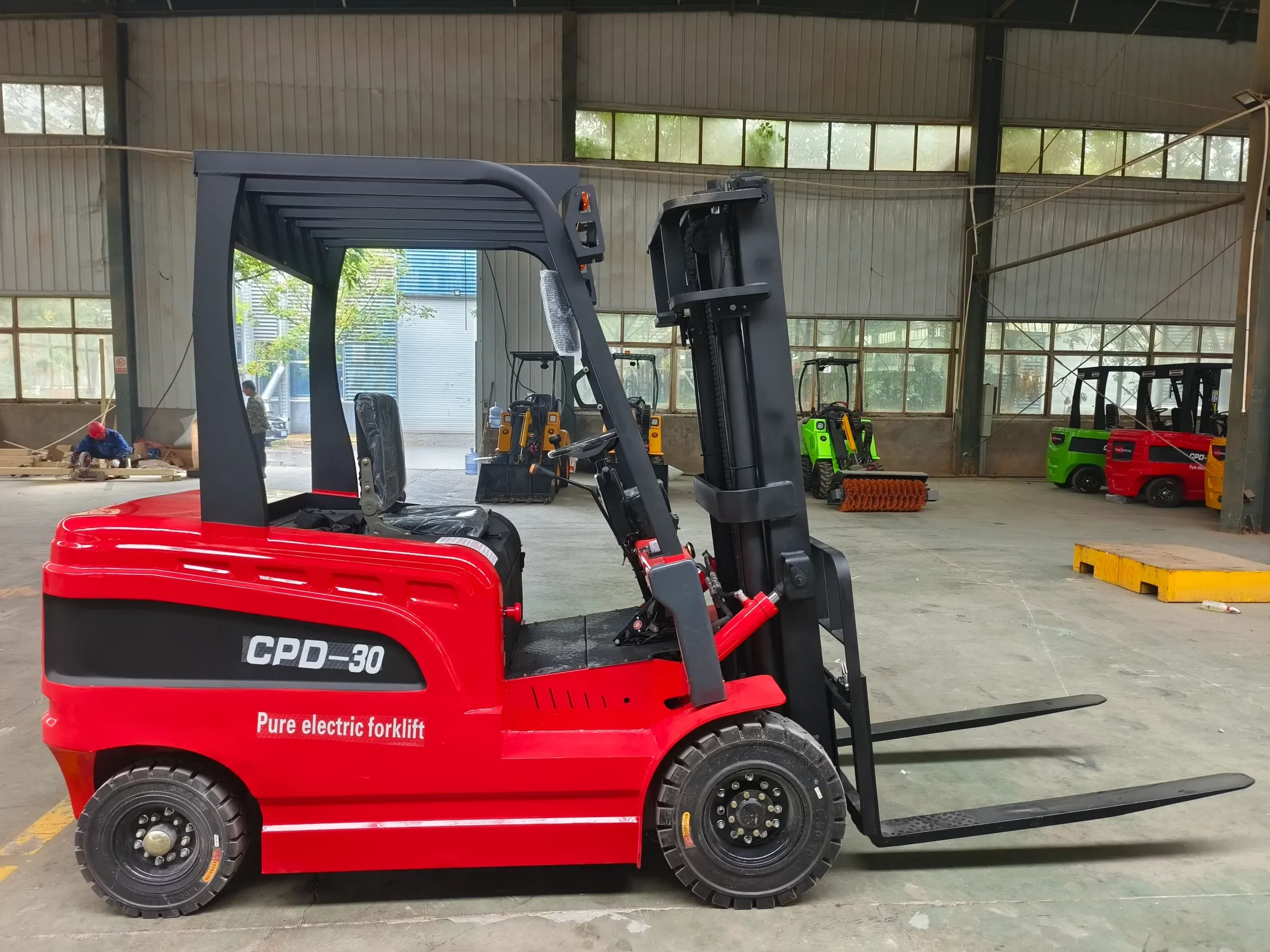
Choosing a high-quality electric forklift comes down to a handful of parts that decide service life: the body steel, the mast section and chain, the controller, the battery's cycle rating, and how easy the wearing parts are to source.
Two trucks with the same tonnage can differ sharply in those components, which is why price alone is a poor guide. A cheaper machine that fails more often costs more in parts and downtime than a better-built one with a longer life, so the number to compare is purchase price divided by service life.
The checks that separate a good build from a cheap one are structural rather than cosmetic: H-section mast steel over C-section, a reinforced 7-link chain over 5-link, a brand-name waterproof controller, a battery rated for at least 3,000 charge-discharge cycles, and oil seals and filters that are easy to source locally rather than proprietary. Safety equipment, from overload protection to an operator presence sensor, should be standard rather than an extra.
We have consolidated the full explanation of electric forklift design, types, advantages, and selection into one guide. It covers the definition, how the machine is built, the main classes, the electric-versus-diesel comparison, and a step-by-step selection method with the evaluation checklist.