Oct 24, 2026Electric Forklifts
How Much Does an Electric Forklift Cost in 2027? Prices & Monthly Rental Rates
A new electric forklift costs USD 8,000–60,000; rentals run USD 900–3,000 a month. 2026 price tables by type and capacity, plus buy-vs-rent math.
What is the price of a electric forklift and the rent monthly ?
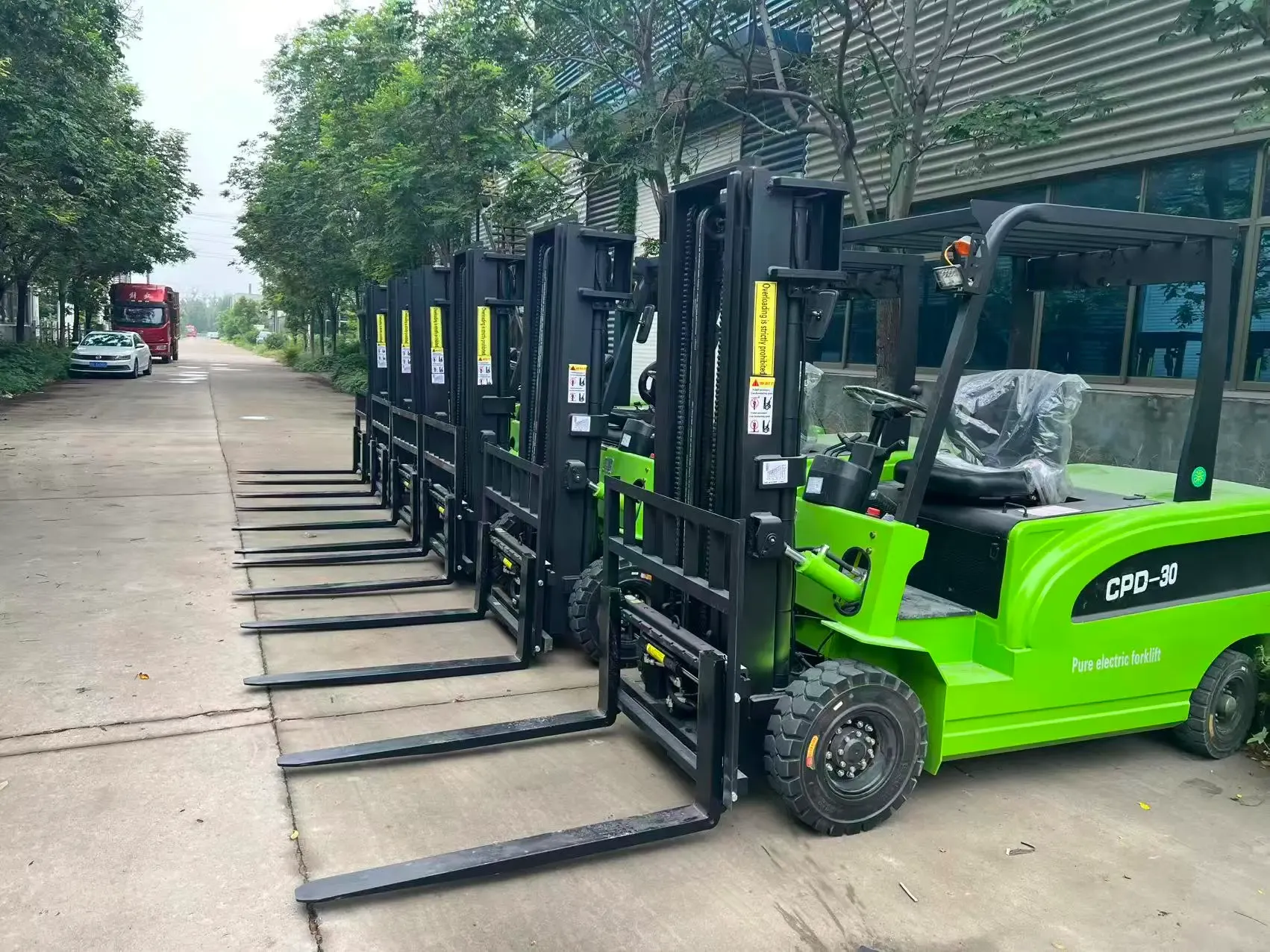
A new electric forklift costs USD 8,000 to 60,000, depending on type and capacity. A 2-ton electric counterbalance forklift — the most common warehouse spec — runs USD 10,000 to 20,000, while a 3-ton unit runs USD 16,000 to 28,000. Monthly rental starts around USD 900 for a 2-ton counterbalance and reaches USD 3,000 for a reach truck. Please refer to your local prices for specific figures.
This page is a price reference: what each type costs to buy, what each costs to rent, and the point at which renting stops making sense.
Quick answer
Question | Answer |
Electric forklift purchase price | USD 8,000 – 60,000 |
2-ton counterbalance (new) | USD 10,000 – 20,000 |
Monthly rental | USD 900 – 3,000 |
Daily rental (2-ton) | USD 150 – 250 |
Cheaper option | Renting, if you need it under 9 months |
Largest price driver | Load capacity and lift height |
How much does a new electric forklift cost?
"Electric forklift" is a category, not a single machine. It runs from a hand-guided pallet truck to a 3-ton counterbalance, and the same family includes reach trucks — forward-moving trucks built for narrow aisles and high racking — and three-wheel units with a short wheelbase and a tight turning circle. Capacities span roughly 0.5 to 10 tons.
Pricing reflects that spread, which is why an "average electric forklift price" means very little without a type and a capacity attached to it.
Type | Capacity | Typical price (new) | Typical use |
Electric pallet truck | 1.5 – 2 T | USD 2,000 – 6,000 | Loading docks, horizontal moves |
Electric stacker | 1 – 1.5 T | USD 3,000 – 9,000 | Low-level racking, light warehousing |
3-wheel counterbalance | 1.5 T | USD 8,000 – 15,000 | Tight aisles, indoor handling |
4-wheel counterbalance | 2 T | USD 10,000 – 20,000 | The standard warehouse workhorse |
4-wheel counterbalance | 3 T | USD 16,000 – 28,000 | Heavier pallets, multi-shift work |
Reach truck | 2 T | USD 22,000 – 35,000 | Narrow aisles, high racking |
Heavy-duty | 5 T and above | USD 35,000 – 60,000 | Ports, steel, heavy manufacturing |
Heavy-duty and custom configurations — explosion-proof, cold-store, or very high lift — can exceed USD 100,000. Those are quoted individually rather than listed.
Two rules explain most of the table. The higher the tonnage, the higher the price: each step up in capacity class adds roughly 30%–50%, which is why a 3-ton truck costs about 1.4 to 1.6 times a 2-ton. And the higher the lift height, the higher the price, because a taller mast carries more steel and is rated to a lower residual capacity.
As a starting point, choose by the load you actually handle: light, low-volume work points to a 1.5-ton unit; general warehouse handling to 2 tons; heavy pallets or multi-shift operation to 3 tons and above. Four-ton units continue the same curve. The 5-ton-and-above row sits above it, because those trucks are built for port and steel work with a reinforced chassis and mast — which costs more than the tonnage alone implies.
One exception to the tonnage logic: a three-wheel version of the same capacity usually costs 10%–15% more than the four-wheel equivalent. The compact chassis and tighter turning circle cost more to build — but they buy access to aisles and confined indoor areas a four-wheel truck cannot enter.
Two adjustments apply to every row above. Through dealer channels in Europe or North America, where ocean freight, duty, and local margin are added, expect 15%–30% more than the manufacturer price. And a used unit with 3,000–5,000 hours typically sells for 40%–60% of new, depending on battery condition — the trade-offs are covered in our new vs used electric forklift comparison.
What drives the price up or down
Load capacity and lift height
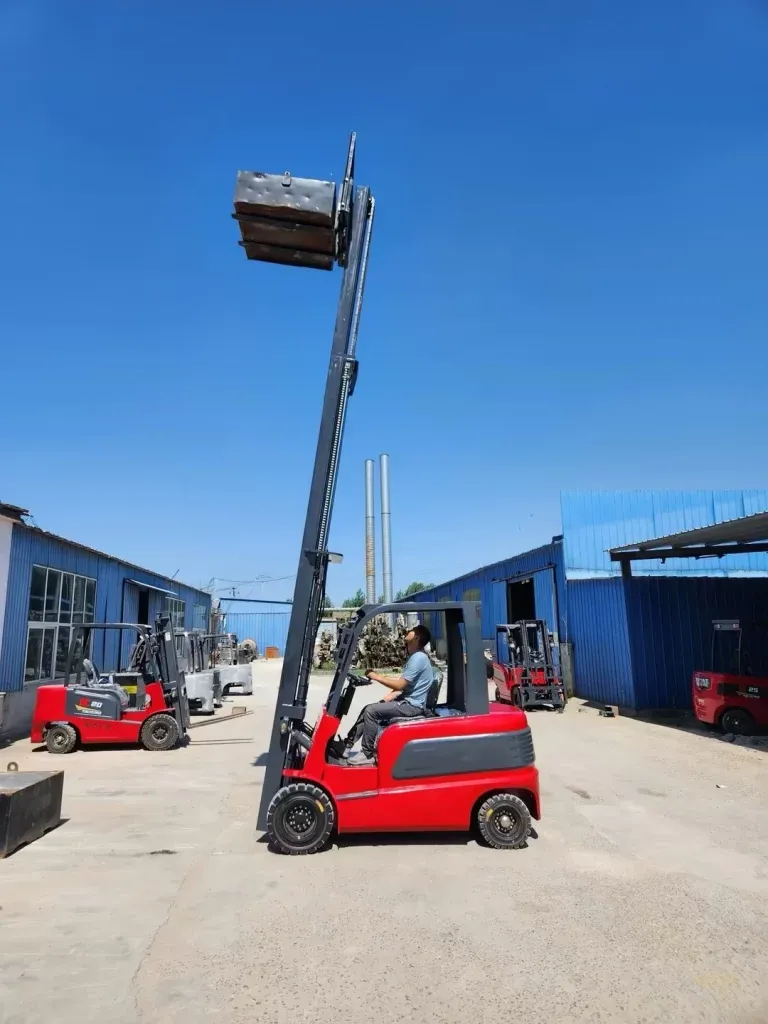
These two set the base price, and they interact. A 2-ton truck rated at 4.8 m may only be rated to lift 1.4 tons once the mast is fully raised — that is the capacity derating curve printed on every load chart. Spec against the weight you lift at your maximum height, not the weight you lift on the floor.
A worked case makes the gap concrete: 800 kg at 6 m and 2 tons at floor level are two different machines, and the price difference between them is several thousand dollars. The rating that decides the specification is the one printed beside your stacking height, not the headline capacity — headline figures are measured near the floor and rarely apply above 3 m.
Battery: lead-acid or lithium-ion
Lithium-ion adds USD 2,000 to 6,000 to the purchase price, and more on larger capacities. It pays back through opportunity charging — no battery swap, no spare battery set, no battery room. On a single shift, lead-acid remains cheaper overall; on two or three shifts, lithium usually wins within 2–3 years.
Brand and manufacturing origin
Two trucks with identical specifications can differ by 30%–50% on brand alone. Part of that is engineering, part is after-sales network, part is simply margin. The practical question is not "which brand is cheapest" but "who will still answer the phone in year four".
Freight, duty, and delivery
On an imported machine these are real line items, and they can swing the landed price by USD 3,000–8,000. A factory-direct quote often excludes them; a delivered quote does not. Always compare like with like.
Tyres and attachments
Solid and non-marking tyres — standard for indoor food, pharmaceutical, and retail work — add a few hundred dollars over pneumatic tyres, and they are part of why an electric truck can work quietly on a sales floor.
Attachments are the larger line. A side-shifter is often bundled at no extra cost on warehouse configurations. A push-pull, clamp, or double-deep attachment adds four figures to the price and lowers the residual capacity rating, so the truck may need to be sized up to keep the same working load.
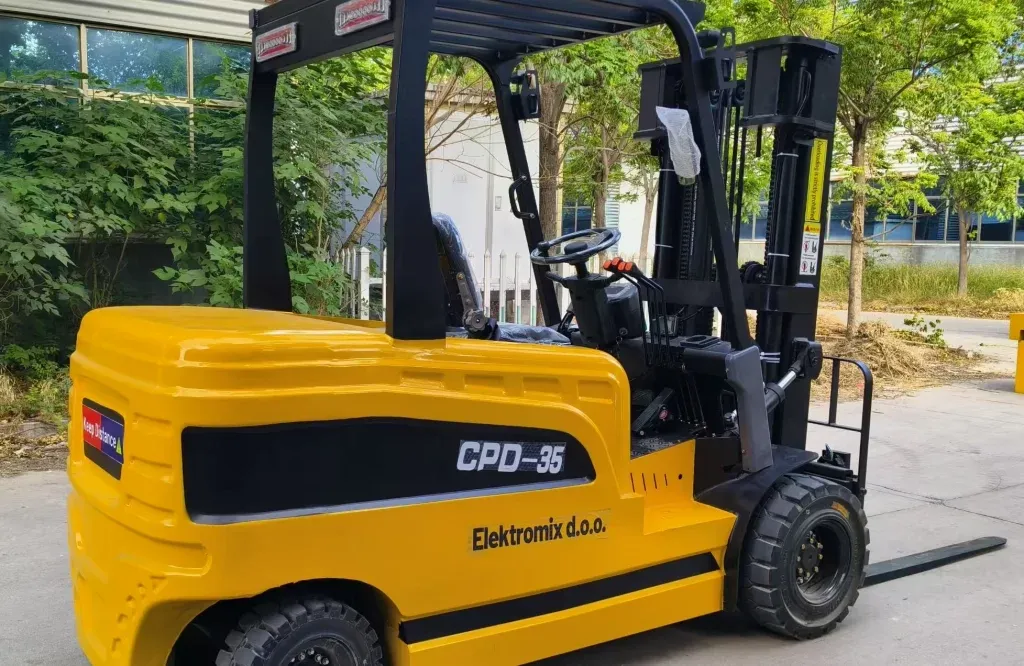
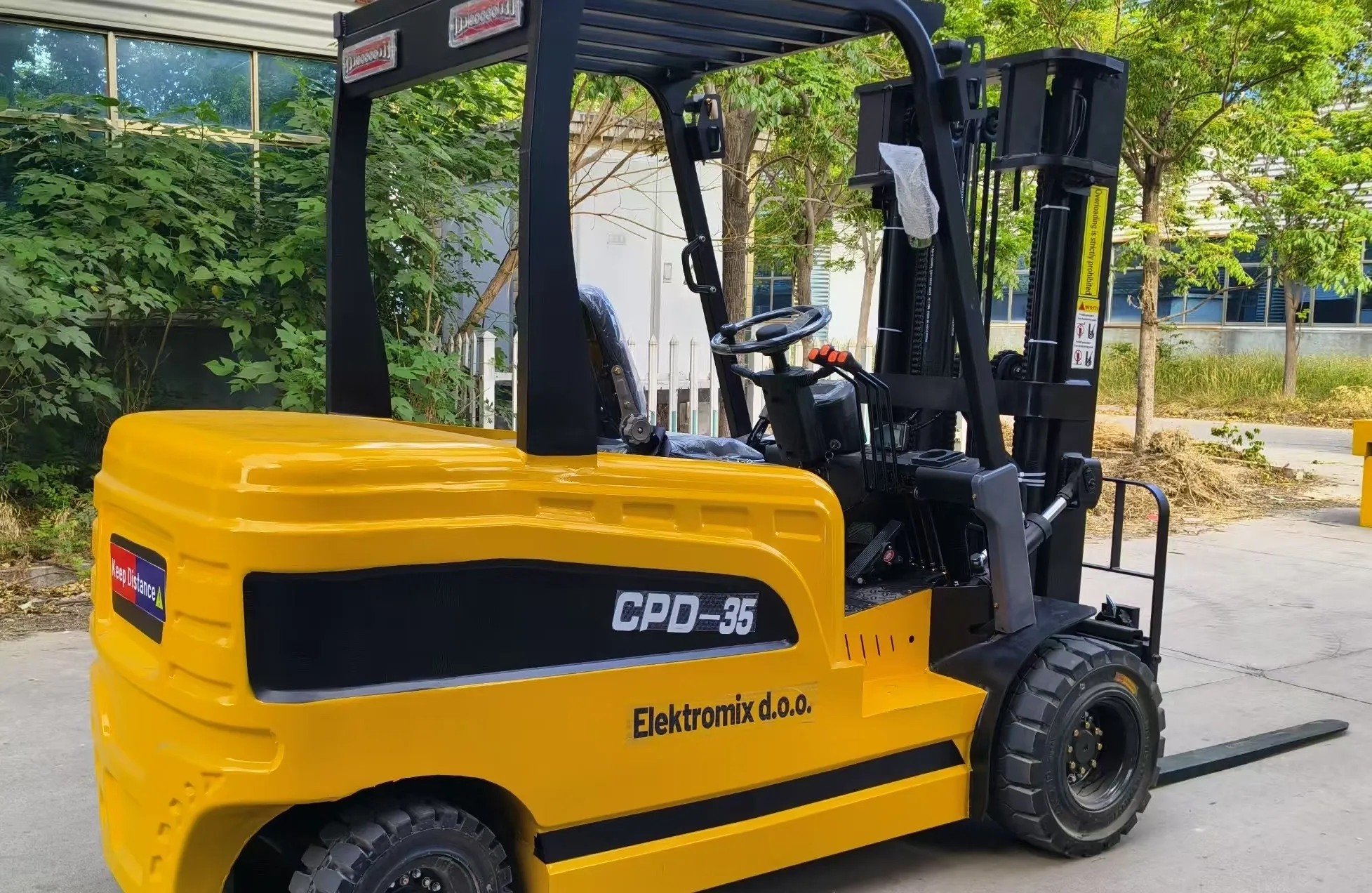
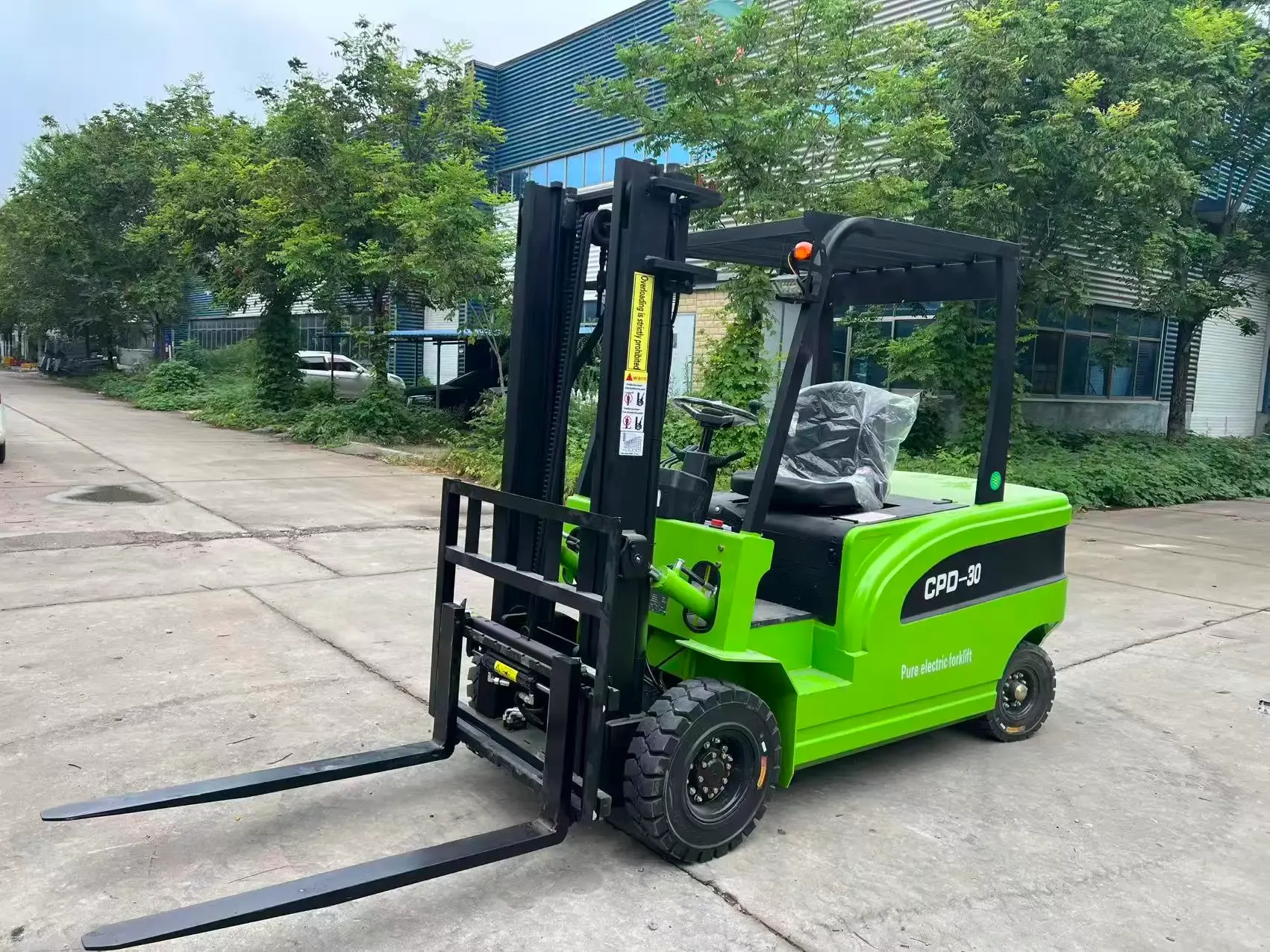
- 3T eletric forklift with highly wear-resistant solid tyres
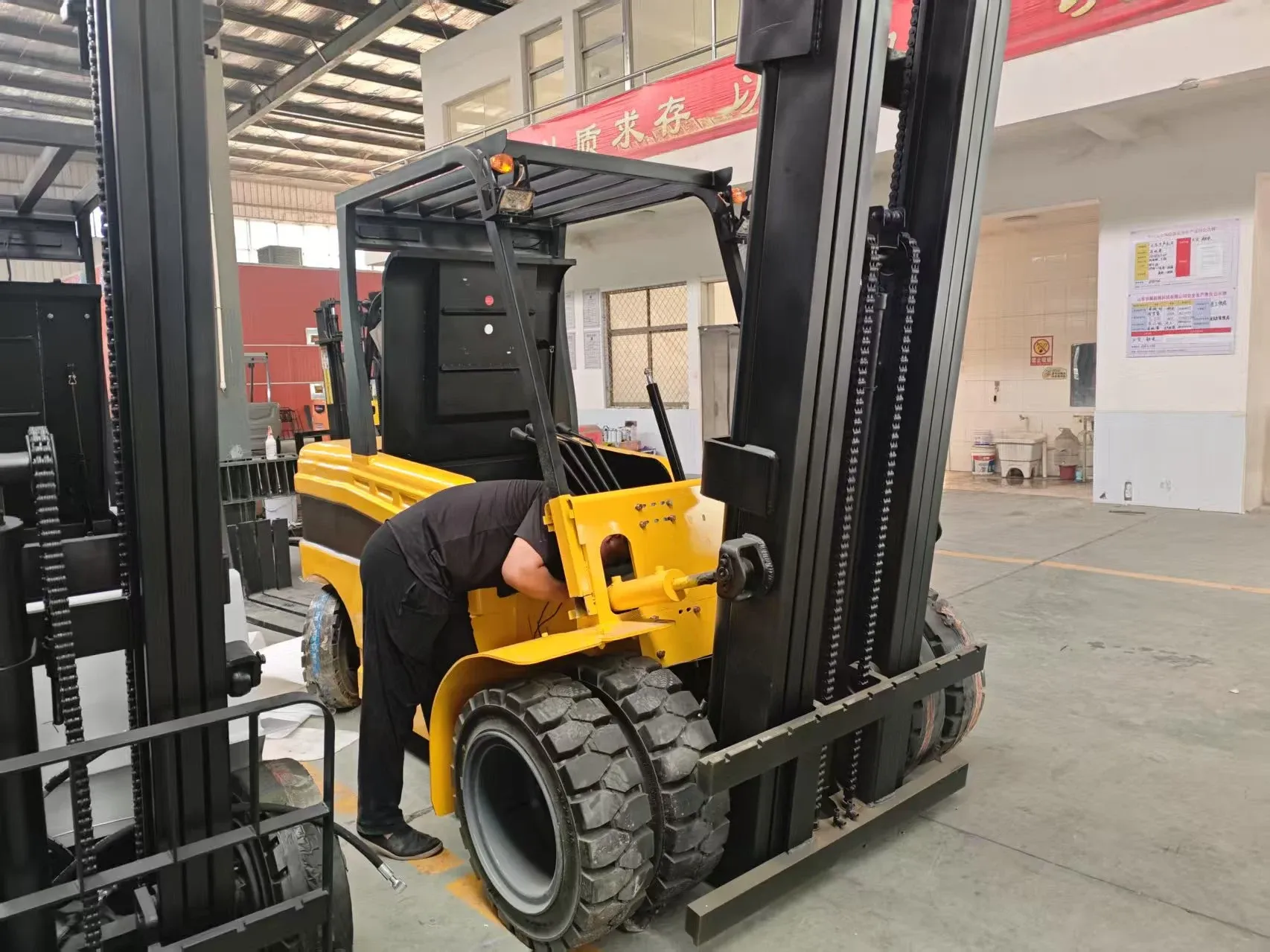
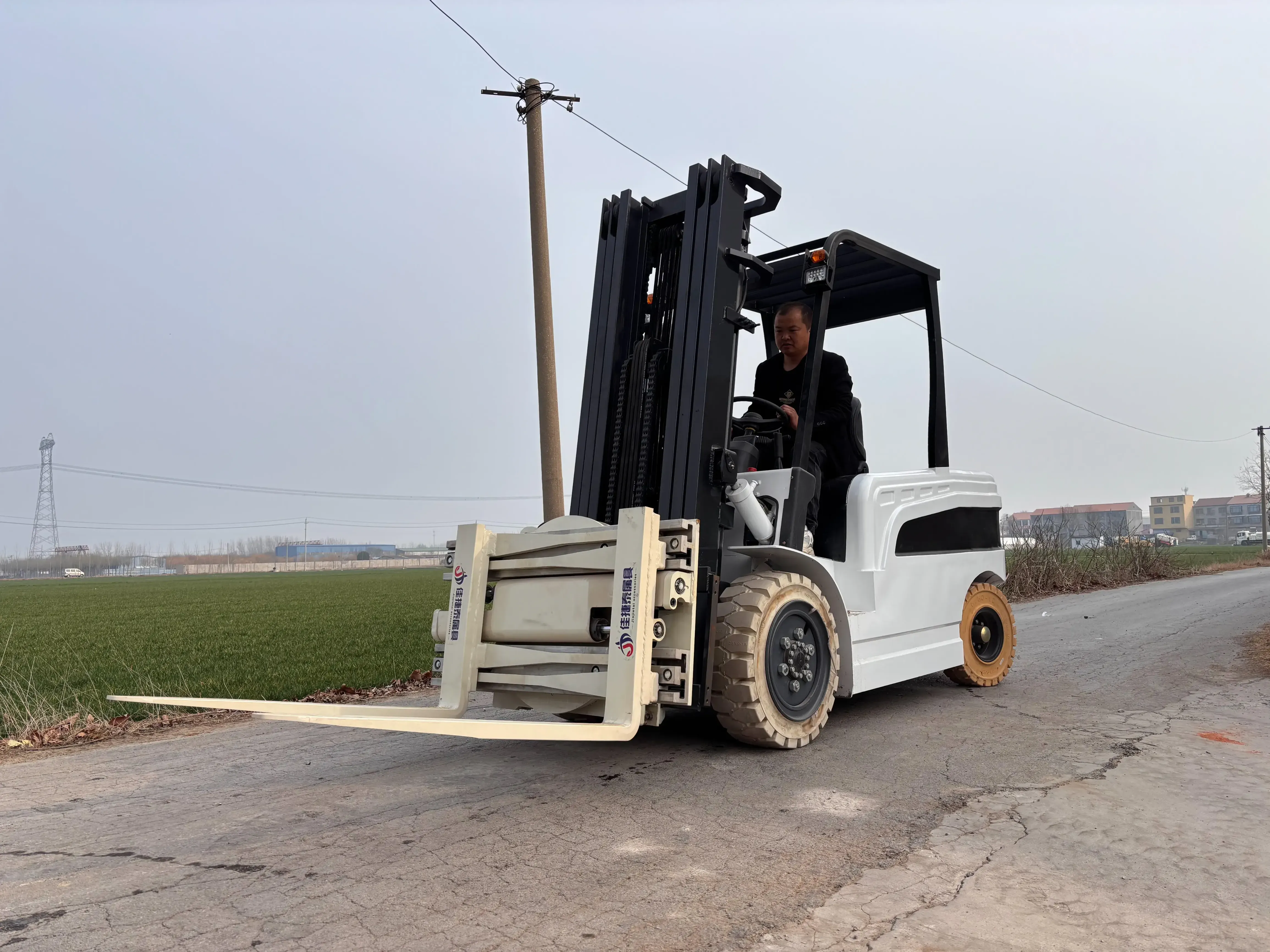
- 4T electric forklift with non-marking tires
How much does it cost to rent an electric forklift per month?
Monthly rental runs USD 900 to 3,000 for most warehouse equipment, and up to USD 5,000 for heavy-duty units.
Type | Monthly rate | Daily rate |
Electric pallet truck | USD 300 – 700 | USD 80 – 150 |
Electric stacker | USD 500 – 1,000 | USD 120 – 200 |
2-ton counterbalance | USD 900 – 1,800 | USD 150 – 250 |
3-ton counterbalance | USD 1,200 – 2,200 | USD 200 – 320 |
Reach truck | USD 1,500 – 3,000 | USD 200 – 350 |
Heavy-duty (5 T+) | USD 2,500 – 5,000 | USD 350 – 600 |
The pattern holds across every market: the daily rate is the most expensive way to rent. Past two weeks, a monthly rate beats counting days, and a 12-month contract typically saves another 15%–20% against month-to-month.
Rental scales with capacity too, but not in a straight line. A 3-ton counterbalance runs about 25% more a month than a 2-ton, and a heavy-duty unit costs roughly double the 3-ton rate — the jump comes from size, mast cost, and the transport needed to move it. Rates also move with region and season; the ranges above reflect mature industrial markets in normal demand, and a rental quote is only comparable once the term, the region, and the inclusions are the same.
Usually included
- The truck, serviced and ready to work
- Scheduled maintenance during the term
- Business-hours breakdown service
- Battery (confirm — charger is less consistently included)
Usually not included
- Delivery and pickup: USD 100 – 300 each way
- Damage waiver: 10%–15% of the base rate
- Electricity or charging
- Attachments beyond the base configuration
- After-hours callouts
Get all five in writing before comparing quotes. A USD 1,200/month quote plus delivery and waiver can cost more than a USD 1,350/month quote that includes both.
Rent or buy? The break-even math
The rule of thumb — rent under 9 months, buy over 12 — is directionally right. Run the actual numbers anyway.
Take a 2-ton counterbalance:
- Buy: USD 15,000 purchase + USD 800/year service + USD 900/year electricity
- Rent: USD 1,400/month, maintenance included
Renting costs USD 16,800 a year. Owning costs about USD 1,700 a year to run, plus the capital. On cash alone, the purchase pays for itself in roughly 10 months.
Three things move that number:
- Residual value. A well-maintained electric forklift is still worth 35%–45% of its purchase price after five years. Counting that, the real break-even drops to about 8 months.
- Utilisation. A truck that idles half the day makes renting cheaper regardless of term — you are paying for capacity you do not use.
- Seasonality. Many operations buy a base fleet and rent the peak. That mix usually beats either pure strategy.
A fast sanity check: divide the purchase price by the monthly rental rate. Under 12, model the purchase seriously. Over 18, rent.
The costs that do not appear in the quote
Purchase price is roughly 70% of first-year cost. The rest:
- Battery replacement — a lead-acid set lasts 4–5 years and costs USD 2,500–5,000 to replace. Factor one replacement into any 8-year ownership model.
- Charger — USD 800–2,500, and sometimes quoted separately from the truck.
- Electrical work — a dedicated circuit, ventilation, and in many regions a battery charging room.
- Floor condition — electric trucks need flat, smooth floors; damaged slabs should be repaired before delivery, not after.
- Operator training — USD 150–400 per operator in most markets.
- Service access — a brand with no local parts network can cost more in downtime than it saved at purchase.
- Warranty and consumables — 12 months on the truck is standard; 24 months is negotiable on a multi-unit order. Consumables (tyres, forks, hydraulic oil, filters, brake linings) sit outside almost every warranty, so ask for the list and price a year of it against your duty cycle before signing.
One more line that never appears on a quote: the cost of the wrong capacity. A truck bought one class too small runs at its limit, wears faster, and gets replaced early — which usually costs more than the step up would have.
Electric vs diesel: running cost
Purchase price is where electric loses; running cost is where it wins.
| Electric (2 T) | Diesel (2 T) |
Purchase | USD 10,000 – 20,000 | USD 8,000 – 15,000 |
Energy per year (1 shift) | USD 900 – 1,300 | USD 4,000 – 7,000 |
Maintenance per year | USD 700 – 1,000 | USD 1,200 – 1,800 |
Indoor emissions | Zero | Requires ventilation |
For a single-shift indoor operation, energy and maintenance together run roughly USD 2,900 to 6,100 a year less, which repays the purchase premium within about 12 to 24 months. Whether that is enough to justify switching — and what it means for your specific duty cycle — is covered in our analysis of whether electric forklifts are worth it.
How to get an accurate quote
1. Specify the load at height, not the load on the floor. State the heaviest pallet, the racking level it goes to, and the pallet dimensions. Weight, height, and footprint together set the capacity class and the fork length — weight alone is the most common reason a delivered truck turns out to be the wrong one. If your pallets fall outside standard dimensions, say so: most manufacturers build to a custom fork length at modest cost, but it cannot be added after delivery.
2. State the shift pattern. One shift with opportunity charging, or two shifts with a battery swap, changes both the battery recommendation and the price by several thousand dollars.
3. Ask for a delivered, duty-paid price including charger. Factory-direct quotes that exclude freight and duty are the most common reason two "identical" quotes differ by 40%.
4. Compare the same way across suppliers. Price is one column; put delivery time, warranty terms, and the local parts and service arrangement beside it. A quote that is 15% cheaper with no regional parts stock is not cheaper over five years. On a large order, a factory visit settles the build-quality question faster than any spec sheet.
If you are still deciding which type fits your warehouse, our guide to electric forklift types covers the categories, and our 2026 model shortlist for small businesses covers specific models.
FAQ
How much does a 2-ton electric forklift cost? A new 2-ton electric counterbalance forklift costs USD 10,000–20,000 depending on battery type, mast, and brand. Lithium-ion and full-free-lift masts sit at the top of that range.
How much is electric forklift rental per month? USD 900–1,800 for a 2-ton counterbalance, USD 1,200–2,200 for 3 tons, and USD 1,500–3,000 for a reach truck. Daily rates run USD 150–350.
Is it cheaper to rent or buy an electric forklift? Renting wins under 9 months. Beyond 12 months, buying usually wins once residual value is counted. For a USD 15,000 truck at USD 1,400/month, the crossover is about 8–10 months.
Are electric forklifts more expensive than diesel? To buy, yes — typically 20%–40% more for the same capacity. To run, no: energy and maintenance cost roughly USD 2,900–6,100 a year less, which repays the difference in about 12 to 24 months for single-shift work.
How long does an electric forklift battery last, and what does a replacement cost? A lead-acid battery lasts 4–5 years and costs USD 2,500–5,000 to replace. A lithium-ion pack lasts 7–10 years and costs more upfront but usually outlives the first ownership cycle.
Does the price include a battery and charger? The battery is almost always included. The charger is included more often than not, but not always — confirm it in writing, because it is the most common line item that appears after the quote.
How much more does a 3-ton electric forklift cost than a 2-ton? Roughly 40%–60% more. A 2-ton counterbalance runs USD 10,000–20,000 and a 3-ton runs USD 16,000–28,000. Each step up in capacity class adds about 30%–50%, driven by the heavier chassis, larger mast, and bigger battery.
Is a three-wheel electric forklift more expensive than a four-wheel? Yes, typically 10%–15% more at the same capacity. The short wheelbase and tight turning circle cost more to engineer, but they let the truck work in aisles a four-wheel machine cannot enter — usually worth more than the premium in a cramped warehouse.
Summary
Electric forklift pricing ranges from USD 2,000 for a pallet truck to USD 60,000+ for heavy-duty counterbalance units, with a 2-ton warehouse truck landing at USD 10,000–20,000. Rental starts at USD 900 a month for that same 2-ton class. For anything under 9 months, rent; beyond 12 months, the residual value math usually favours buying.
Get an electric forklift price for your specification
Tell us the load weight, lift height, shift pattern, and whether you need lead-acid or lithium-ion, and we will send a configuration with a delivered price — usually within one business day. We manufacture electric pallet trucks, stackers, and counterbalance forklifts from 1 to 5 tons, in standard and custom configurations.