Electric Forklifts
What Is an Electric Forklift? Types, Advantages and How to Choose (2026 Guide)
What an electric forklift is, how it is built, the main types, its advantages over diesel, the limits to plan for, and how to choose capacity, aisle width and battery.
Introduction
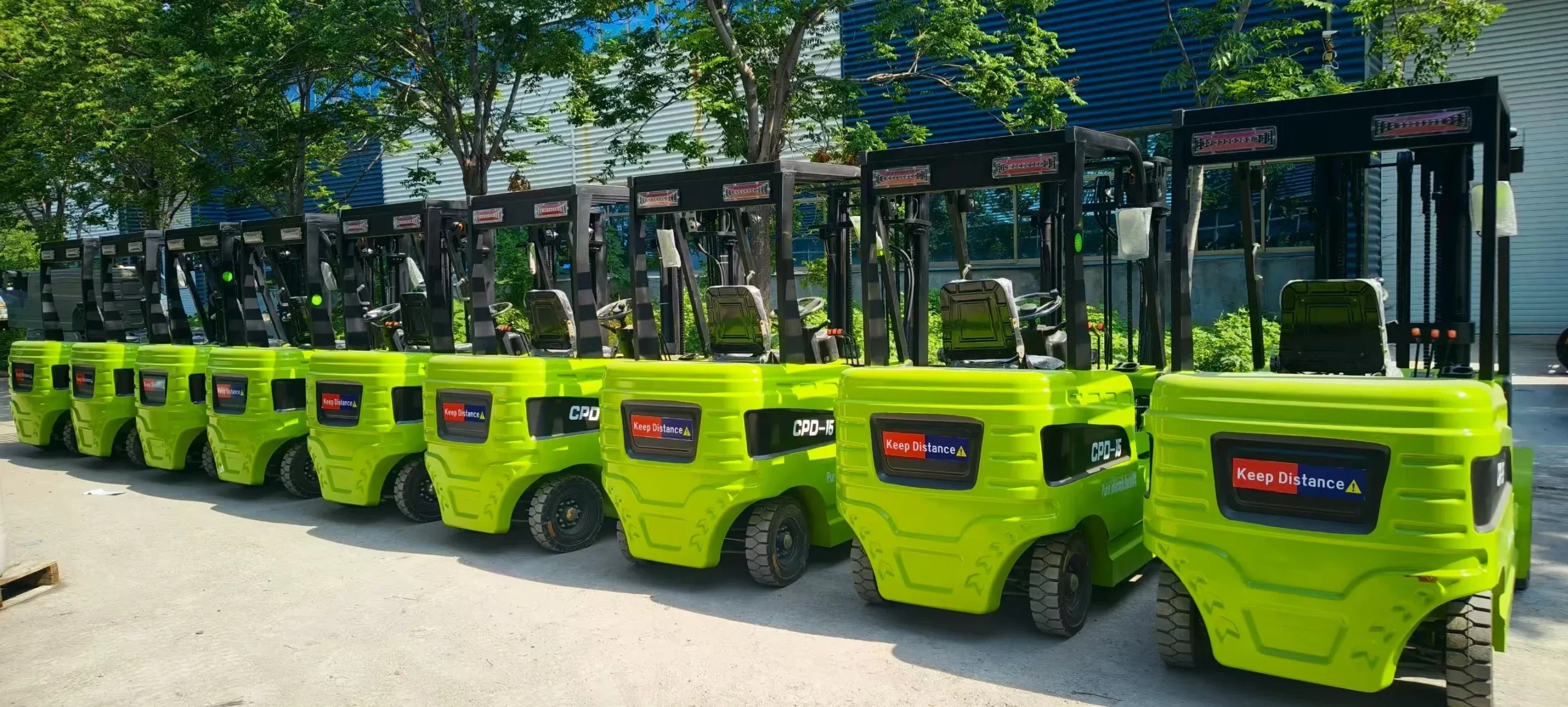
An electric forklift is a battery-powered industrial truck that handles loading, unloading, stacking, and short-distance transport without producing any exhaust emissions. It is now the default choice for indoor warehousing, food and pharmaceutical facilities, cold chain operations, and any site where air quality or noise is regulated.
The problem is that "electric forklift" is also one of the most crowded topics in materials handling content. Buyers searching for a definition, a type comparison, an advantage list, and selection criteria land on different pages and get partial answers. This guide puts the core of it in one place: what the machine is, how it is built, why it beats diesel on operating cost, where it still falls short, and how to size one for your operation.
Quick Answer
Definition: an electric forklift runs on a rechargeable battery that drives a traction motor and a hydraulic pump motor, replacing the engine, transmission, and fuel system of an internal combustion truck.
Three things that matter most when choosing one:
- Load and lift: match rated capacity at your actual load center and lift height, not just the headline tonnage.
- Aisle and type: counterbalance, reach truck, VNA, stacker, or pallet truck, chosen by aisle width and rack height.
- Battery and charging strategy: lead-acid, lithium, or a swap arrangement that matches your shift pattern.
If your operation is indoor, runs one to two shifts, and has level floors, an electric forklift will almost always cost less to own than a diesel equivalent. If you work outdoors on rough ground all day, a diesel machine may still be the better tool.
What Is an Electric Forklift?
An electric forklift is an industrial vehicle that uses a battery as its power source, driving the travel motor and the hydraulic system motor to move and to lift. ISO/TC110 classifies it as industrial truck equipment, which matters in practice: because it has a mast, a fork assembly, and self-propulsion, it is regulated as special equipment in most markets and operators usually need a certificate to drive one.
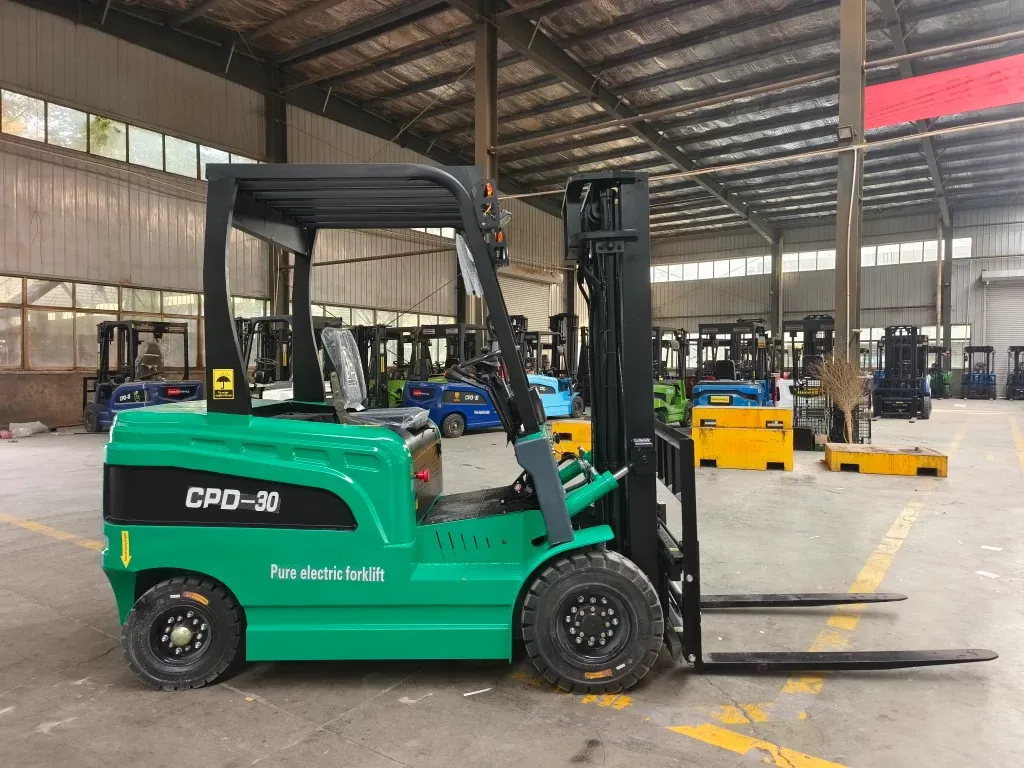
The step change that made electric forklifts competitive with engine trucks was the move to transistor controllers (SCR and MOSFET). Electronic control turned a rough, limited machine into one with smooth acceleration, precise inching, regenerative braking, and reliability close to internal combustion trucks. Today electric models cover roughly 1 to 10 tons of capacity and 3 to 8 meters of lift in the counterbalance class alone, before you count reach trucks and warehouse equipment.
How an Electric Forklift Is Built
Understanding the main assemblies helps when you compare quotes, because two machines with the same tonnage can differ sharply in the parts that decide service life.
Chassis and Body
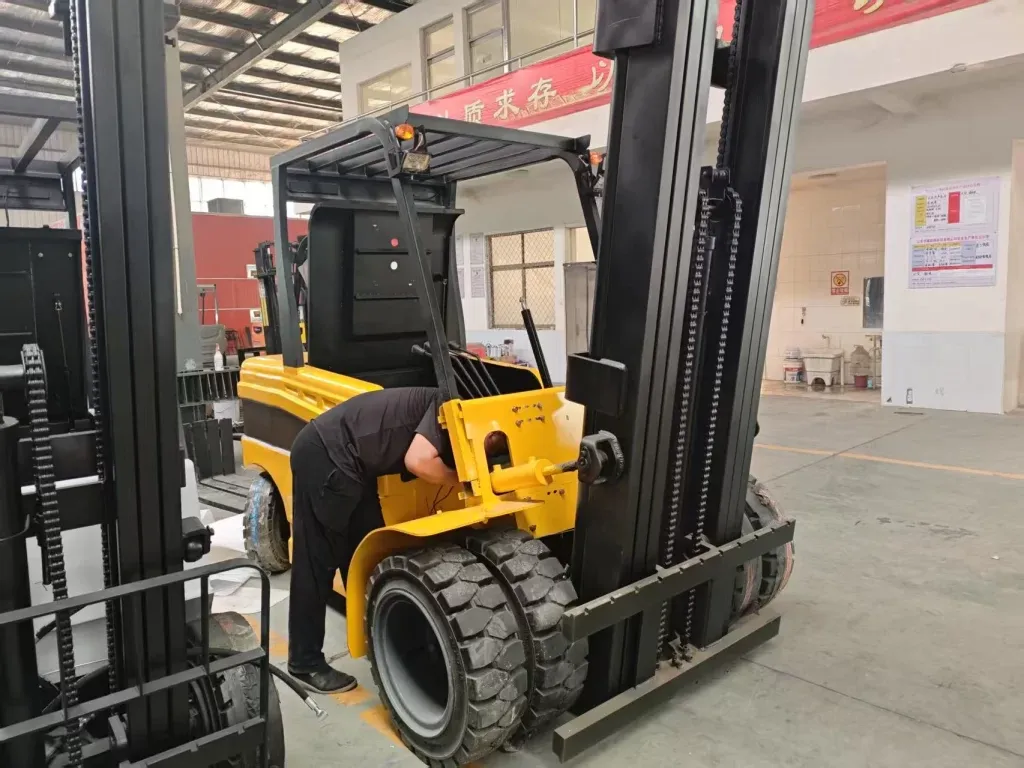
The chassis is usually welded steel with a protective coating, housing the control console and the operator seat. On a counterbalance truck the rear carries the counterweight, which can be cast iron, concrete, or a composite. Cast iron gives the best stability and the highest density for a given volume, but it costs more. A body built from high-quality steel, with clean paint and proper corrosion protection, is a reliable sign of build quality.
Power, Drive and Hydraulics
The power system is the battery, motor, and controller working together: the battery stores energy, the motor converts it into mechanical force, and the controller regulates speed and torque. Most electric forklifts use solid tires rather than pneumatic ones, because solid rubber does not deform under load and therefore preserves rated capacity and lift height. Pneumatic tires ride better, but they cost you capacity.
On the hydraulic side, look at the mast section (H-section steel carries more than C-section), the chain (7-link reinforced chain outperforms 5-link), the pump (a good brand leaks less and holds capacity better), the tank size, and the quality of the piping. A larger, separate hydraulic tank gives more stable oil output and smoother lifting.
Controls, Instruments and Safety Devices
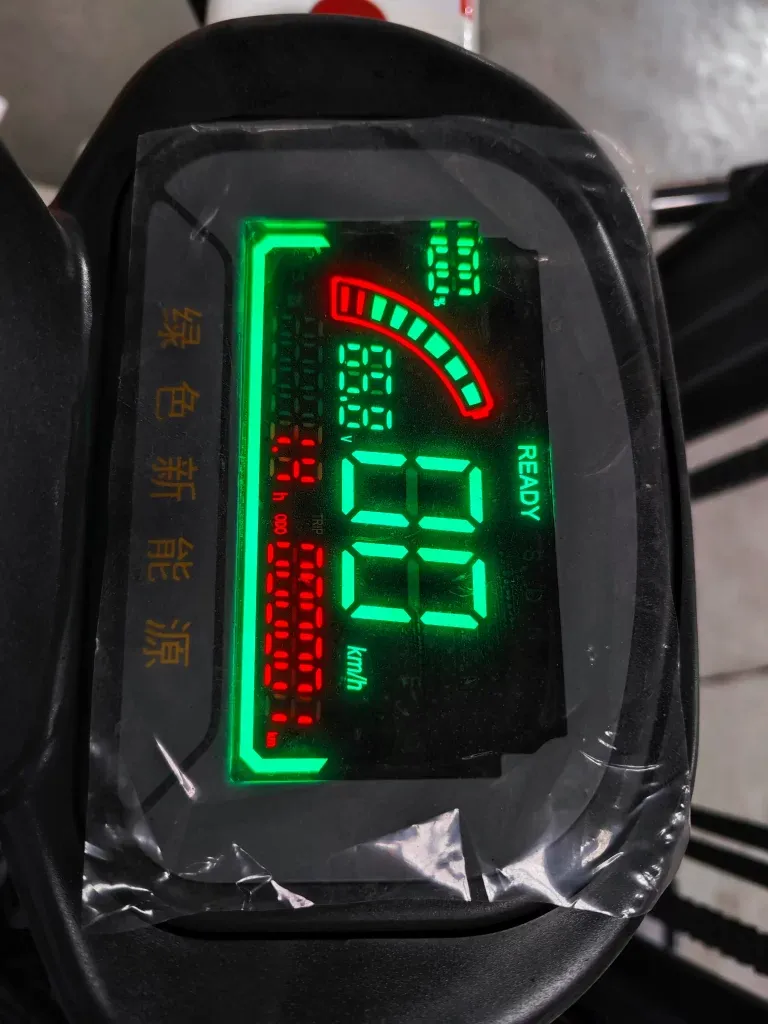
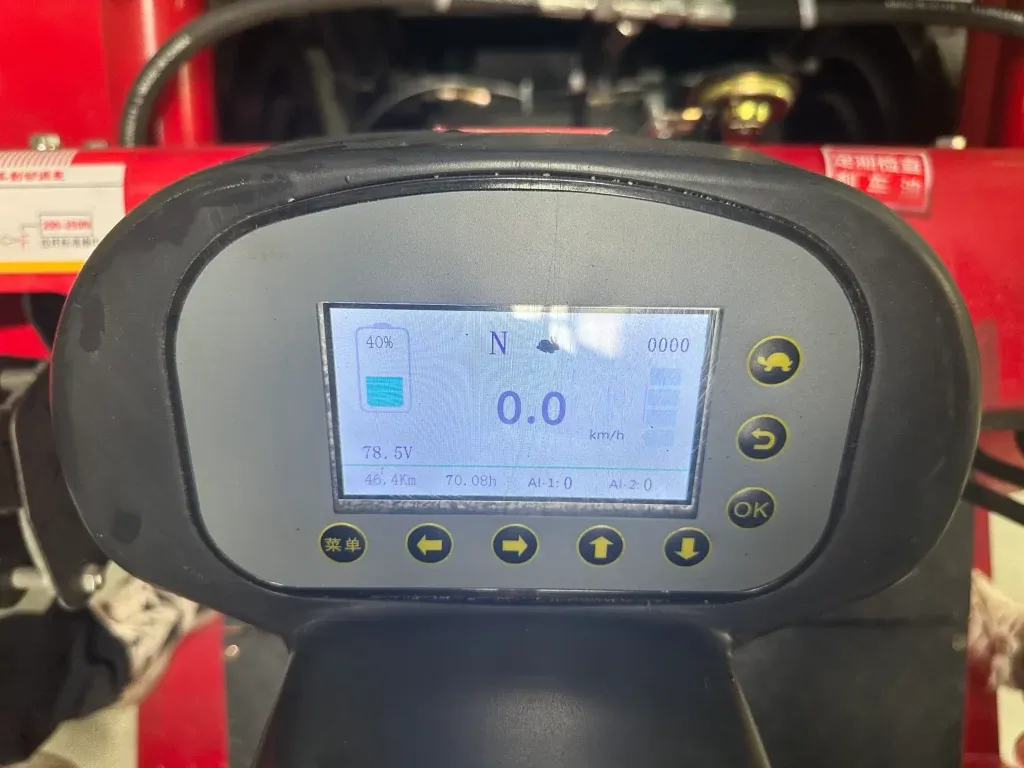
The operator console carries the joysticks, buttons, and instrument panel for lift, lower, travel, and steering, and displays battery state and speed. Better machines add an LCD status display and a communication instrument that shows faults and service data at a glance, which shortens troubleshooting.
Safety devices on a modern electric forklift typically include overload protection, anti-rollback control on ramps, a reverse alarm, emergency stop, and an operator presence system (OPS) that detects whether someone is actually in the seat and enables or disables the relevant functions. Load sensors and warning lights are also common on higher-spec models.
Main Types of Electric Forklifts
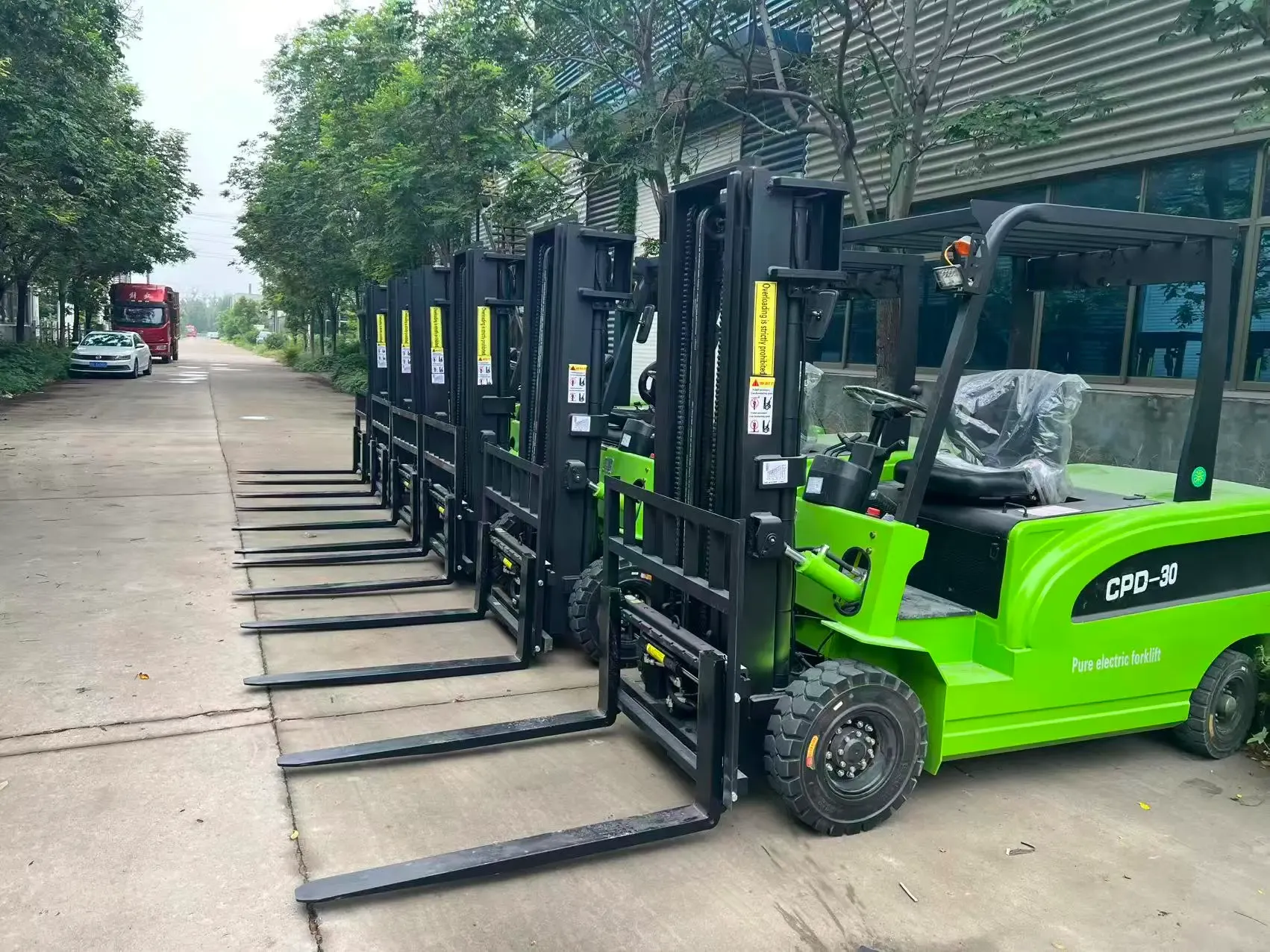
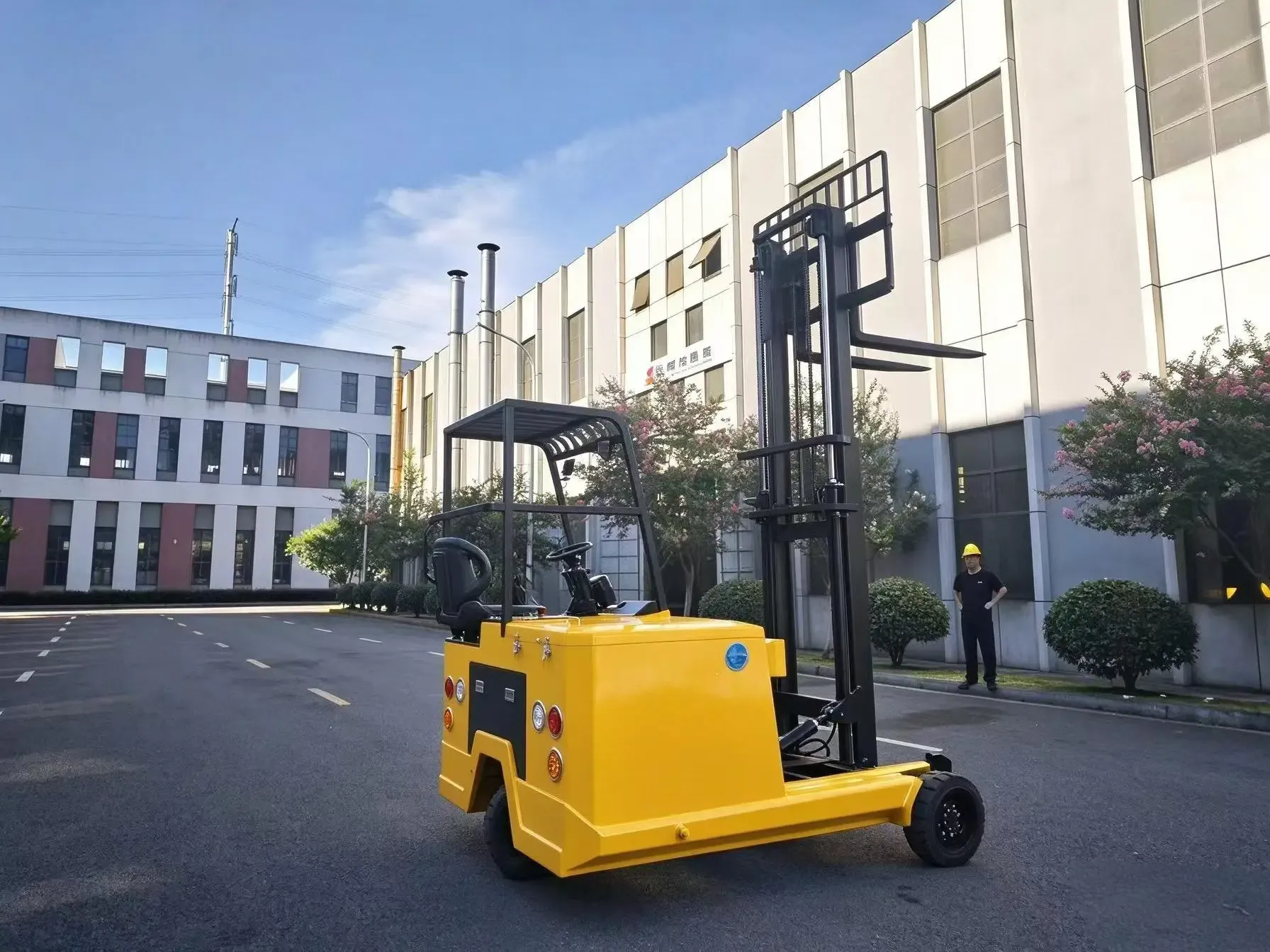
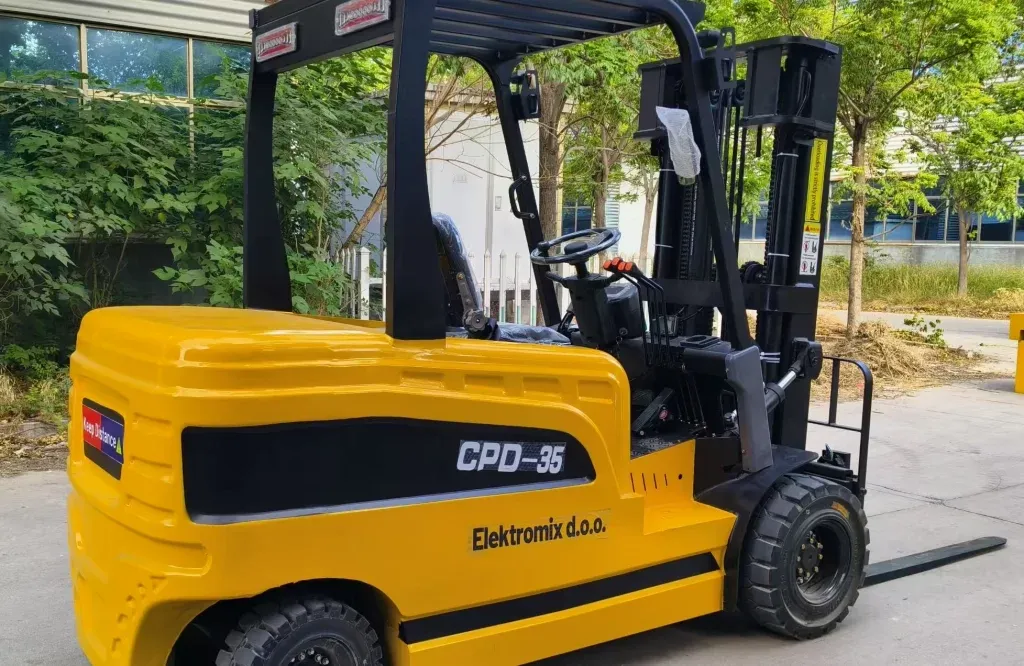
The industry groups electric forklifts into three classes, and the class decides where the machine can work and how much storage density you can reach. Class I is the counterbalance truck used on loading docks and in general warehouse work. Class II is the narrow-aisle family, led by the reach truck and extending to VNA trucks and electric stackers. Class III is the walk-behind and stand-on equipment used for short-distance pallet movement.
Type | Typical capacity | Lift height | Turning radius / aisle | Best for |
|---|---|---|---|---|
Electric counterbalance (3-wheel / 4-wheel) | 1 - 10 t | 3 - 8 m | Larger; needs standard aisles | Loading docks, truck loading, general stacking, indoor and level outdoor |
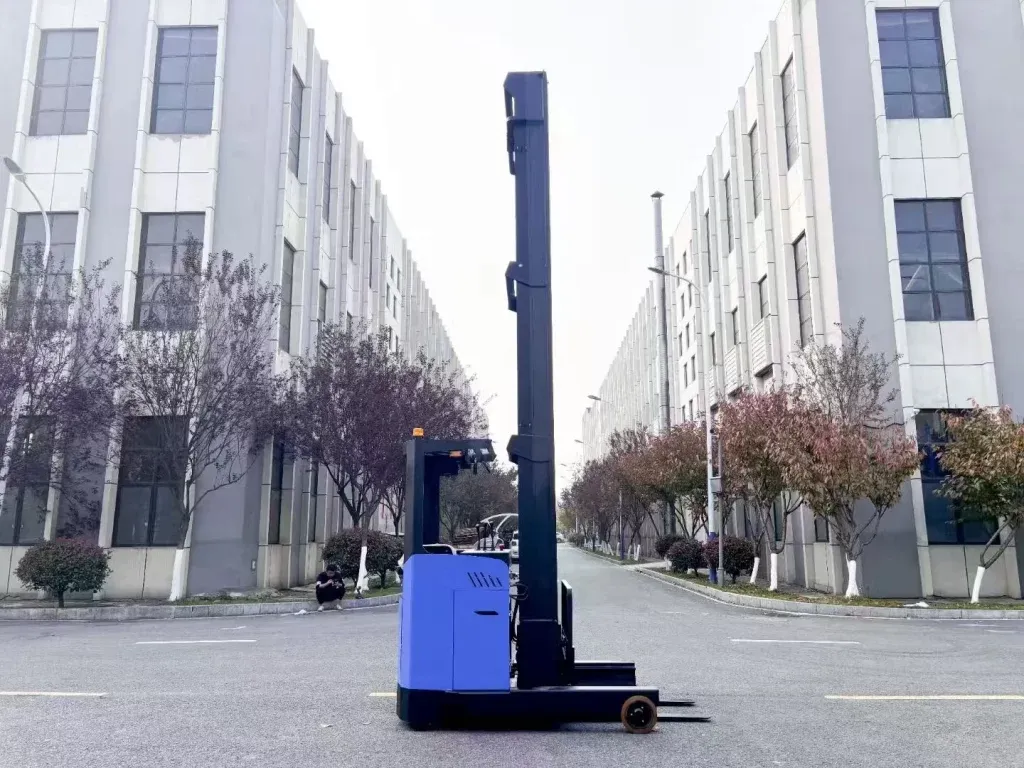
Reach truck | 1 - 3 t | up to 13 m | ~0.8 m turning radius; narrow aisle | High-bay racking, dense warehouses |
VNA truck | 1 - 3 t | up to 18 m+ | 1.5 - 1.8 m aisle | Maximum storage density, rail-guided |
Electric stacker | 1 - 3 t | up to 6 - 7 m | Very small; narrow aisle | Light pallet handling, small warehouses, retail back rooms |
Electric pallet truck | 2 - 5 t | 10 - 20 cm lift | Very small | Horizontal transport, truck unloading |
Order picker | 0.5 - 1.5 t | 4 - 6 m | Small | Piece picking from racks at height |
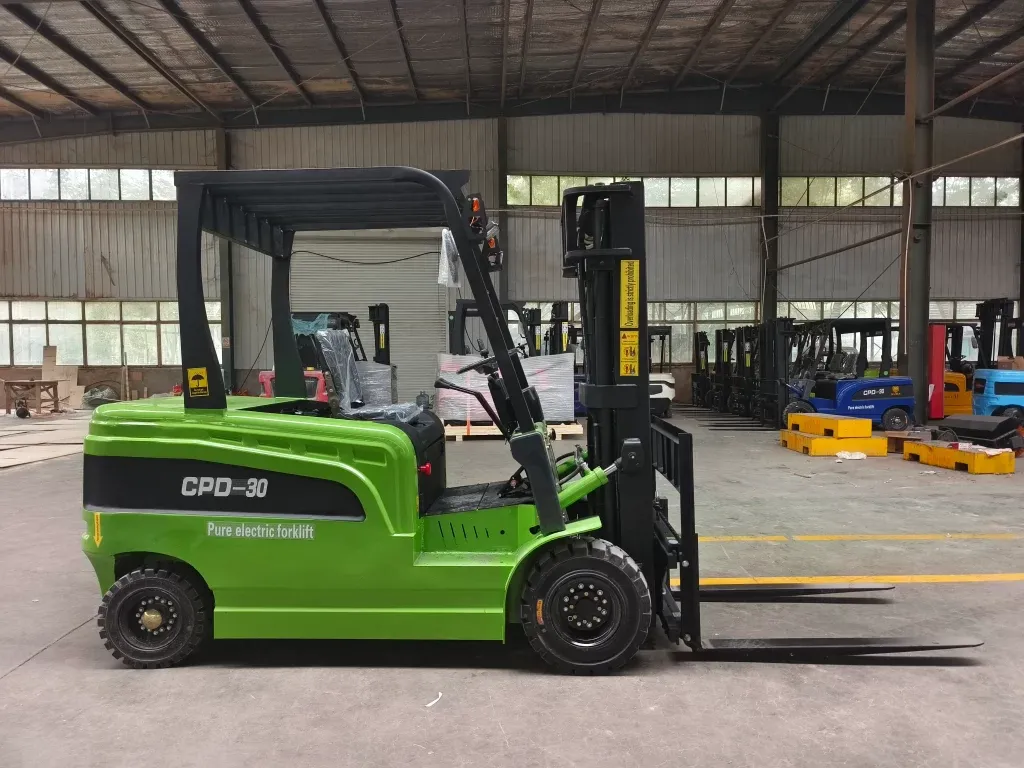
Most warehouses end up running a mix rather than a single type: a counterbalance truck for dock work, a reach truck for the racking, and pallet trucks for horizontal movement. Two numbers decide whether a narrow-aisle machine fits your building, the minimum turning radius and the right-angle stacking aisle width (RASA), and both are covered in our guide to the different types of electric forklifts and their applications, which details each class, its features, and its applications.
Advantages of Electric Forklifts
Zero Emissions and Low Noise
Electric trucks produce no carbon monoxide, hydrocarbons, or nitrogen oxides, and they run well under 75 dB against 80 dB or more for a diesel. That combination is why they dominate food processing, pharmaceuticals, electronics, cold chain, and any warehouse where ventilation is limited. It also removes a real health cost: diesel and LPG exhaust accumulating indoors affects operators and nearby staff, and the ventilation needed to control it is itself an energy expense.
Lower Energy and Maintenance Costs
Electricity typically costs 10 to 30 percent of what diesel costs for the same work, depending on duty cycle and local tariffs. Maintenance is simpler too: no engine oil, oil filter, fuel filter, air filter, spark plugs, or transmission service. The service focus shifts to the battery, motor, controller, and hydraulic system, which means fewer parts, shorter service visits, and far less unplanned downtime.
Better Control and Operator Experience
Electric drive delivers full torque from zero speed, so starting, climbing, and inching are smooth and predictable. Electronic speed control gives precise slow-speed movement, which matters when placing pallets in dense racking or working in tight aisles. Operators also report less fatigue, because steering, acceleration, hydraulics, and braking are all electrically assisted rather than mechanically linked.
Regenerative braking is a further benefit: during deceleration and downhill travel, the motor acts as a generator and returns energy to the battery, extending runtime between charges.
Wider Application Range
Electric forklifts are no longer indoor-only. With the right tires, sealing, and protection rating, they work on level outdoor yards, in cold storage, and in explosion-proof configurations for mines, oil depots, and other hazardous areas. The range of available types, from 1-ton three-wheel trucks to 13-meter reach trucks, is far wider than the internal combustion lineup.
Electric vs Diesel Forklift: Side-by-Side
The comparison below is the short version. For the full cost breakdown by component, see the 7 key differences between electric and diesel forklifts, and for a payback view see are electric forklifts worth it.
Feature | Electric forklift | Diesel / LPG forklift |
|---|---|---|
Emissions | Zero emissions, suitable indoors and outdoors | Exhaust emissions, unsuitable for enclosed spaces |
Noise | Very low, under 75 dB | High, above 80 dB |
Energy cost | Low; typically 10-30% of fuel cost | High and volatile fuel prices |
Maintenance | Simple; no oil, fuel or air filter changes | Complex; regular filters, oil and engine service |
Initial cost | 1-5 t models cost less than diesel in China supply | Comparable or higher once emission controls are fitted |
Operating feel | Smooth, precise, excellent inching control | More vibration, less precise, but strong on rough ground |
Runtime | 6-8 hours per charge; upgradeable battery | Refuels in minutes; runs all day |
Best environment | Indoor and level outdoor | Outdoor, rough terrain, high-intensity continuous work |
The honest summary: diesel still wins on continuous heavy-duty work, rough terrain, and all-day runtime without charging. Electric wins on operating cost, indoor air quality, noise, maintenance simplicity, and precision control. For most warehouse and logistics operations, the electric case is now stronger on total cost of ownership, not just on emissions.
Limitations You Should Plan For
A credible buying decision has to account for what electric trucks do not do well.
- Runtime is finite. A typical battery delivers 6 to 8 hours. Multi-shift operations need either a larger battery, a spare battery for swapping, or fast charging that returns the truck to service in a few hours.
- Batteries age. A quality battery is rated for roughly 3,000 to 5,000 charge-discharge cycles, which is about five to eight years. Replacement is a real cost, though it is comparable to an engine overhaul and takes far less time.
- Water and weather. Standard electric trucks are not built for rain. Water in the circuits causes short circuits, so outdoor use needs an appropriately sealed model.
- Initial cost can be higher. In some markets the battery pushes the purchase price above a comparable diesel. Where Chinese supply is available, the gap has largely closed or reversed in the 1 to 5-ton range.
- Operator habit. Drivers used to diesel throttle response sometimes need a short adjustment period, particularly on ramps.
How to Choose the Right Electric Forklift
1. Match Load Capacity and Lift Height
Start with the weight, length, width, and height of what you actually handle. Two loads of the same weight can need different trucks, because the distance from the load's center of gravity to the fork faceplate, the load center, changes the effective capacity. Then check capacity at your real lift height: a 3.5-ton truck rated at 3 meters may only hold about 3 tons at 4.5 meters. Always read the load chart rather than the headline number.
2. Check Aisle Width and Turning Radius
Measure your narrowest aisle and your rack-to-rack distance, then compare against the truck's RASA figure. If the numbers are close, a three-wheel counterbalance or a reach truck will buy you margin. Our guide to matching a forklift to warehouse aisles walks through the calculation, and the narrow aisle electric forklift guide covers the reach truck and VNA options in detail.
3. Choose the Battery Type
Lead-acid, lithium iron phosphate, and hybrid packs each trade cost against runtime, charging speed, and maintenance. The short version: lead-acid is cheapest upfront and its weight acts as useful counterbalance, but it needs watering and ventilation; lithium iron phosphate costs more but charges faster, tolerates a wider temperature range, and needs no maintenance, which pays off across multiple shifts. The full trade-offs are in lithium-ion vs lead-acid forklift batteries.
4. Evaluate Build Quality, Not Just Price
Purchase price divided by service life is the number that matters. A cheaper truck that fails more often costs more in parts and downtime than a better-built one with a longer life. Use this checklist when comparing quotes:
Check point | What good looks like |
|---|---|
Chassis and body | High-quality steel, clean paint and protective coating, cast-iron or composite counterweight |
Mast and chain | H-section high-strength steel mast, reinforced 7-link chain, high-quality cylinders |
Controller | Brand-name controller, waterproof, stable signal, low fault rate |
Battery | At least 3,000 charge-discharge cycles; lithium or maintenance-free lead-acid options |
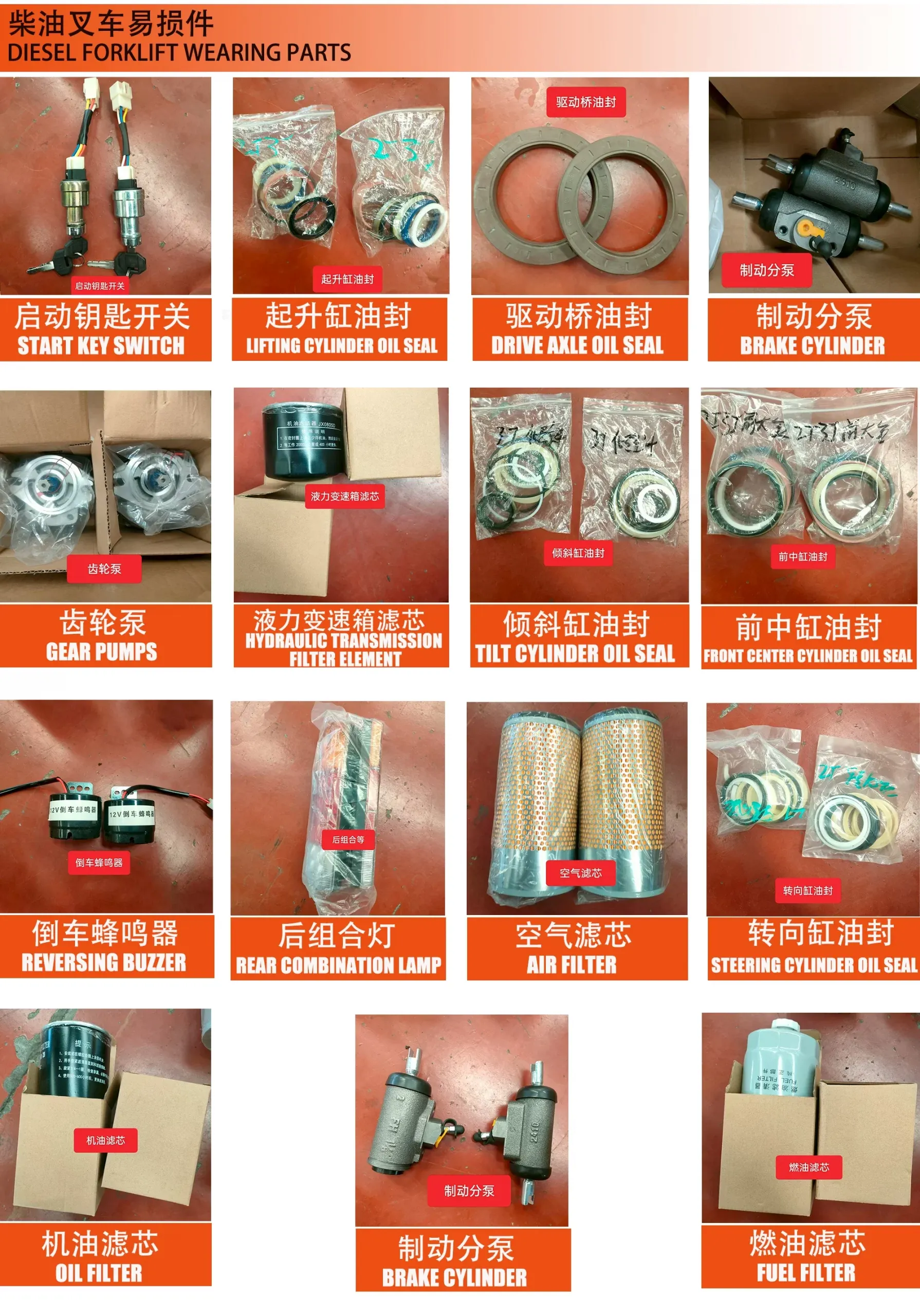
Wearing parts | Oil seals, filters and lights that are easy to source locally |
Safety | Overload protection, anti-rollback, reverse alarm, OPS seat sensor |
Ergonomics | Adjustable shock-absorbing seat, low step, clear forward view, LCD status display |
5. Confirm the Specification Before You Order
Before placing an order, pin down the load chart at your lift height, the fork length you need (1070 mm to 2450 mm covers most cases), the mast stage count, whether you need side shift or a fork positioner, the battery capacity that matches your shift pattern, and the charging arrangement. Getting these wrong is the most common source of expensive rework. Our guide to buying the best electric forklift covers brand selection, sourcing options, and how to structure the specification.
Maintenance Essentials
Electric forklifts need less routine service than diesel, but not none. The essentials are: keep the battery charged within its recommended window and clean the terminals; check and replenish lead-acid electrolyte with distilled water; lubricate axles and hinge points; inspect brakes for response and travel; check tire wear and pressure; and keep the truck clean so debris does not reach the controller and motor. Electrical faults should always stop operation until a qualified technician has checked them.
Following the manufacturer's schedule is what actually protects the five-to-eight-year service life these trucks are capable of. The full procedure is in our electric forklift maintenance guide.
FAQ
What is the difference between an electric forklift and a diesel forklift?
The power source. An electric forklift runs on a battery driving electric motors; a diesel forklift burns fuel in an engine. That single difference drives everything else: emissions, noise, energy cost, maintenance complexity, runtime pattern, and how the machine feels to operate. Electric trucks are quieter, cheaper to run, and simpler to maintain; diesel trucks run longer without refueling and handle rough ground better.
How long does an electric forklift battery last?
A quality battery is rated for roughly 3,000 to 5,000 charge-discharge cycles, which typically works out to five to eight years of normal use. Runtime per charge is about 6 to 8 hours, and a larger battery or a spare pack extends that.
Can an electric forklift be used outdoors?
Yes, on level surfaces and with the right configuration. Standard models are not designed for rain, so outdoor work needs sealed components and appropriate tires. Rough terrain and steep slopes are still diesel territory.
How much does an electric forklift cost?
It depends mostly on capacity, lift height, battery type, and configuration. In the 1 to 5-ton range, Chinese-manufactured electric trucks are generally priced at or below comparable diesel models, and the battery is the single largest cost component. Contact us with your load, lift height, and aisle width for a specific quote.
What tonnage do I need?
Start from the weight of your heaviest regular load, add margin for attachments, then confirm capacity at your actual lift height using the load chart. If your loads vary widely, size for the heavy end rather than the average, or plan for two trucks.
Conclusion
An electric forklift is no longer a niche alternative to diesel. Across counterbalance, reach, VNA, stacker, and pallet truck classes, it covers the full range of warehouse handling at lower operating cost and with zero emissions. The decision that actually matters is not electric versus diesel in the abstract, but which class, capacity, lift height, battery, and aisle fit your specific building and duty cycle.
We manufacture electric forklifts from 1.5 to 10 tons with lift heights from about 3 to 8 meters, and we customize battery capacity, fork length, mast height, attachments, color, and branding. Send us your load weight, lift height, aisle width, and shift pattern, and we will recommend the right configuration.