Oct 27, 2026Electric Forklifts
Types of Stackers: A Complete Pallet Stacker Guide (Manual, Electric & Walkie) 2027
Compare 8 types of stackers: manual, semi electric, walkie, stand-on, reach, counterbalance, piggyback and electric pallet stacker, and how to choose.
Introduction
Quick answer: A stacker — also sold as a pallet stacker or stacker truck — is a compact lift-and-move machine used for loading, unloading and short-distance transport in warehouses and factories. There are eight common types of electric and manual stackers — manual hydraulic, semi-electric, full-electric walkie, stand-on, reach, counterbalance, piggyback and the electric pallet truck — and the right one depends on your load, lift height, budget and how you prefer to operate it.
Note on figures: Load and lift-height ranges below are typical values for each category. Confirm the exact spec and quotation with the manufacturer before you order.
What is a stacker?
A stacker is equipment for loading and unloading goods and moving them over short distances, widely used in warehouses, factories and similar sites. Its main jobs are lifting, transporting and stacking. Most stackers use a hydraulic system, operated either manually or electrically, so they can handle heavy loads and greatly improve working efficiency. A battery-powered stacker works much like an electric forklift, with all the controls grouped on the handle. Because the category is broad, the same machine is often listed as a pallet stacker, a stacker truck or an electric pallet stacker — these names are largely interchangeable, so compare the spec rather than the label when you request quotes. For a broader look at electric forklift types and how to choose one, see our guide.
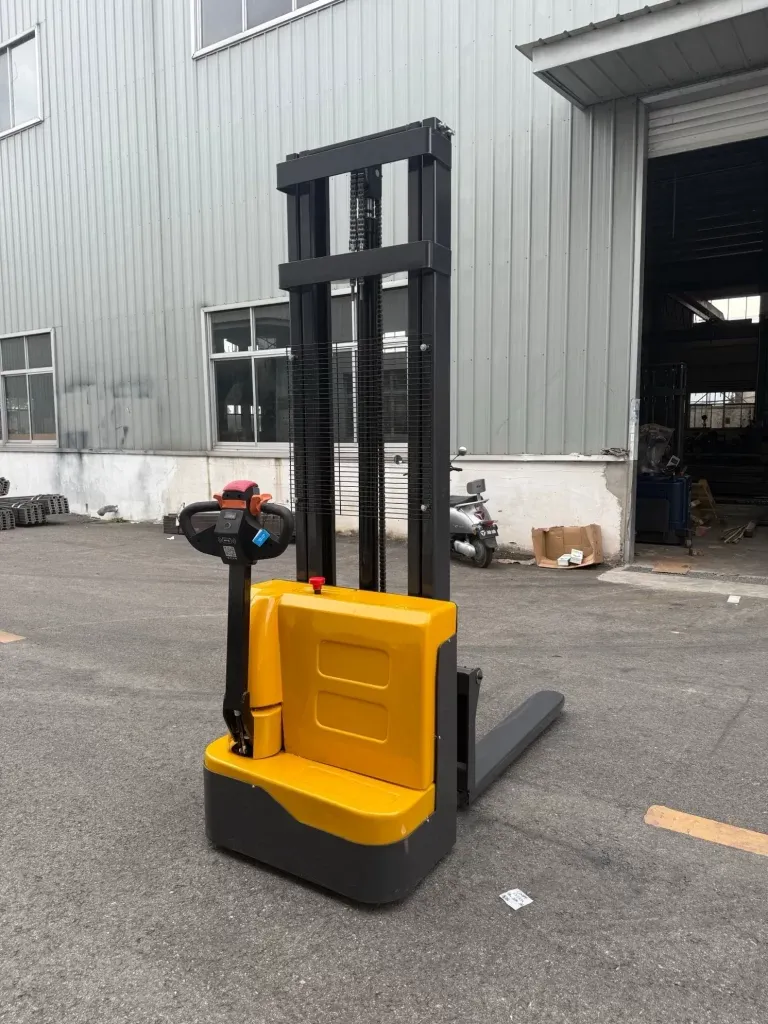
The 8 main types of stackers
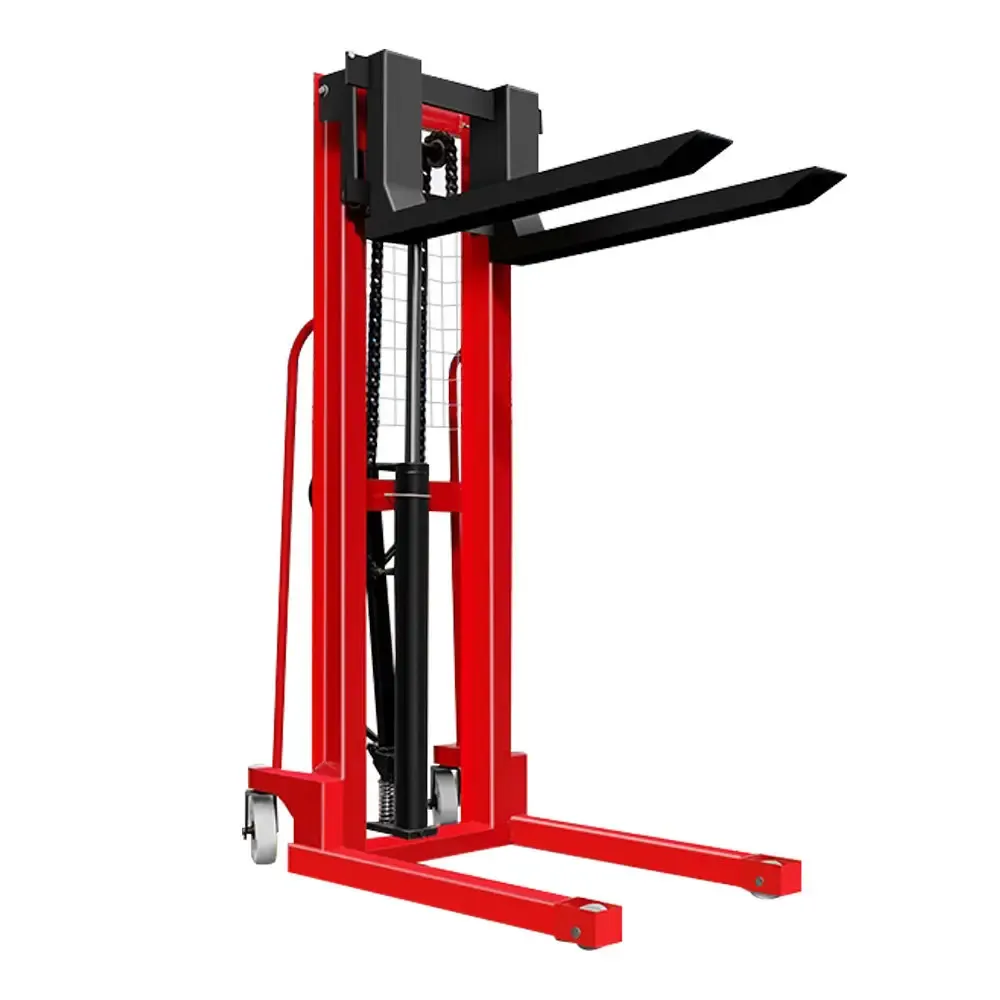
1. Manual hydraulic stacker
A manual hydraulic stacker — also called a hydraulic stacker or simply a manual stacker — is a pollution-free option with nimble transport, flexible operation and a small turning radius. You raise the forks by hand and push or pull the truck to move it. Typical loads are 0.5 t, 1 t and 2 t, with a maximum lift of about 3 m. It is the simple, entry-level stacker and offers strong value for money.
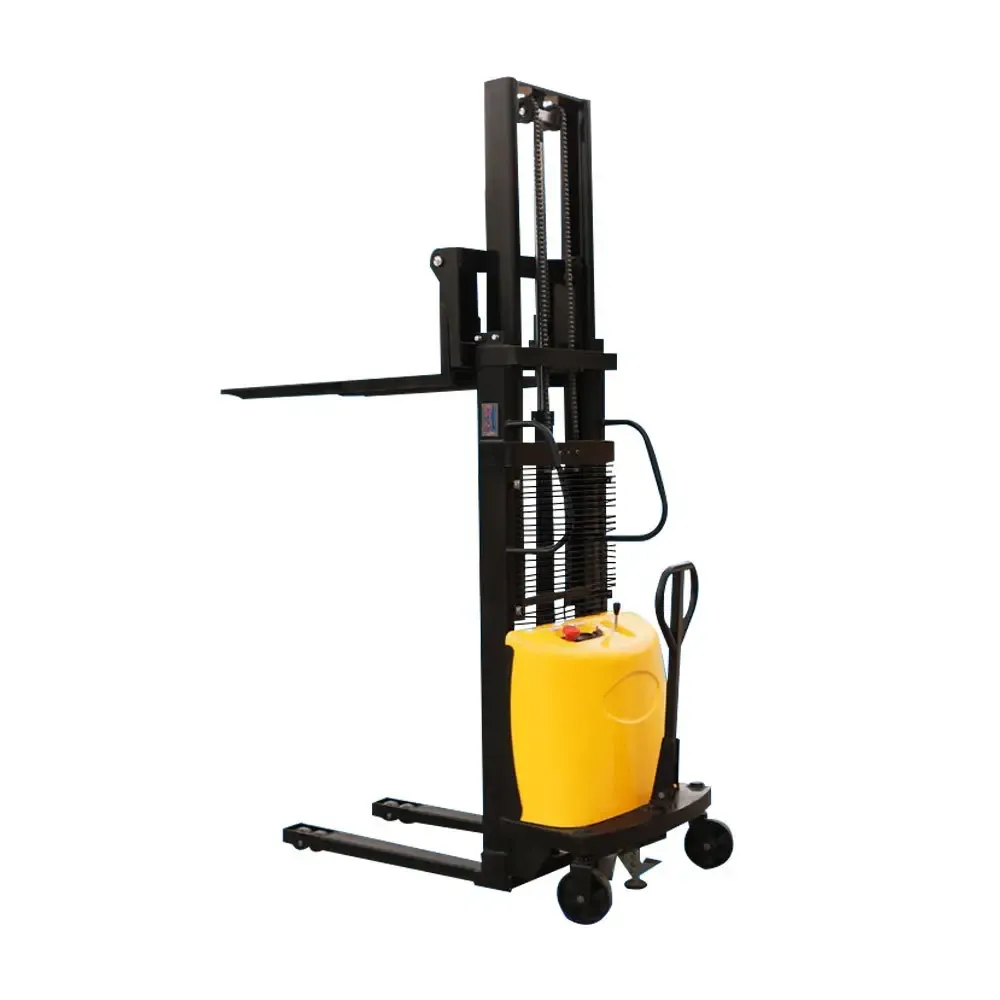
2. Semi-electric stacker
A semi electric stacker (often written semi-electric stacker) adds a battery and a lift drive motor — an upgraded version of the manual hydraulic stacker. Its selling point is effort-saving lifting: buttons control the raise and lower functions, while the operator still pulls or pushes the machine to travel. Typical load is 1–2 t with a lift height of around 3 m.
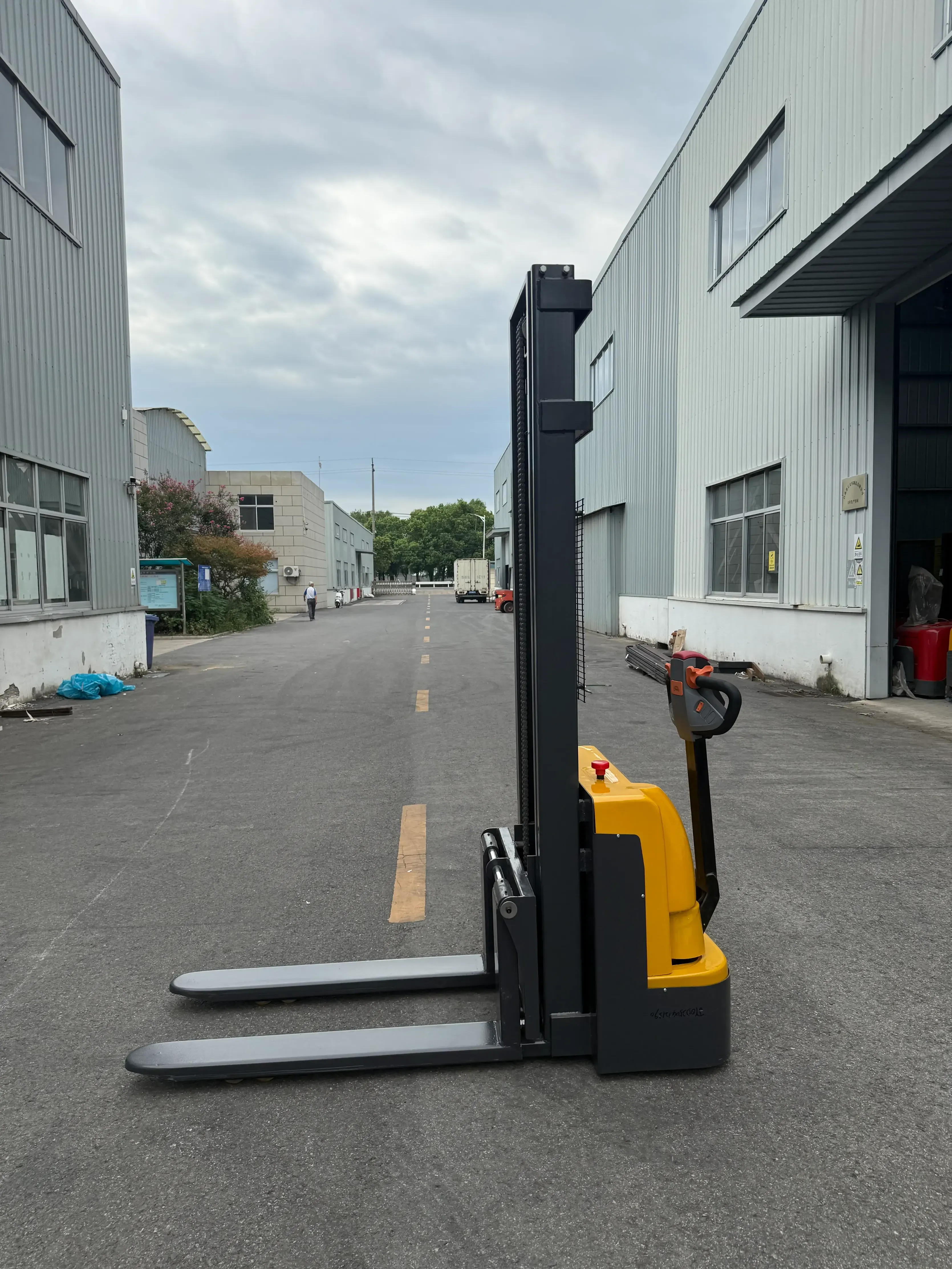
3. Full-electric walkie stacker
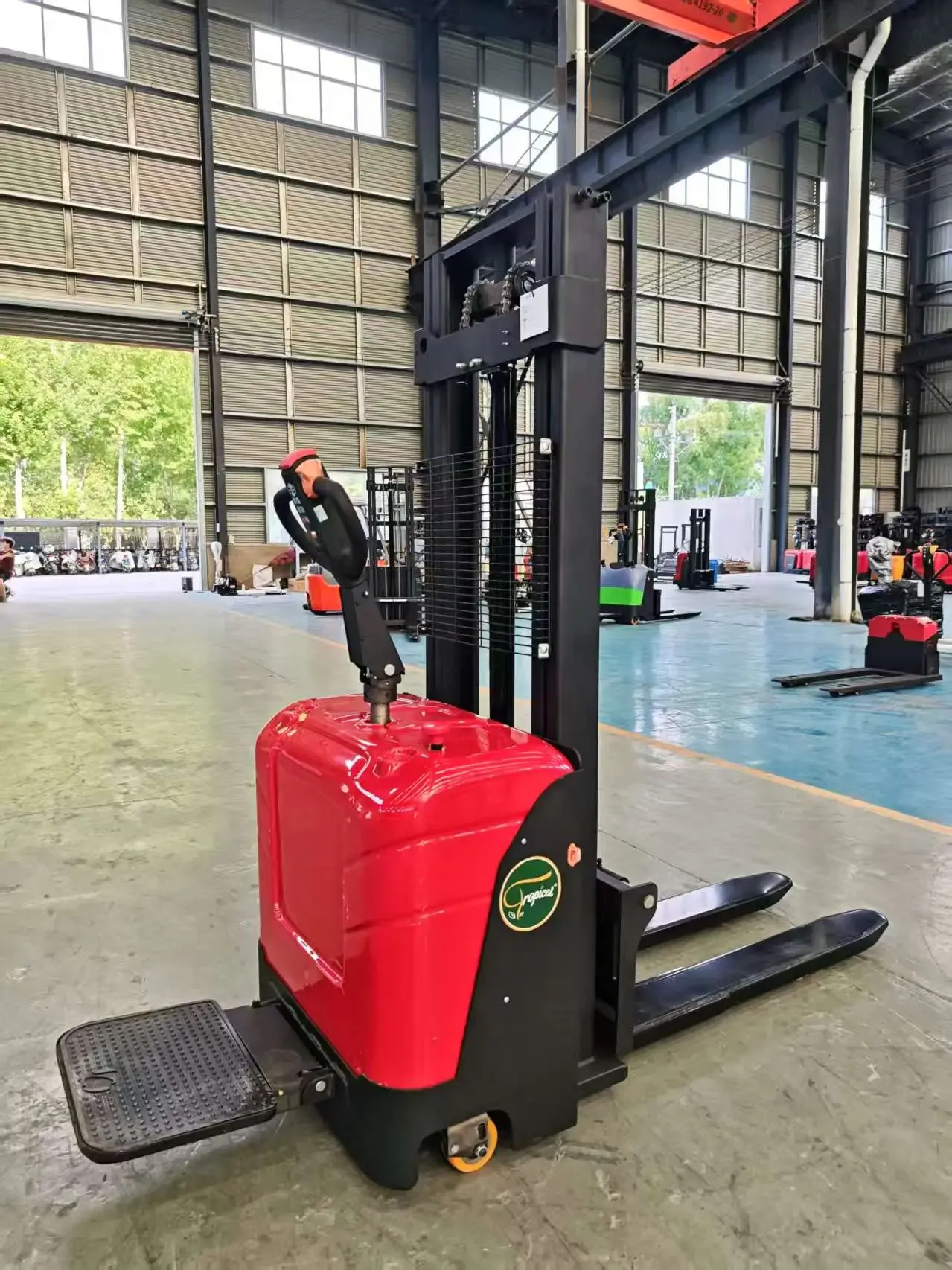
A full-electric walkie stacker has a battery, a drive-wheel motor, a lift motor, a control handle and support legs. It is motor-driven, so it saves energy and effort. The operator stands behind the machine and uses the handle to control forward and reverse travel as well as fork raise and lower. Typical load is 1–2 t — including the popular 2 ton electric stacker — with a lift height of about 2–5 m.
4. Stand-on stacker
A stand-on stacker carries a forklift battery, a drive-wheel motor, a lift motor, a control handle and a folding platform. The operator stands on the platform, which makes long shifts far less tiring. Typical load is 1–2 t with a lift height of 3–5 m.
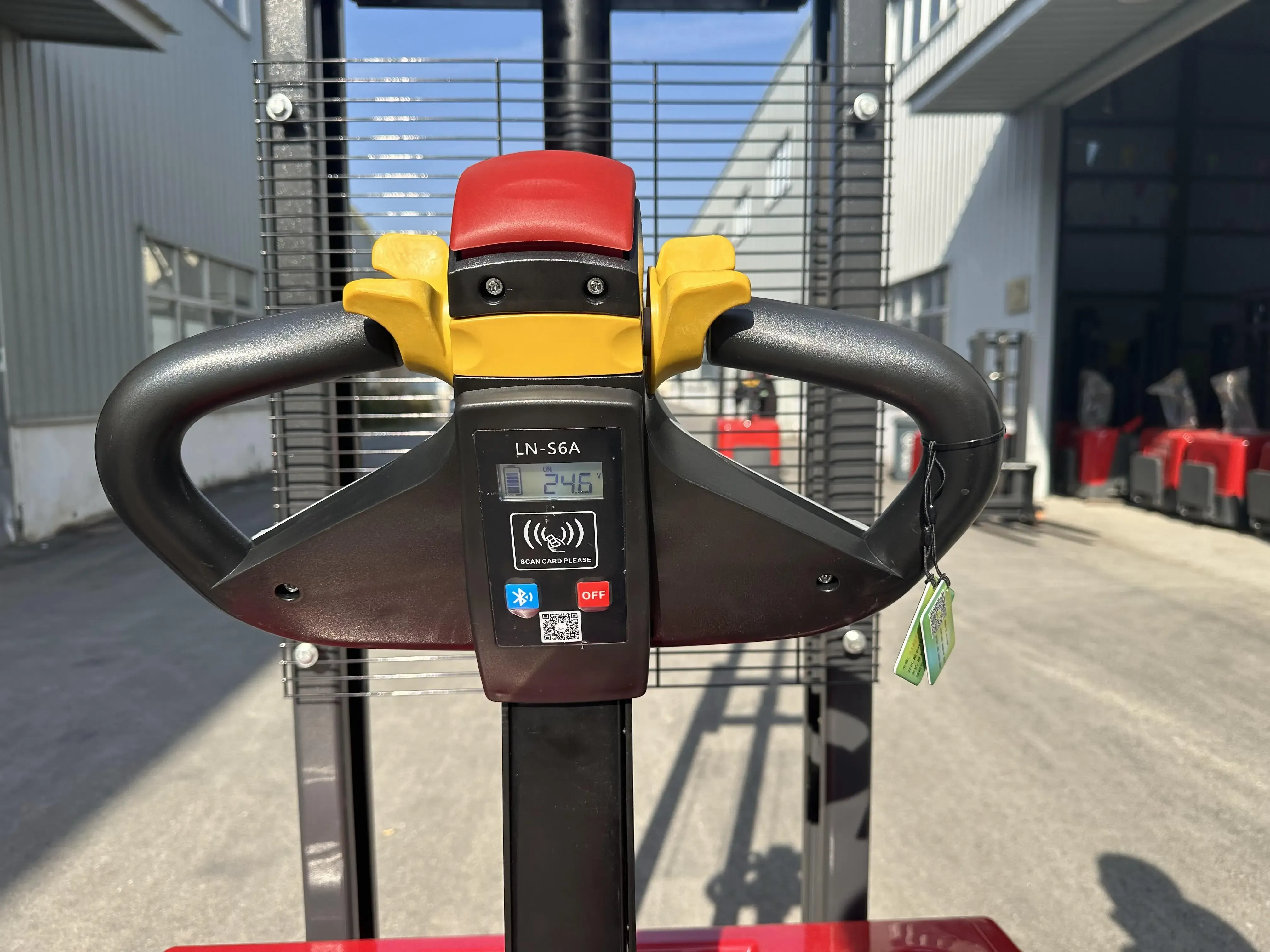
5. Reach stacker
A reach stacker works like a reach truck: its mast can move, so the forks reach into the rack instead of the whole truck entering the aisle. The operator stands on the platform and controls the forks forward and backward. Typical load is 1–2 t with a lift height of 3–5 m. If you are comparing high-rack options, our guide to reach truck vs VNA truck covers aisle width, lift height and throughput.
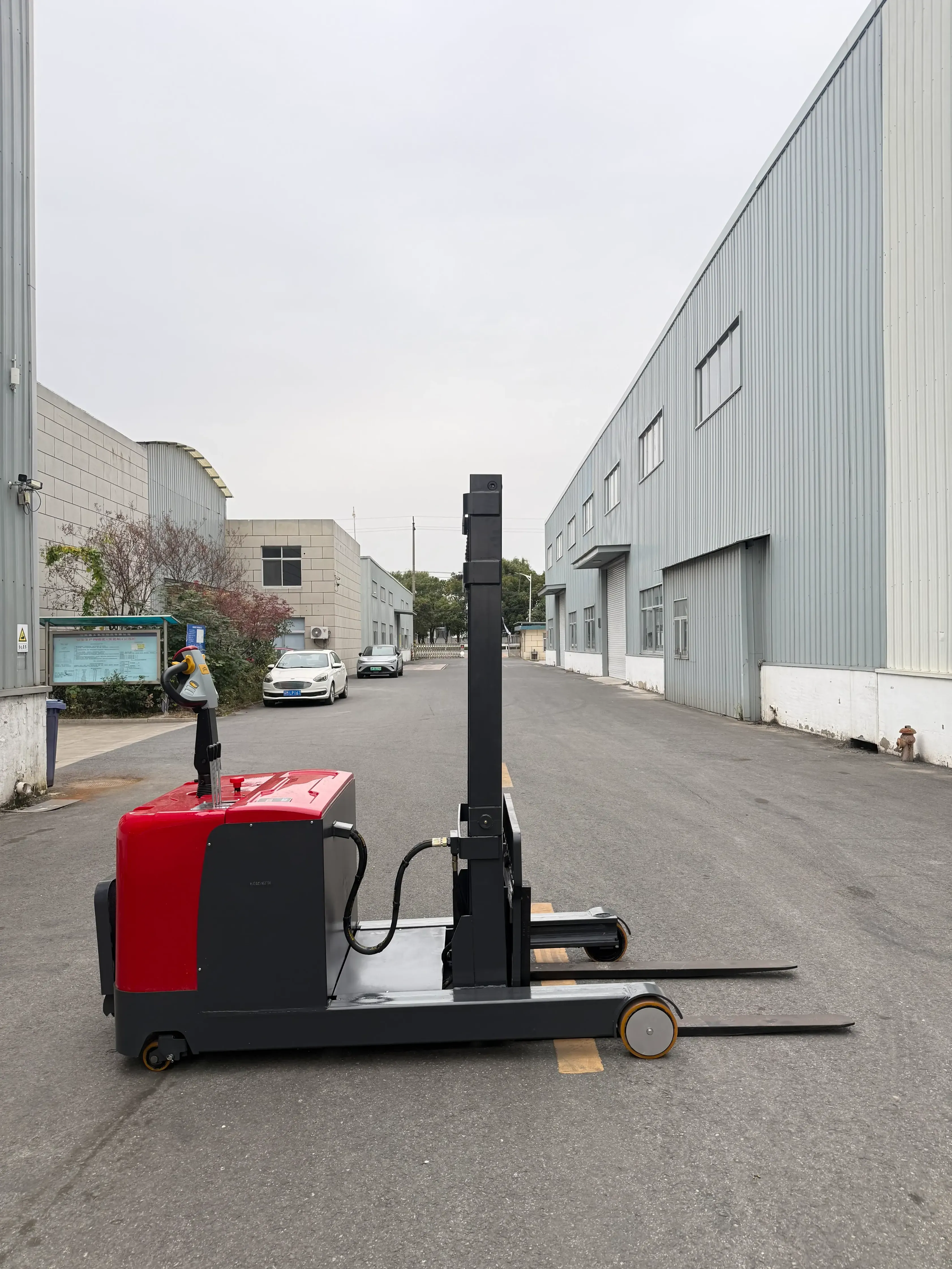
6. Counterbalance stacker
A counterbalance stacker has no front legs; instead, a counterweight at the rear balances the load, and the forks can tilt slightly forward and back. It is a full-electric stacker with a stand-on platform. With no legs it suits a wide range of loads and behaves much like a traditional internal-combustion forklift. The operator stands on the folding platform.
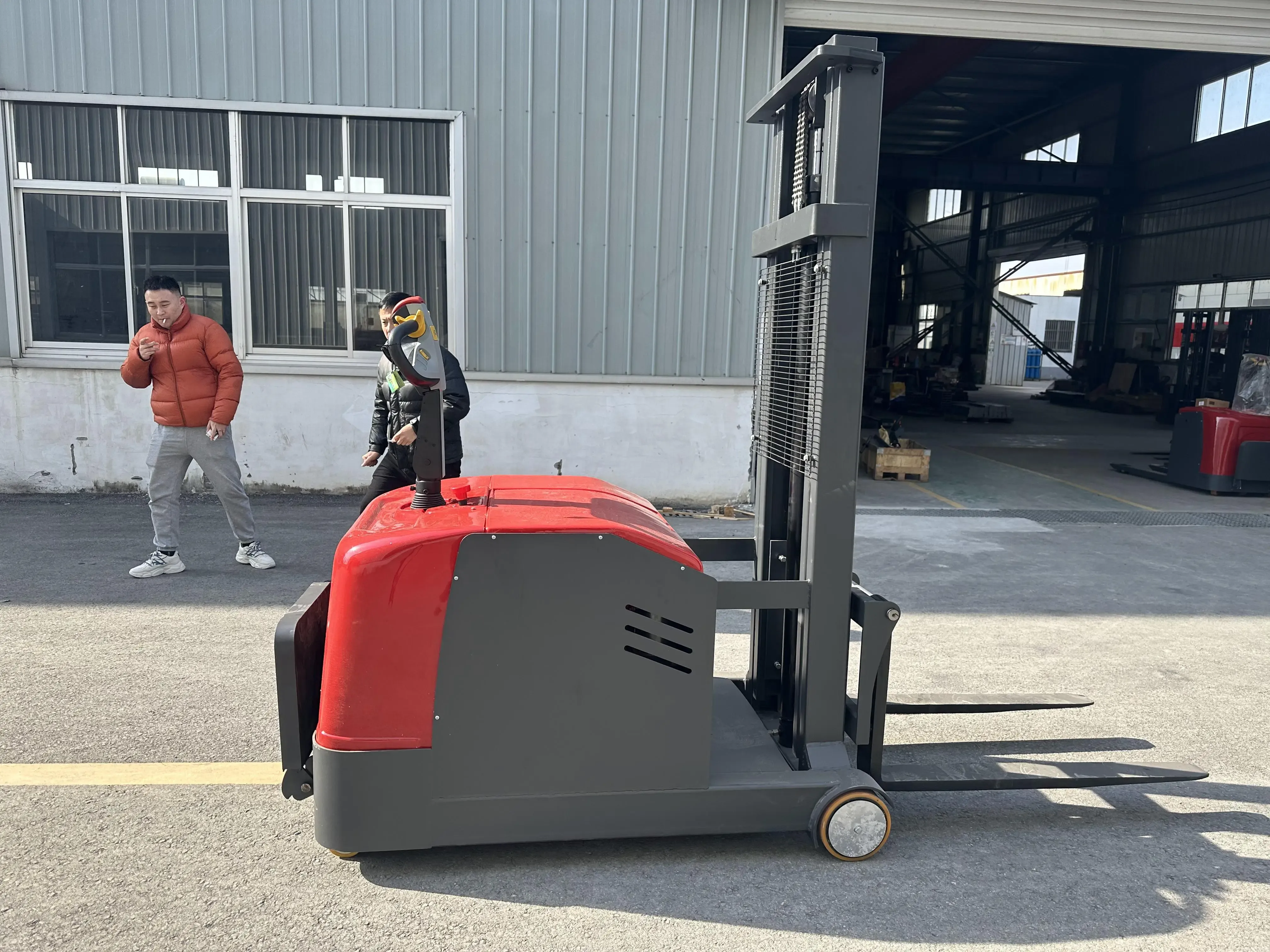
7. Piggyback (truck-mounted) stacker
A piggyback stacker is a small unit that can load and unload goods onto a truck and travel with the vehicle. It is compact and flexible, and can place goods onto pallets. Typical load is 1–2 t with a lift height of 1.5–2 m.
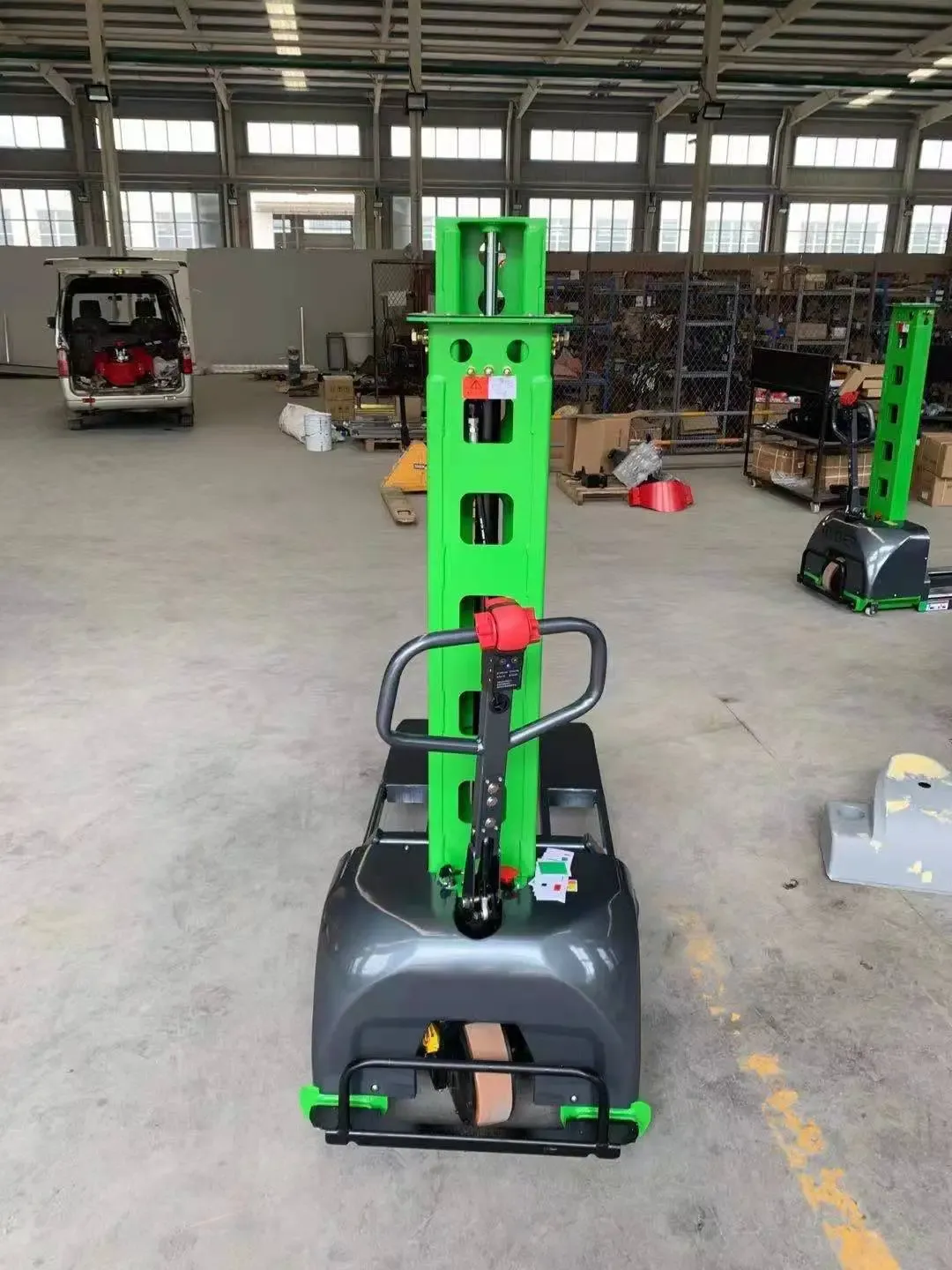
8. Electric pallet truck (electric pallet jack)/self-lifting stackers
An electric pallet truck/self-lifting stacker is the powered version of a manual pallet jack. Buttons control travel and lifting, so there is no need to pull the truck or pump the lever. Typical load is 2–3 t with a lift height of 10–20 cm — ideal for moving pallets at floor level.
Type | Power | Load | Lift height | Best for |
Manual hydraulic | Manual | 0.5–2 t | up to 3 m | Low-cost, light-duty work |
Semi-electric | Battery lift, manual travel | 1–2 t | ~3 m | Effortless lifting on a budget |
Full-electric walkie | Battery, motor drive + lift | 1–2 t | 2–5 m | General warehouse handling |
Stand-on | Battery, motor drive + lift | 1–2 t | 3–5 m | Longer shifts, less fatigue |
Reach stacker | Battery, moving mast | 1–2 t | 3–5 m | Deep racking, narrow aisles |
Counterbalance stacker | Battery, rear counterweight | 1–2 t | 3–5 m | Leg-free, forklift-like handling |
Piggyback | Battery, truck-mounted | 1–2 t | 1.5–2 m | Loading and unloading trucks |
Electric pallet truck | Battery | 2–3 t | 10–20 cm | Moving pallets at floor level |
Custom options and modifications
Widened legs. The lift height of an electric stacker is limited by its relatively light counterweight or by the walkie structure. As a rule, if you need to lift above 4.5 m, we recommend widened legs for extra stability.
Rough-terrain stacker. Electric stackers have small wheels. Fitting larger wheels lets the truck handle uneven ground, raises the chassis and improves mobility.
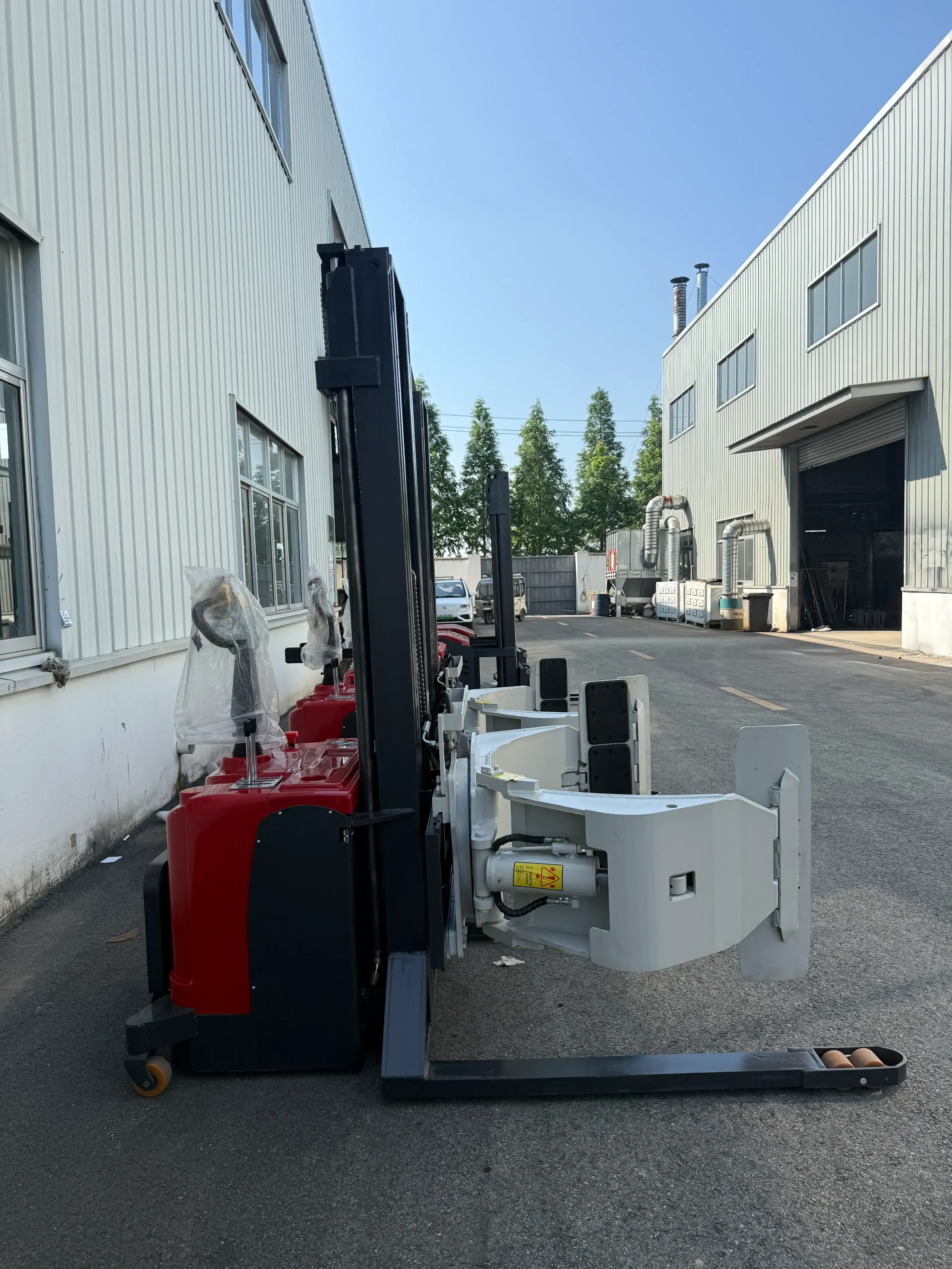
Attachments. Electric stackers can be customised with attachments such as a paper roll clamp, so one platform can handle more than pallets.
Below is a ride-on stacker fitted with a paper clamp, featuring rotation and lift/lower functions.The outriggers have been widened to ensure stability.
Electric stacker vs counterbalance electric forklift
Feature | Electric stacker | Counterbalance electric forklift |
Load capacity | 1–2 t | 1–10 t |
Lift height | up to ~5 m | ~6 m |
Price | Lower | Higher |
Turning radius | Small | Large |
Customisation | Limited | Wide range of attachments |
In short, the electric stacker has a smaller load, lift height and turning radius — and a lower electric stacker price — which makes it ideal for simple material handling. The counterbalance electric forklift offers far more customisation and a more comfortable drive, so it suits long-term, professional handling. Both are indoor trucks with zero emissions and low noise.
How to choose the right stacker type
When choosing an electric stacker for warehouse work, first confirm the load and the rack height. Then decide on your budget — full-electric or semi-electric — and your preferred operating style: are you comfortable walking behind a walkie stacker, or would you rather stand on a stand-on platform? Answer those three questions and the right type usually becomes obvious.
Questions about stackers, electric forklifts or reach trucks? Talk to our team.
FAQ
Can electric stackers be customised? Yes. Electric stackers support a wide range of customisation, including attachments and lift height, with an MOQ of one unit.
How long can an electric stacker work on one charge? It depends on battery capacity. A typical working time is 4–6 hours.
What battery does an electric stacker use? The batteries are similar to those used on electric forklifts — mainly lead-acid and lithium-ion.