Types of Pallet Trucks: 7 Warehouse Models Explained (Manual, Electric, Off-Road) 2027
Types of pallet trucks: manual, semi electric, electric, off-road and stand-on compared on load, wheels and route length. We build them - ask us anything.
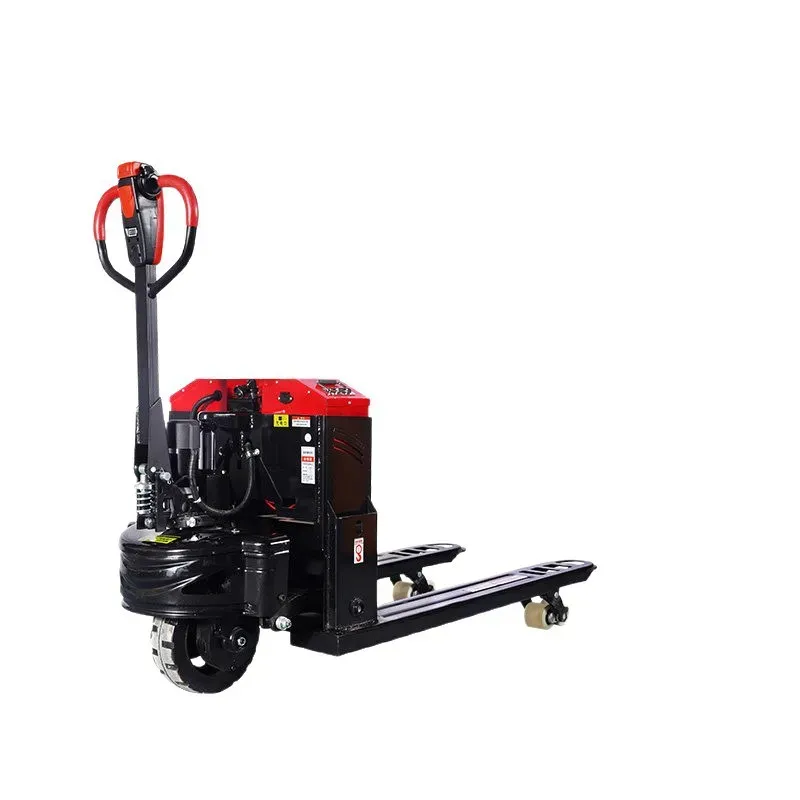
Quick answer: There are five core types of pallet trucks — manual, semi electric, full electric, off-road and stand-on — plus three manual variants: scissor lift, built-in scale and drum clamp. Manual models carry 2–5 t and cost least but tire the operator over long runs; electric models carry the same load with motor drive; the off-road pallet truck adds large solid rubber tires for yards and uneven ground; the stand-on version adds a folding platform for routes of 30–70 m.
A warehouse pallet truck is the cheapest way to move a pallet. It is an indoor forklift in miniature, with a very small turning radius, which is why it works in aisles a counterbalance truck cannot enter. But "pallet truck" covers machines that behave very differently — a manual pump truck and a stand-on electric model share a silhouette and almost nothing else. This guide walks through every type, then covers the two decisions that actually determine whether the machine survives five years: wheel choice and build quality.
What is a pallet truck?
A pallet truck is logistics handling equipment whose job is to lift and move goods. On a manual pallet truck the forks slide into the pallet openings, the operator pumps a hydraulic system by hand to raise the load, and then pulls the whole thing along. It is the simplest, most effective and most common tool in pallet transport — the machine that moved warehouses from human lifting to mechanical handling.
The same machine has several names, and they are interchangeable. What North American buyers call a pallet jack, British and Irish catalogues call a pallet truck or a pump truck; some export markets list it as a pallet pump, and a few simply say pallet mover. Add the word "hand" and you get the hand pallet truck — the manual version — while "hydraulic" and "pump" describe the same lift mechanism rather than a different product. So a 2.5 t machine can reach you as a hand pallet truck, a pallet jack or a pump truck depending on which catalogue it came from. Compare the specification, not the label: capacity, fork size, wheel type and cylinder construction are what actually differ.
A pallet truck is an indoor forklift with a very small turning radius, so it fits narrow aisles. That single characteristic explains most of its use: not lifting to height, but moving pallets from A to B quickly, in tight space, with the load staying close to the floor.
If you are weighing a pallet truck against a machine that lifts, our comparison of electric pallet trucks vs stackers sets out the lift-height and capacity split in one table.
The main types of pallet trucks
1. Manual pallet truck
A manual pallet truck — also called a manual hydraulic pallet truck — carries 2–5 t, and both lifting and travel are done by human power. Value for money is high, which is why it is so widely used. Its automation and intelligence are limited, but it is the machine that carried material handling from manual labour into mechanisation. Effort rating: 4 out of 5 stars — the load is easy, the walking is not.
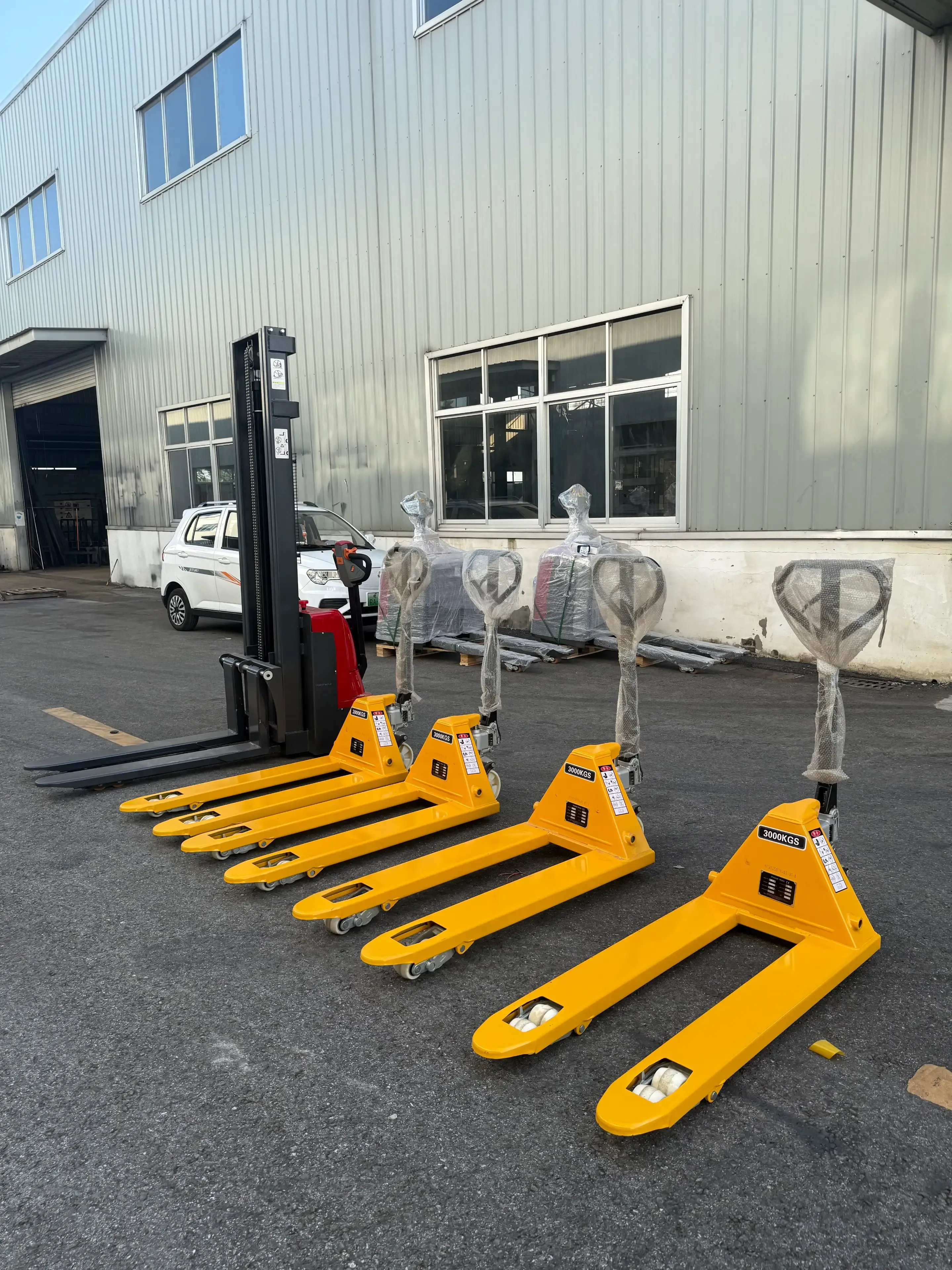
2. Semi electric pallet truck
A semi electric pallet truck carries 2–5 t. Lifting is still done by hand through a hydraulic pump, but travel is motor-driven. In essence it is a small electric forklift with a battery on board: the operator pumps to lift, then drives. Effort rating: 3 out of 5 stars. It suits sites that lift occasionally but cover ground constantly.
3. Full electric pallet truck
A full electric pallet truck — commonly searched as electric pallet jack, and known in the trade as CBD — carries 2–5 t with both lift and travel motor-driven. The operator only works the handle. Its automation level matches an internal-combustion forklift, but the power source is a battery, which is what makes it quiet, emission-free and cheap to run. That combination makes it the default choice for indoor work in food and other hygiene-sensitive industries, and the industry treats it as the type with the most long-term potential.
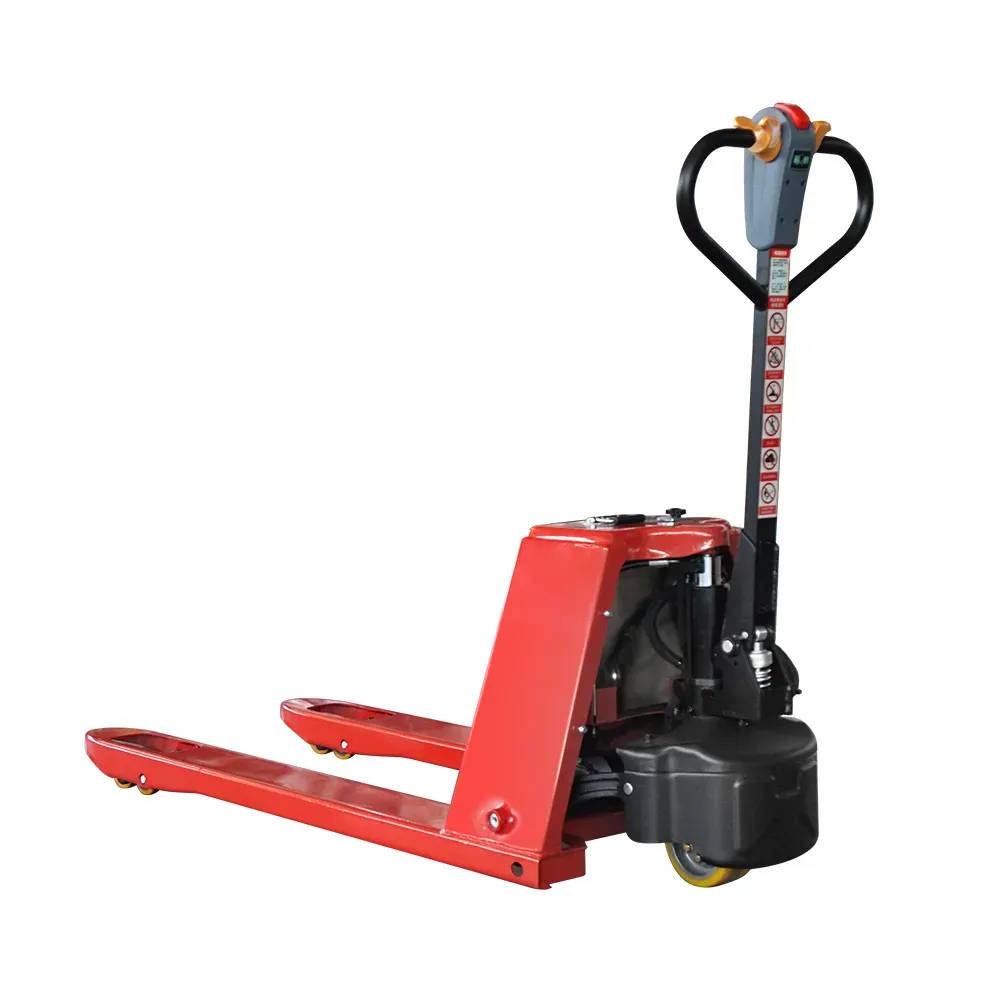
The limit is real, though: battery capacity constrains power and working time, so a single-shift machine is comfortable and a three-shift machine needs planning. Effort rating: 2.5 out of 5 stars.
4. Off-road pallet truck
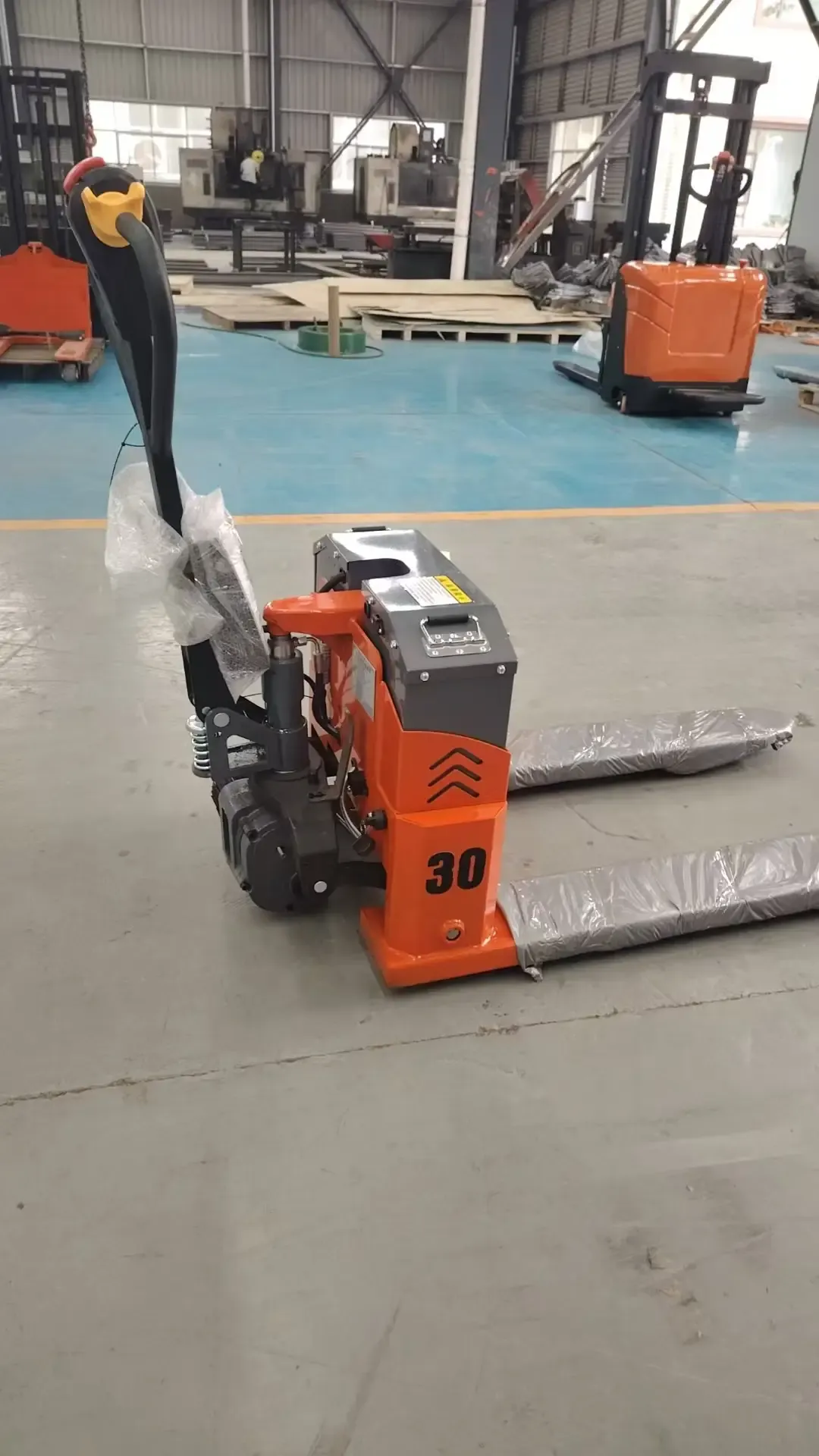
An off-road pallet truck — also searched as rough terrain pallet truck, all terrain pallet truck or outdoor pallet truck — is a different animal from the warehouse models above, and buyers find it with a different set of search terms. It carries 2–5 t and is fitted with large solid rubber tires instead of the polyurethane or nylon casters used indoors.
That single change defines the machine. Solid rubber tires have a much larger diameter and a deeper contact patch, so the truck rolls over gravel, packed earth, yard concrete and potholes instead of digging in. The chassis sits higher, so a solid rubber tire pallet truck does not scrape its body on uneven ground — the failure that ends most indoor trucks sent outdoors. If your route crosses from a warehouse floor onto a yard, a ramp or a truck bed, this is the variant to price.
Two practical notes. First, an off-road model is slower and heavier than an indoor one, so do not buy it for a smooth floor where a standard electric pallet truck would be quicker. Second, tire choice is not cosmetic — see the wheel section below. For the wider question of what electric equipment can handle outdoors, our guide to indoor vs outdoor electric forklifts and rough terrain covers rain, ground conditions and protection ratings.
5. Stand-on pallet truck
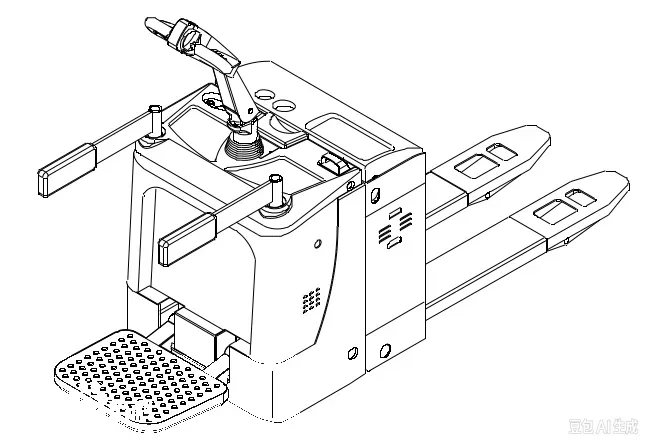
A stand on pallet truck carries 2–5 t and adds a folding platform and a protective arm. The operator stands on the machine instead of walking behind it, which raises travel speed and cuts fatigue over distance. On a long picking route this is the difference between a full shift and an exhausted operator.
6. Other pallet truck variants
Three more manual variants are worth knowing, because they solve specific jobs that a standard truck cannot:
- Scissor lift pallet truck — lift height from 50 cm to 190 cm, so the pallet can be raised to a working height for picking or loading rather than merely lifted off the floor.
- Pallet truck with built-in scale — weighs the load as it is moved, which removes a separate weighing step in receiving and shipping.
- Drum clamp truck — grips and rotates a drum instead of carrying a pallet.
When should you use a pallet truck?
A manual pallet truck and an electric pallet jack both move loads point to point on one level. The difference is distance.
- Up to about 15 m, frequent trips, loading bays. A hand pallet truck is enough. Its small size suits almost any site, but at 2 t the physical effort becomes real, so it belongs in short repetitive work — above all in the loading and unloading area. Every truck or container that carries a manual pallet truck on board makes loading faster and removes the need for site infrastructure.
- Around 30 m. A powered pallet truck is the better answer. Speed is controlled by a stepless throttle on the handle that follows the operator's walking pace, which cuts fatigue without compromising safety.
- 30–70 m. Use a powered pallet truck with a folding platform — the stand-on model. The operator rides instead of walking, and maximum speed rises by close to 60%.
How to choose a pallet truck
Two specifications decide the purchase before price does.
Working scenario. If material moves often and over long periods, choose an electric pallet truck. Then match the type to distance and floor: a flat, smooth floor needs only standard casters; a route of 30–70 m calls for a stand-on model, which buys you roughly 60% more throughput. A route that leaves the building calls for the off-road variant.
Load and pallet size. Measure the actual weight of the goods, then choose capacity with margin — a 5 t truck happily does the work of a 2 t or 3 t machine. Then match the forks: standard fork length is 1220 mm, with an outer width of 550 mm or 650 mm. Measure your own pallets rather than assuming, because a mismatch here is the most common and most expensive ordering error. If aisle width is also tight, our guide to matching a forklift to warehouse aisles explains how to measure turning radius and stacking width.
Build quality: cylinder, motor and wheels
Three components decide whether a pallet jack lasts: the hydraulic cylinder, the motor, and the wheels.
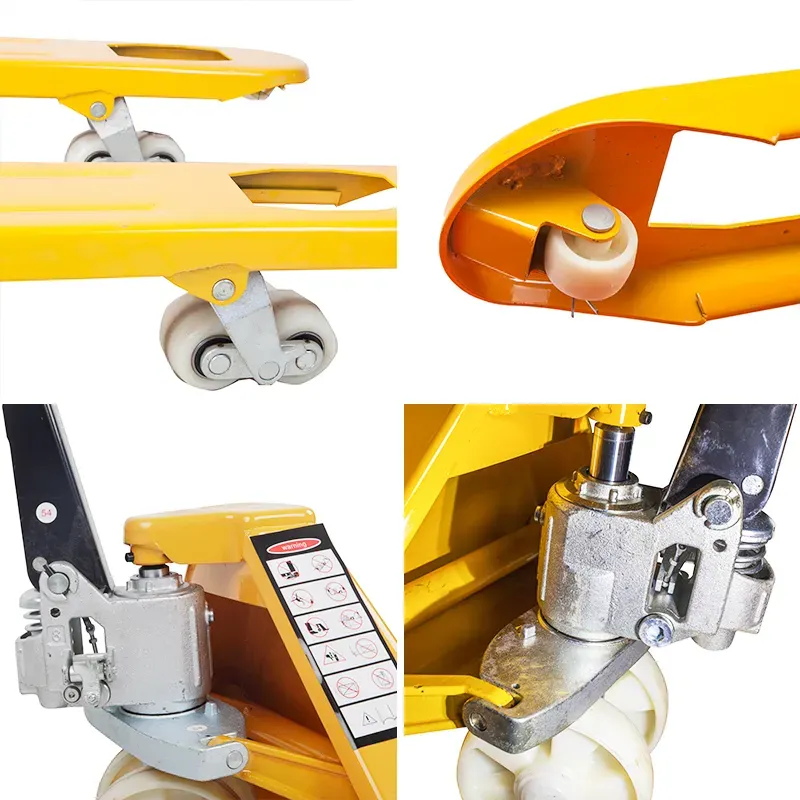
The cylinder. A thickened cylinder wall with a strong seal is what keeps oil inside. The better units use a seamless cast cylinder body rather than a welded assembly, because every weld is a potential leak path — and a leak costs you both oil and lifting force.
The motor. A pure copper motor sustains long runs without overheating, which is what keeps throughput steady across a shift.
The wheels. This is where most buyers under-specify, so it is worth looking at the caster comparison directly. In the side-by-side we show buyers, a red polyurethane (PU) wheel sits on the left and a white nylon wheel on the right, mounted on the same truck.
- Polyurethane wheels resist wear, absorb shock and vibration, and run quietly — that is why the category is sold as a low-noise caster. They suit marble-finish floors and epoxy-coated floors, where a hard wheel would mark the surface and a noisy one would be a nuisance. PU wheels are bonded to a steel core, which is what gives them their service life.
- Nylon wheels have low rolling resistance, so the truck pulls easily and the operator works less. They do not corrode and they suit concrete floors. The trade-off is noise and floor marking on soft or coated surfaces.
Wider casters are also more stable under load — the same truck with a wider wheel track tips less when a pallet is off-centre. And if the route is outdoors, none of the above applies: that is the solid rubber tire case described in the off-road section. Spare wheels and casters can be ordered from the manufacturer separately, so a worn set does not mean a new truck.
For battery chemistry — which affects weight distribution and therefore wheel loading — see our comparison of lithium-ion vs lead-acid forklift batteries.
Buying: factory or platform
If you are buying in volume, import from China. Chinese factories such as Senchi Machinery supply hand pallet trucks, electric pallet jacks and a full range of indoor forklifts, and the unit economics only work at container volumes. For a single machine, buying from a platform is simpler and often cheaper once freight is counted.
What separates a real factory from a trading company is what the specification sheet commits to. The product sheet we send buyers is built around four claims — strong load capacity, thickened and reinforced structure, and a one-piece cylinder — supported by three component choices: an imported valve core, a forged rocker arm and selected steel. The detail panel underneath lists what that means in practice: an upgraded fork, thickened steel plate, wear-resistant casters, a comfortable handle, no easy oil leakage, no easy deformation, a one-year warranty and non-standard customisation.
That last item matters more than it looks. A factory that offers non-standard builds can match your pallet width, your voltage and your plug type at the order stage; a trading company usually cannot. If importing is new to you, our guide to how to import a forklift from China covers documents, duties and shipping. For indicative pricing across the range, see the electric forklift price and rental cost guide.
FAQ
Are you an electric pallet truck manufacturer?
Yes. We are an electric pallet truck manufacturer and we support customisation of the tires, fork length and dimensions, high-capacity batteries, logo and colour. Tell us the floor surface and the route length and we will specify the caster and the drive type to match.
What is your MOQ?
One unit. Our factory accepts single-machine orders, and we supply the plug and voltage that suit your local supply so the truck works on arrival.
What other manual pallet truck types are there?
Beyond the standard manual hydraulic truck, there are the scissor lift pallet truck (lift height 50–190 cm), the pallet truck with a built-in scale, the basic hand pallet truck and the manual drum clamp truck.
Not sure which type fits your route?
Tell us three things — the load, the distance and the floor — and we will tell you which type of pallet truck you actually need, and which wheels to put on it. We manufacture manual pallet trucks, electric pallet trucks, off-road models, stackers, electric forklifts and reach trucks, and we have been building and exporting them for more than ten years. Ask us anything, however small; you will get a straight answer rather than a sales pitch.