Oct 19, 2026Diesel Forklifts
Diesel Forklift Buying Guide 2027: Types, Tonnes, Prices & How to Choose
Need a diesel forklift in 2027? Compare types, a 3t/4t/5t tonnage matrix, indicative FOB prices, and a 3-step buying checklist. Read the guide.
Diesel Forklift Buying Guide 2027: Types, Tonnes, Prices & How to Choose
Quick answer: When you need to move heavy loads (3–10+ tonnes), work outdoors or on rough ground, and run long shifts where fast refueling matters, a diesel forklift is the right choice. In 2027, budget roughly USUSD8,000–20,000 for a new unit (FOB China), with 3-ton, 4-ton and 5-ton models covering about 80% of buyers. Choose by load weight + lift height + duty cycle, and verify emissions tier, mast type, build quality and after-sales before ordering. This guide covers types, a tonnage matrix, a 3-step buying checklist, 2027 reference prices, how to choose a high-quality diesel forklift, and how to import one with a Chinese manufacturer.
Note on figures: General industry context (price bands, duty-cycle logic) is stated as common knowledge. The diesel-shrink trend and any specific model spec or quote are indicative / to be verified — the contraction rate in particular is a planning assumption, not a sourced market figure; confirm against a current report before publishing.
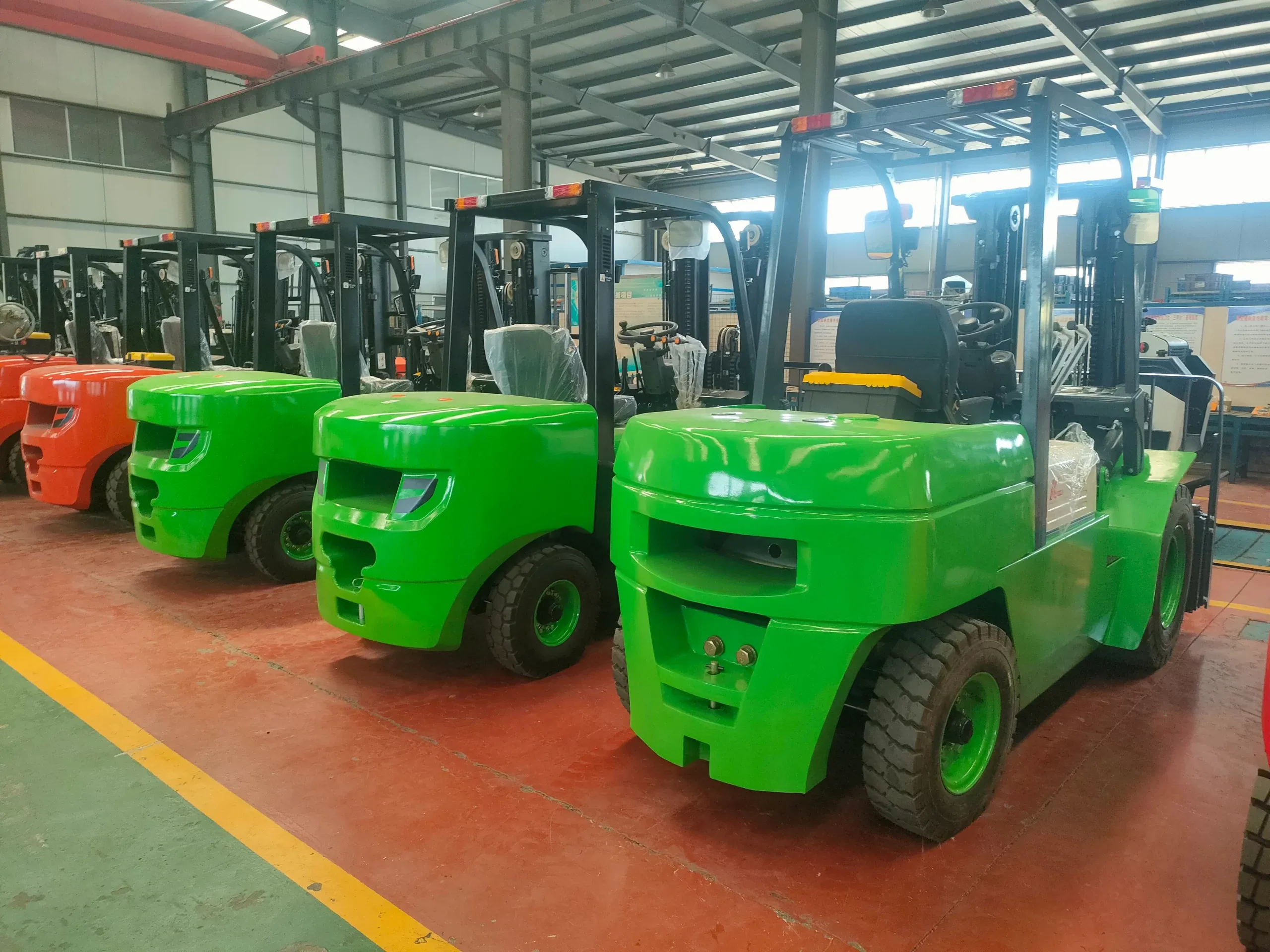
Why This Guide Matters in 2027
- Diesel still owns the heavy, outdoor job. Even as electric forklifts gain share indoors, diesel remains the default for 5-ton+ lifting, lumber yards, ports, construction and any site without reliable charging.
- The category is shifting, so buy smart. As electrification accelerates, diesel's slice of the forklift market is widely seen as a declining segment — planning assumptions suggest a low-single-digit annual contraction (the roughly -4% figure is a planning estimate, not a sourced report). That means buyers should optimize for total cost of ownership, not just the sticker price — fuel use, service intervals and resale all matter more in a softening market.
- China supply stays price-competitive. FOB pricing from established Chinese manufacturers is typically 30–50% below EU/US list on comparable capacity, with lead times around 15–35 days ex-works.
- Diesel's power advantage. Compared with electric, the IC engine delivers abundant power — generally, at the same tonnage, diesel > gasoline = LPG > electric.
- Operator habits. Many operators accustomed to IC forklifts actually prefer the engine's roar and the feel of driving them.
What Is a Diesel Forklift?
A diesel forklift is a counterbalance lift truck powered by a diesel internal-combustion engine. The engine burns fuel to drive a hydraulic pump that raises the mast and tilts the carriage.
Core traits that define the category:
Trait | What it means for you |
High low-end torque | Pulls heavy loads from a standstill; ideal for ramps and grades, with strong power |
No battery to recharge | Refuel in minutes and keep working — no charging downtime, can run 24 hours |
Rugged in harsh conditions | Performs stably in rain, dust, mud and uneven surfaces |
Higher emissions & noise | Usually restricted indoors without ventilation |
How it differs from the alternatives:
- vs. Electric: Electric is cleaner, quieter and cheaper per hour indoors, but limited by battery capacity and charge time, so it struggles with heavy/outdoor continuous duty. Diesel has a big advantage in runtime and harsh-environment operation.
- vs. LPG/Gas: LPG is cleaner than diesel and works indoors with ventilation, but has less low-end grunt and needs gas-bottle handling. LPG forklifts also cost more than diesel because of the more complex engine and technology.
Diesel vs Electric vs LPG — Comparison Table
Factor | Diesel | Electric (Li-ion/Lead-acid) | LPG |
Best use | Outdoor, heavy, rough terrain | Indoor, clean, light–medium | Indoor + outdoor, medium |
Initial price (indicative) | USD8k–20k | USD15k–45k | USD10k–22k |
Fuel/energy cost / hr | Medium–high | Low | Medium |
Refuel / recharge | Minutes | 1–8 hrs | Minutes (bottle swap) |
Max capacity | Up to 50t+ | Usually ≤ 10t | Usually ≤ 10t |
Emissions | Highest | Zero at point of use | Medium |
Maintenance | Medium | Low | Medium |
Indicative ranges — verify against actual quotes.
Types of Diesel Forklifts
- Standard counterbalance (most common). Classic sit-down diesel truck, 1.5–10t. Versatile for yards and loading docks.
- Rough-terrain / compact diesel. Large pneumatic off-road tires, high ground clearance, often 4WD — built for mud, gravel and construction sites.
- Container handlers / reach stackers. Dedicated diesel machines for ports and intermodal yards (often 10t+).
- Mini / compact diesel (1.5–3t). Smaller turning radius for tight outdoor areas that still need diesel torque.
For most B2B buyers, the decision lands on a standard counterbalance 3t / 4t / 5t unit — see the matrix below.
Tonnage Matrix: 3t / 4t / 5t and Beyond
Use as a starting selector. "Typical applications" reflect common industry practice; rows marked [verify] must be confirmed against the real product spec sheet before quoting.
Capacity | Typical lift height | Common use | Indicative FOB price (new) | Notes |
3 ton | 3–6 m | Warehouses, loading, general yards | USD8,000–12,000 | Most popular entry; P0 keyword target |
4 ton | 3–6 m | Building materials, mid-duty yards | USD10,000–14,000 | Sweet spot for mixed loads |
5 ton | 3–6 m | Ports, timber, heavy pallets | USD12,000–18,000 | Heavy-outdoor workhorse |
7 ton | 3–8 m | Steel, containers | USD18,000–28,000 | [verify] spec & availability |
10 ton+ | 4–8 m | Ports, foundries | USD30,000+ | [verify] spec & availability |
Assumption flag: Prices are indicative 2027 China FOB bands based on market data. Confirm exact model pricing, mast options and engine tier with the supplier's current quote.
How to Choose: 3-Step Buying Checklist
Step 1 — Match capacity to your heaviest load (+ pallet)
- Add the load weight plus pallet/attachment weight, then add a 20% safety margin.
- Moving 2.5t goods + 0.5t pallet? You need a ≥3.5t rated truck → choose 4t.
- Don't ignore lift height: capacity drops as the mast goes higher. Check the load chart, not just the nameplate.
Step 2 — Match duty cycle & environment
- Outdoor + rough ground + long shifts → diesel, pneumatic tires.
- Indoor + clean-air rules → electric instead.
- Continuous two-shift operation → size the engine up one class; don't run a light-duty unit flat-out.
Step 3 — Verify specs & supplier before ordering
- Emissions tier (EU Stage V / US EPA Tier 4, etc., as required) — confirm it's legal in your market.
- Mast type (2-stage/3-stage, duplex/triplex) and free lift.
- Warranty, spare-parts lead time, local service coverage.
- Supplier track record: years in business, export volume, references.
2027 Price Reference (FOB China, Indicative)
Item | Indicative price | Notes |
New 3t diesel | USD8,000–12,000 | Most competitive segment |
New 4t diesel | USD10,000–14,000 | |
New 5t diesel | USD12,000–18,000 | |
Used diesel (any size) | USD3,000–9,000 | Condition varies widely — inspect; best to choose a branded unit |
Optional attachments | USD200–2,000 each | Side shifter, fork positioner, etc. |
Fuel consumption (rough planning figure): a 3–5t diesel typically burns 3–6 L/hour under load. At 1,500 hrs/year and local diesel price, that's a meaningful TCO line — factor it into the buy decision.
All figures are indicative / to verify, per live quotes and your Incoterms.
How to Choose a High-Quality Diesel Forklift
A forklift is mainly made up of the power system, transmission, hydraulic system, mast & forks, and operator platform. A high-quality diesel forklift is judged mainly by these components — and different components mean different costs.
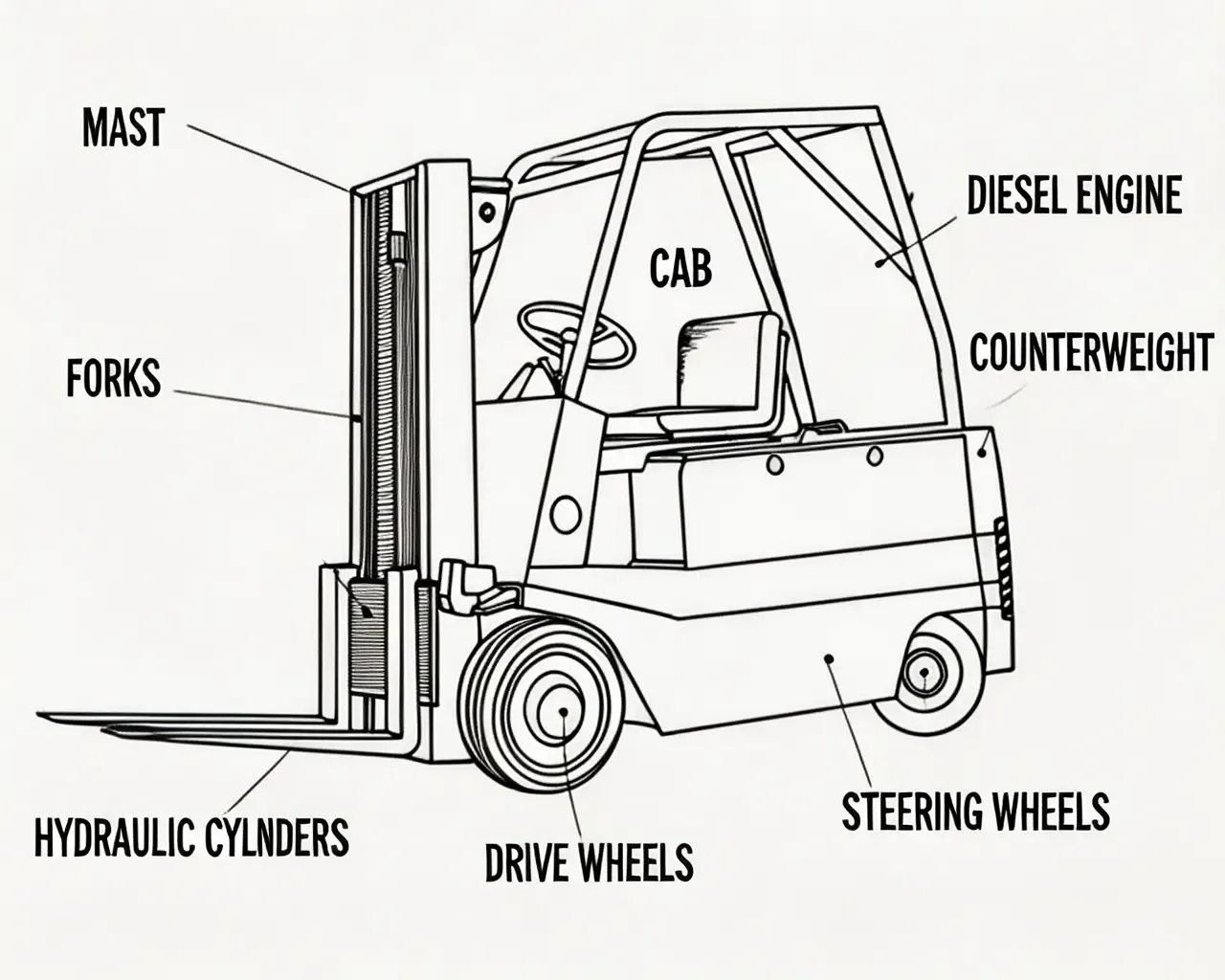
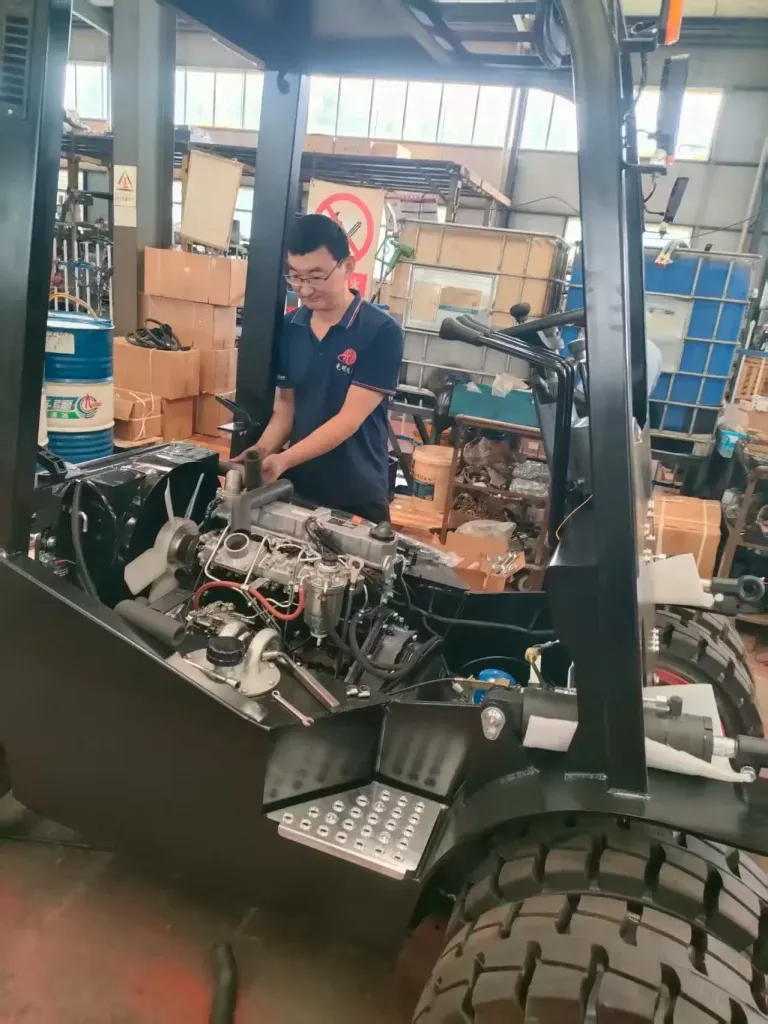
- Power system: IC forklifts use common diesel or LPG engines, 50–150 hp (per the Forklift Design Manual), suited to outdoor heavy-duty work. Electric forklifts use electric motors. The engine is the heart of an IC forklift — prioritize branded engines such as Yanmar, Weichai, Yunnei, which offer good quality and low after-sales cost. If your budget is tight, a cost-effective 4-cylinder diesel engine like Xinchai is a good choice; with proper maintenance it will last a long time.
- Transmission: Mechanical gearbox (conventional) or hydrostatic transmission (modern); the latter uses a hydraulic pump and motor for stepless (CVT) shifting and smoother operation. Hydrostatic-transmission IC forklifts do cost a bit more.
- Hydraulic system: Composed of hydraulic oil, gear pump, multi-way valve and hydraulic cylinders; working pressure about 15–25 MPa, controlling fork lift and mast tilt. Use high-quality hydraulic oil to reduce leakage and clogging, and a multi-way valve lets you add attachments and improve efficiency. Strengthened sealed cylinders and branded-quality gear pumps improve load capacity.
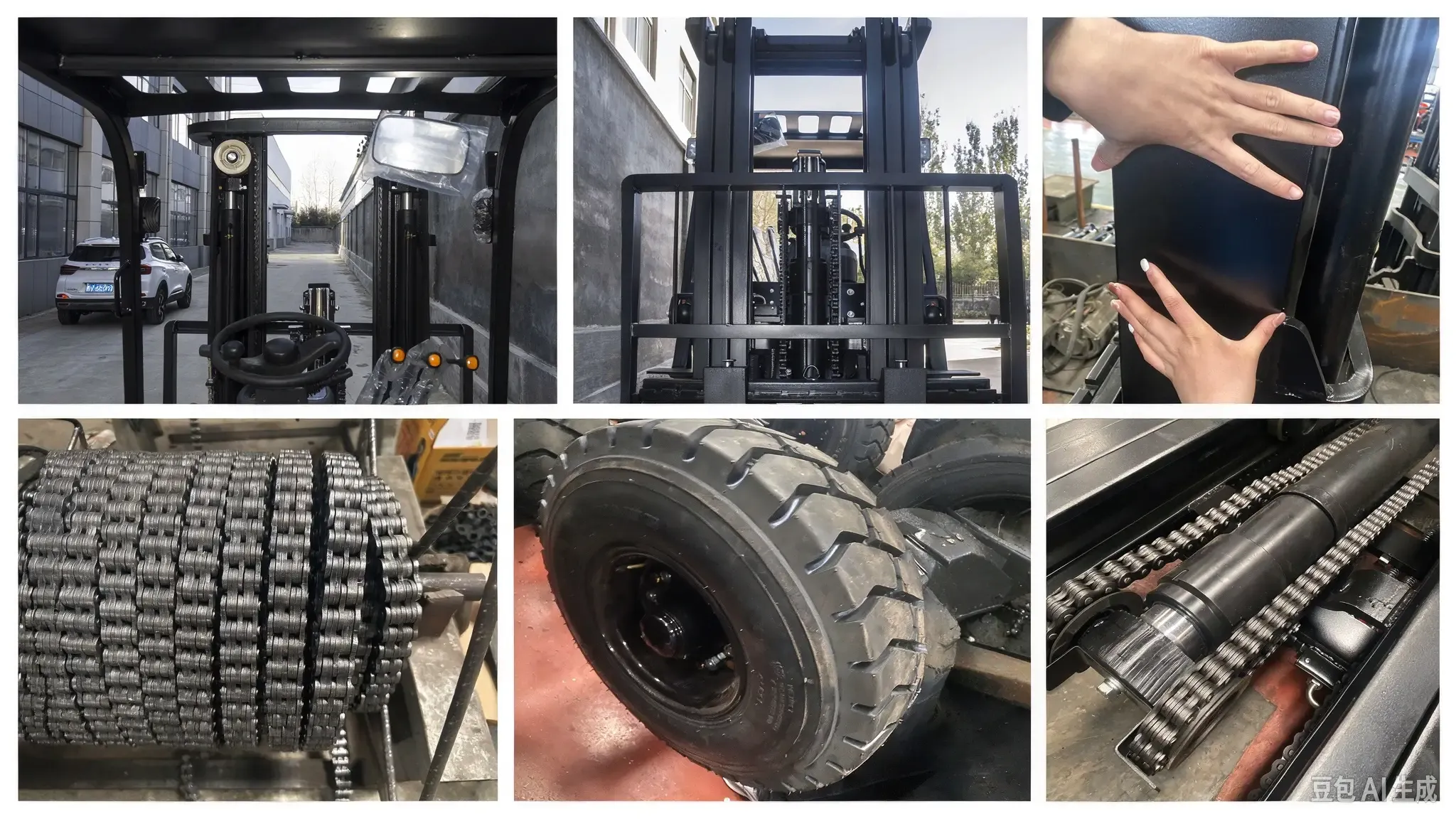
- Mast, forks & chain: Masts come in 2-stage and 3-stage, with lift heights up to 6 m (3-stage); fork length usually 0.9–1.2 m, laterally adjustable. A mast built from H-beam steel with tight clearances is better. Fork quality: one-piece forged > drop-forged > others. A 7-link reinforced chain is better than a 5-link.
- Operator platform: Equipped with a shock-absorbing or suspended seat; some models add electric power steering (EPS) to reduce operator fatigue.
Our Forklift Advantages
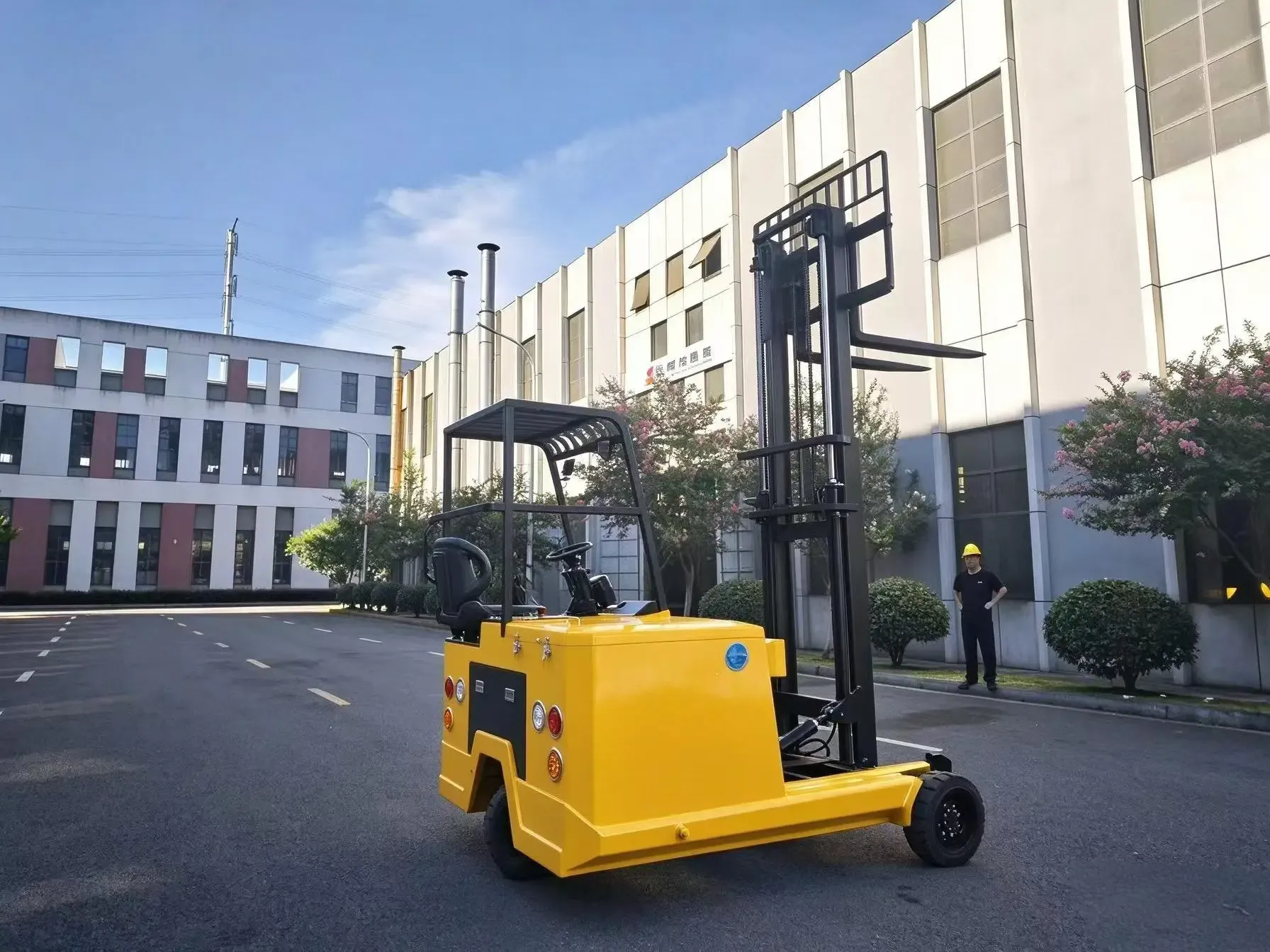
The widened mast greatly improves the driver's front viewing angle. The mast, chain and cylinder are designed with high strength and have strong overload capacity. Masts of various heights can be selected.
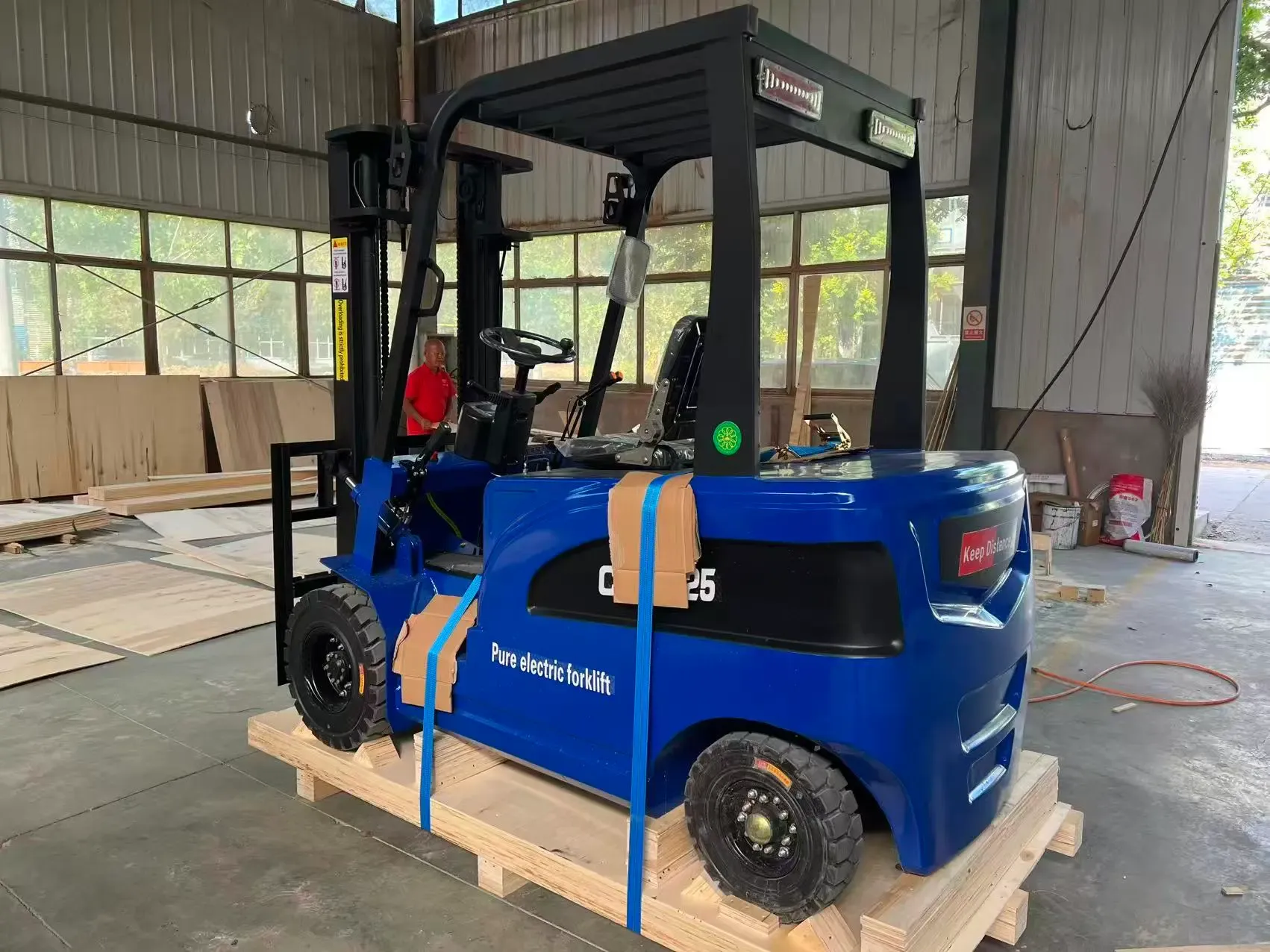
Our forklifts feature the following characteristics and advantages: a widened mast for significantly improved driver visibility; a high-strength mast, 7-link reinforced chain, and hydraulic cylinder design for strong overload capacity; optional mast heights; and high-wear-resistant pneumatic tires. Standard features include an LCD display, comfortable seat, rearview mirrors, high-brightness LED lights, and a buzzer. Whether for personal use or resale, these are high-quality products.
Working with China Manufacturers: Lead Time, Shipping, Terms
If you source from a Chinese factory (common for cost reasons), expect this pattern:
- Payment: typically 30% deposit + 70% balance (T/T against shipping documents).
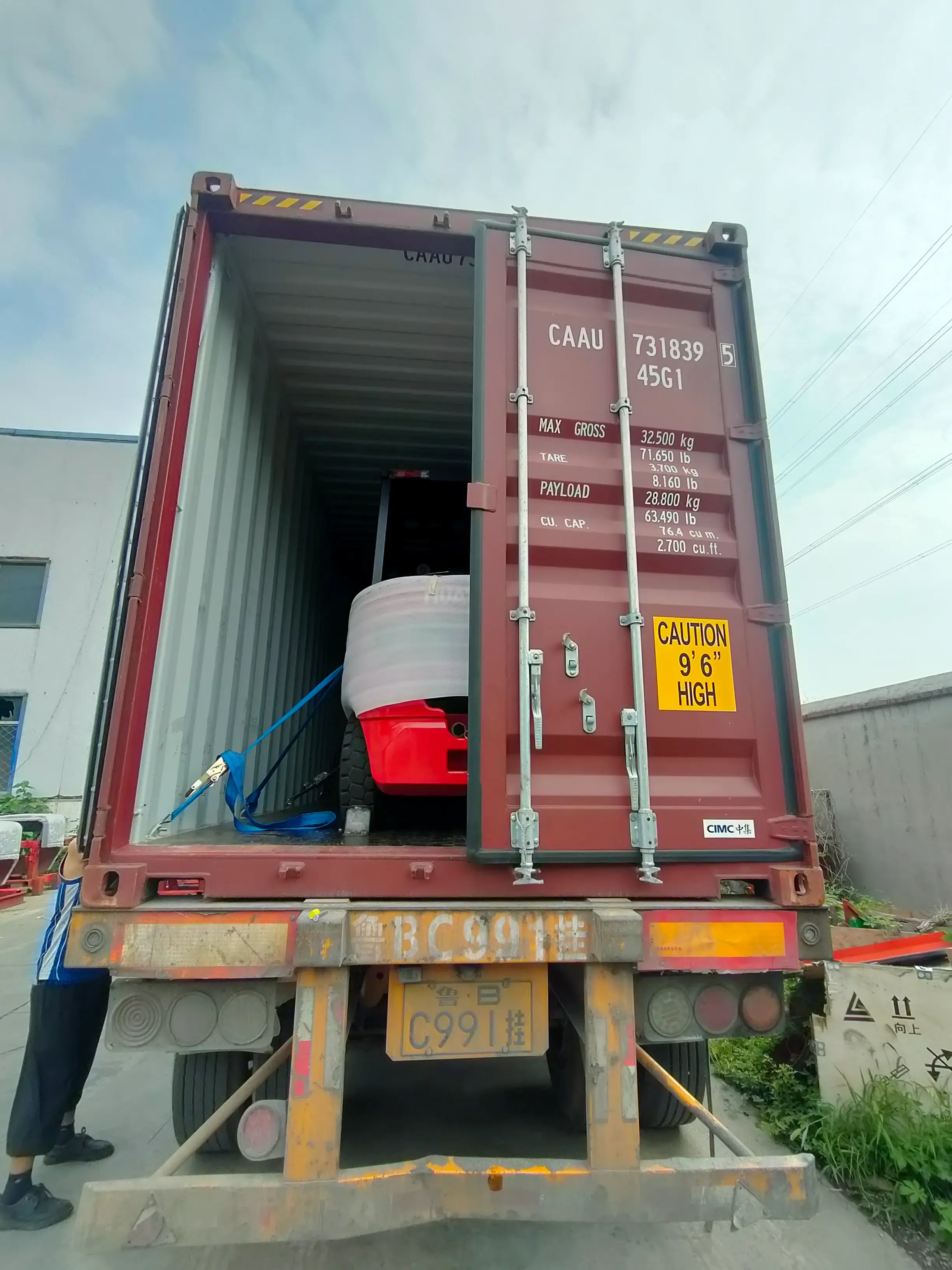
- Packaging: wooden crate or stretch film; ensure ISPM-15 treated wood for export.
- Incoterms: FOB (you arrange freight + clear), CIF (seller books freight, you clear), FCA (handover at origin terminal), or DDP (door-to-door, seller handles customs).
- Lead time: ~15–35 days ex-works for standard 3–5t models; longer for custom masts/attachments.
- Duty: destination tariff on forklifts is often around 30% (market-dependent) — budget for it under CIF/FOB; DDP includes it.
- Transport docs: commercial invoice, packing list, Bill of Lading, CE/COC where required; batteries (if any) need proper transport documentation.
Illustrative based on common export practice; confirm exact terms with your supplier. For more information, read our guide on How to Import a Forklift from China.
FAQ
1. Is a diesel forklift worth it in 2027 if electric is "the future"? Yes — for outdoor, heavy (5t+), or continuous-duty work where charging downtime kills productivity. Diesel remains the mainstay of material-handling solutions; electric wins indoors, diesel still wins the yard and outdoors.
2. What tonnage do most businesses need? A 3-ton or 4-ton standard counterbalance covers most general material-handling needs. Timber, ports, steel → step up to 5t+. Based on your load weight and operation, choose the right number of units — e.g., a rental business might run several 3–4t diesel forklifts, a few 5t diesel units, and one large 7–10t machine.
3. How much does a new diesel forklift cost in 2027? Indicatively **USD8,000–20,000 FOB China** (3–5t new); used starts around USD3,000. Confirm exact pricing per model.
4. Diesel vs LPG — which should I pick? Pick diesel for max torque, outdoor/rough use and long shifts. Pick LPG if you need indoor-capable, cleaner running with fast bottle swaps and lighter loads.
5. What about emissions rules? Many markets require EU Stage V / US EPA Tier 4 engines. Confirm the engine tier is legal where you operate before ordering.
6. How long do diesel forklifts last? With proper maintenance, 10,000–20,000+ service hours is common — one reason resale value stays decent even in a shrinking market.
7. Can I import directly from China to save money? Yes, and many do — but budget for ~30% destination duty (typical), freight, and confirm Incoterms (FOB/CIF/DDP) and after-sales spare-part supply up front.