Oct 30, 2026Reach Truck
How Much Does a Reach Truck Cost? 2027 Price & Rental Rates
A new reach truck costs USD 15,000–60,000; rentals run USD 1,500–3,000/month. 2027 price tables by capacity and lift height, plus rent-vs-buy math.
Quick answer
Question | Answer |
Buy a new reach truck | USD 15,000 – 60,000 |
Rent a reach truck | USD 1,500 – 3,000 per month |
Daily rental | USD 200 – 350 per day |
Which is cheaper | Renting, if you need it for less than 9 months |
Biggest price driver | Lift height first, then load capacity |
Reach truck pricing is not a single number — it is a matrix of capacity and lift height. Two trucks that look identical from the outside can differ by 3x in price, because the money sits in the mast and the battery.
Capacity | Lift height | Typical price (new) | Best for |
1.5 T | 3 – 6 m | USD 15,000 – 22,000 | Small warehouses, low racking, entry-level fleets |
2.0 T | 6 – 8 m | USD 22,000 – 35,000 | The most common warehouse specification |
2.5 T | 8 – 10 m | USD 35,000 – 50,000 | High-rack, multi-shift operations |
3.0 T and above | 10 m+ | USD 50,000 – 60,000+ | Custom masts, heavy pallets, cold storage |
These are manufacturer prices for new equipment. Through dealer channels in Europe or North America, where ocean freight, import duty, and local margin are added, expect 15%–30% more. A used reach truck with 3,000–5,000 hours on the clock typically sells for 40%–60% of the new price depending on battery condition — a route many small operations take, though the total cost of ownership rarely works out as favourably as it first appears.
What drives reach truck price up or down
Lift height
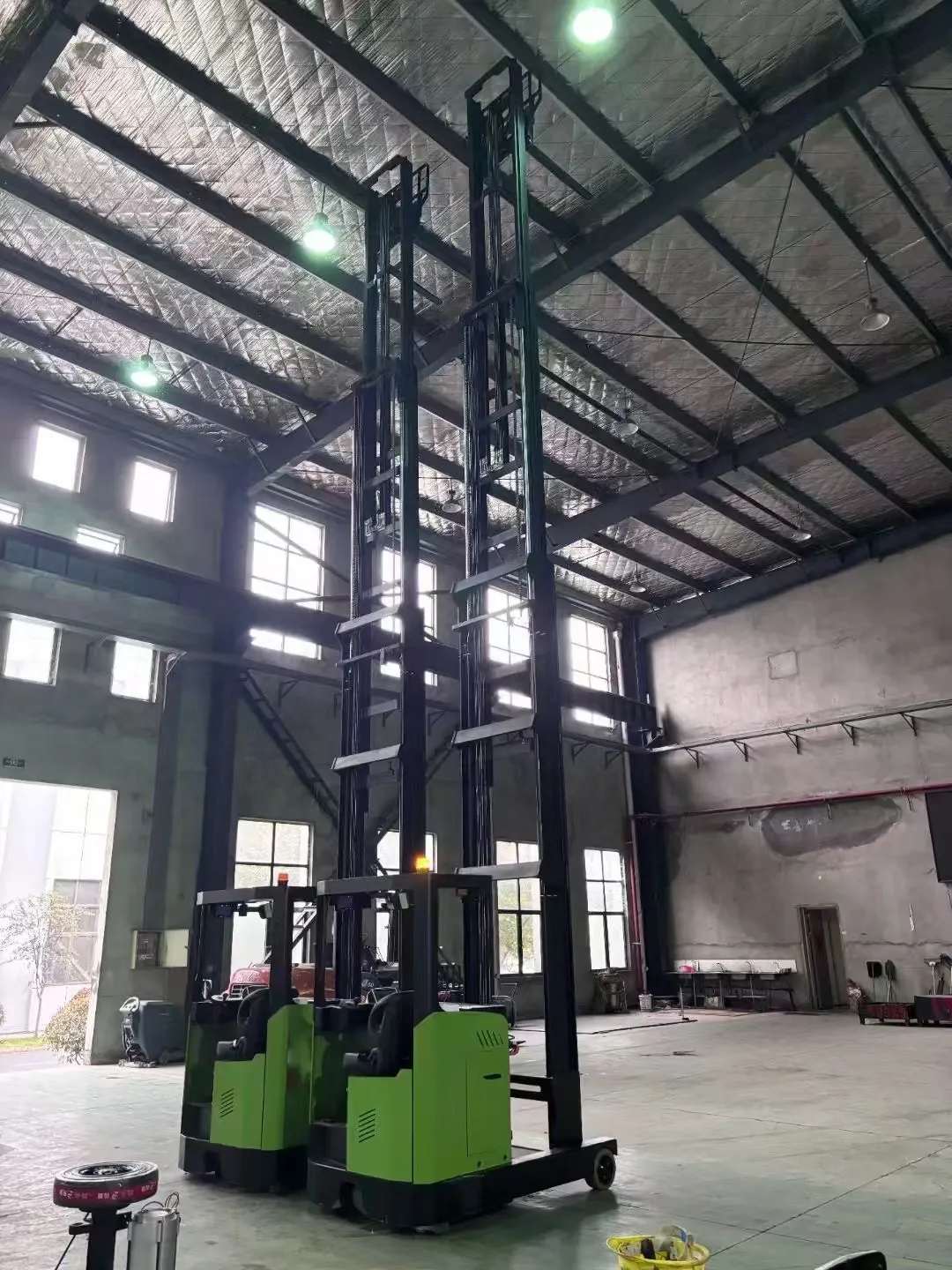
Lift height is the single biggest cost driver, and it does not scale linearly. Going from 6 m to 8 m adds roughly 25%–35% to the price. Going from 8 m to 10 m can add another 30%–40%, because taller masts need heavier steel, larger base legs, and more counterweight to stay stable at full extension.
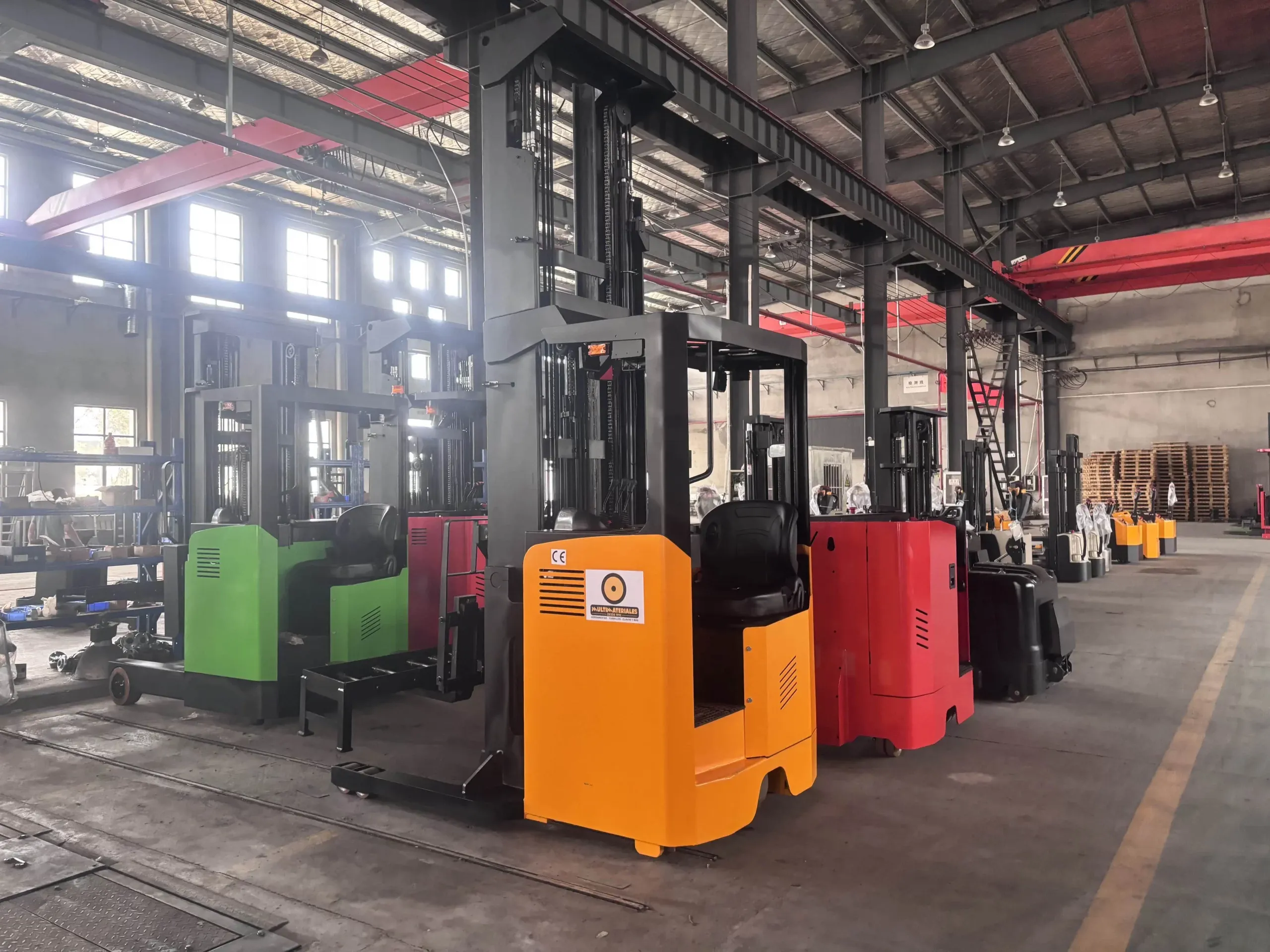
A new electric reach truck typically costs USD 15,000 to 60,000 depending on load capacity and lift height, while renting one runs USD 1,500 to 3,000 per month in most markets. A 1.5-ton unit with a 6-meter mast starts around USD 15,000, while a 3-ton high-rack model with a lithium-ion battery can exceed USD 50,000.
If your racking tops out at 7 m, do not buy a 10 m truck "for future growth" — unless that expansion is already approved, budgeted, and scheduled. Otherwise you are paying for steel you will never lift.
Load capacity
Capacity and height interact. A truck rated at 2 tons and 8 m may only be rated to lift 1.4 tons once the mast is fully raised — that is the capacity derating curve, and it is printed on every load chart. Spec the truck by the weight you will lift at your maximum height, not by the machine's rated capacity at standard height.
Battery type
Battery | Upfront cost | Service life | Best for |
Lead-acid | Baseline | 4–5 years | Single-shift, low utilisation |
Lithium-ion | +20%–40% | 7–10 years | Multi-shift, opportunity charging |
Lithium-ion costs more upfront but removes the battery room, the watering routine, and the swap-and-charge cycle. For two-shift operations, payback is usually 2–3 years. For a single shift a day, lead-acid remains the cheaper choice.
Mast and attachments
A two-stage mast is standard. A three-stage full-free-lift mast adds USD 1,500–4,000, and in warehouses with low doorways it is often non-negotiable — full-free-lift lets the forks rise before the mast itself extends upward.
Common attachments and their approximate add-on cost:
- Side shifter: USD 800 – 1,500
- Fork positioner: USD 1,800 – 3,500
- Integral sideshift (built into the carriage): USD 1,200 – 2,000
- Cold-store package (sealed hydraulics, heated cab, low-temperature battery): USD 3,000 – 8,000
Where it is made, and how it gets to you
Two trucks with identical specifications can differ by USD 8,000 on logistics alone. Ocean freight, import duty, and inland delivery are real cost lines, and they vary by destination. Buying directly from the manufacturer usually removes one layer of dealer margin, but you take on freight, duty, and after-sales coordination yourself — which is why the cheapest quote is rarely the cheapest outcome.
How much does it cost to rent a reach truck per month?
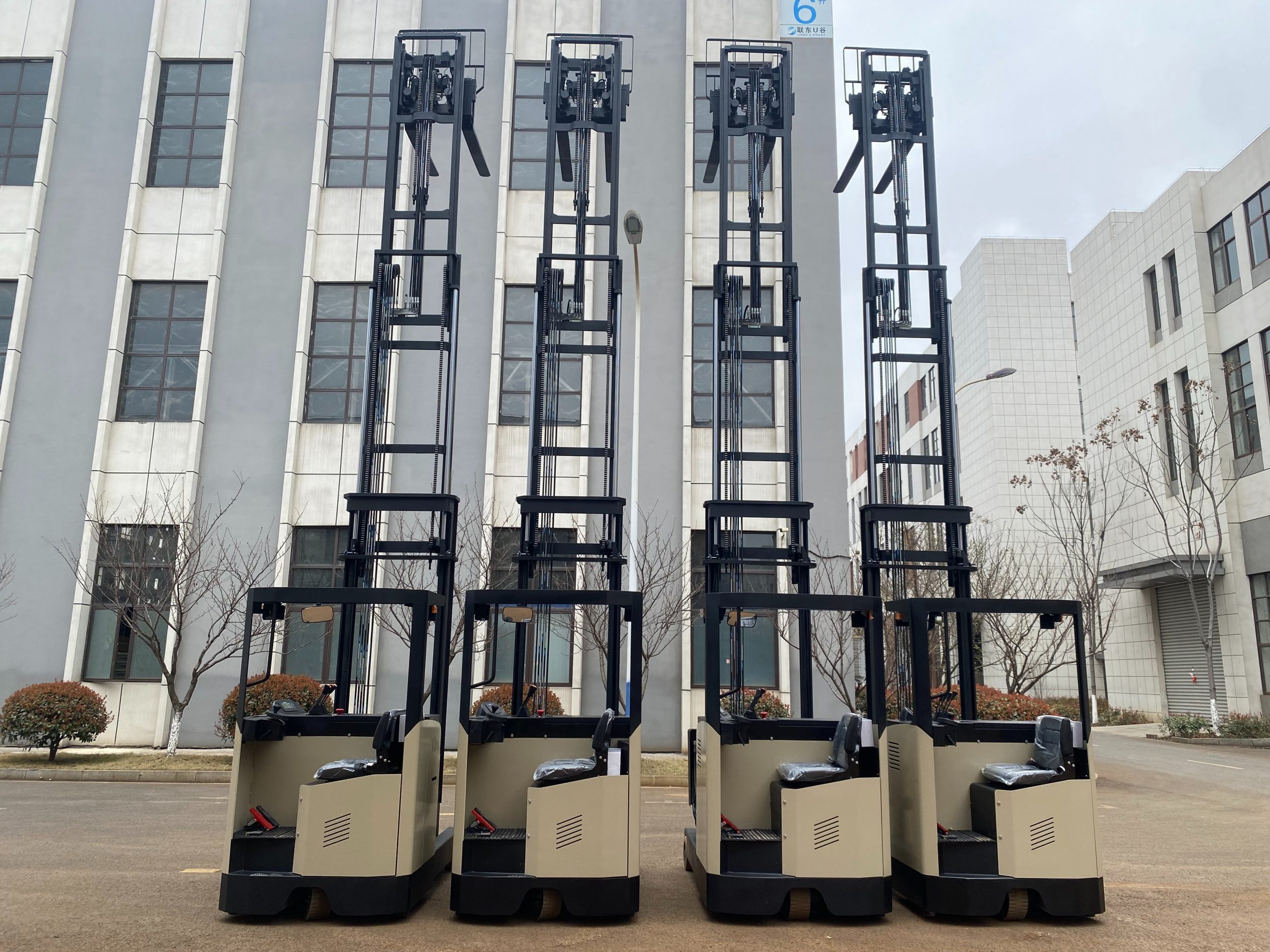
Monthly rental for a standard electric reach truck runs USD 1,500 to 3,000, or roughly USD 200 to 350 per day. The rate moves with capacity, lift height, rental term, and local supply.
Term | Typical rate | Effective daily cost |
Per day | USD 200 – 350 | USD 200 – 350 |
Per week | USD 600 – 1,100 | USD 86 – 157 |
Per month | USD 1,500 – 3,000 | USD 50 – 100 |
Annual contract | USD 1,200 – 2,200 / month | USD 40 – 73 |
The pattern is the same in every market: the daily rate is the most expensive way to rent. Once you pass two weeks, the monthly rate is almost always cheaper than counting days, and a 12-month contract typically saves another 15%–20%.
What the rate usually includes
- The truck itself, serviced and ready to operate
- Scheduled maintenance during the rental period
- Breakdown service during business hours
- Battery and charger (confirm this — it is the most common point of dispute)
What it usually does not include
- Delivery and pickup: USD 100 – 300 each way
- Damage waiver: 10%–15% of the base rate
- Electricity or charging costs
- Attachments beyond the base configuration
- After-hours callouts
Put these five items in writing before you compare quotes. A quote at USD 1,900/month plus delivery and waiver can cost more than a USD 2,100/month quote that includes both.
Rent or buy a reach truck? The break-even math
The industry shorthand — rent under 9 months, buy over 12 — points in the right direction but is too blunt. Run the actual numbers.
Take a 2-ton truck at 8 m:
- Buy: USD 30,000 purchase + USD 1,800/year maintenance + USD 1,200/year electricity
- Rent: USD 2,200/month, maintenance included
Renting costs about USD 26,400 a year. Buying costs about USD 3,000 a year to run, plus the capital tied up. On a pure cash basis, the purchase pays for itself in roughly 15 months.
Three things change that answer:
- Residual value. A well-maintained reach truck is still worth 35%–45% of its purchase price after five years. That shortens the real break-even to 10–12 months.
- Utilisation. If the truck sits idle half the time, renting wins regardless of the term — you are paying for capacity you never use.
- Peak season. Many operations buy a base fleet and rent for the peak. That combination is usually cheaper than either pure strategy.
A quick sanity check: divide the purchase price by the monthly rental rate. Below 12, buying is worth modelling seriously. Above 18, rent.
Reach truck vs standard electric counterbalance forklift: price comparison
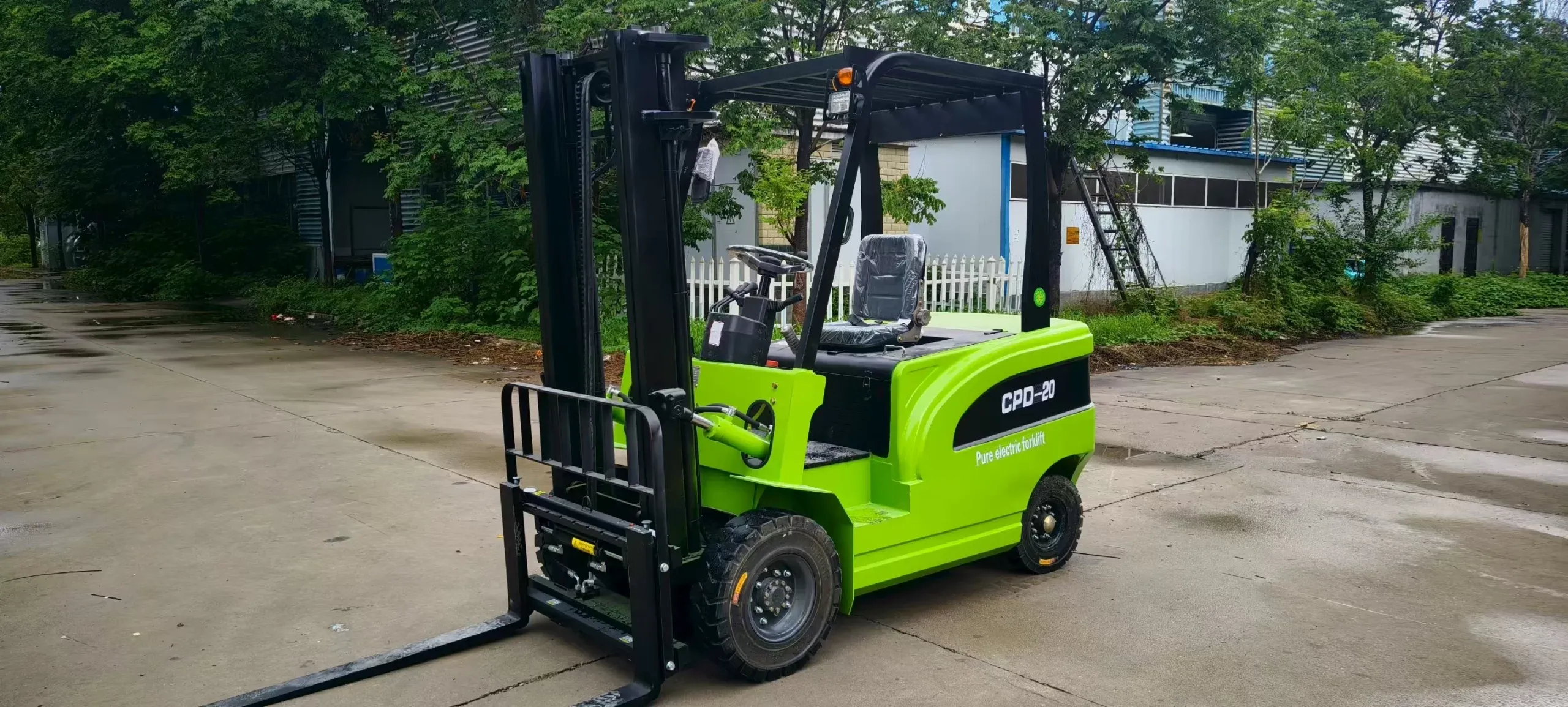
At the same capacity, a reach truck typically costs 75%–120% more than a standard electric counterbalance forklift — roughly 1.75 to 2.2 times the price. What you are paying for is the mast, and the ability to work in an aisle about half the width.
Items | Reach truck | Standard electric counterbalance |
Price (2 T, new) | USD 22,000 – 35,000 | USD 10,000 – 20,000 |
Minimum aisle width | 2.7 – 3.0 m | 3.5 – 4.0 m |
Maximum lift height | 10 – 12 m | 6 – 7 m |
Throughput in high racks | Higher | Lower |
Outdoor use | Not suitable | Suitable with pneumatic tyres |
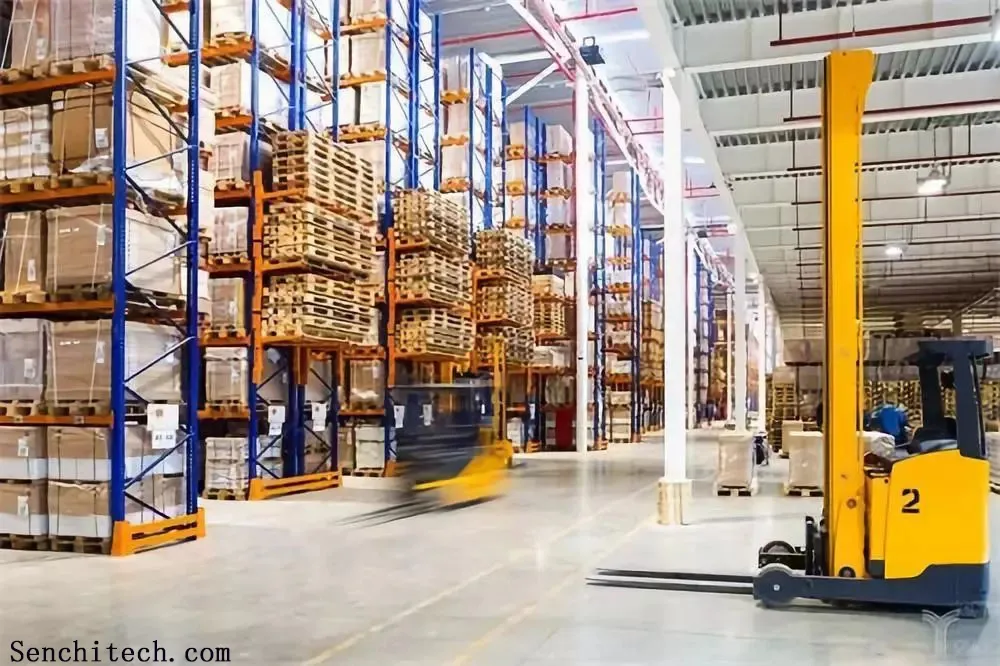
Only one situation reverses the economics: if you rent your warehouse space, a reach truck can pay for itself through rack density alone. Narrower aisles mean more pallet positions per square metre — often 20%–30% more — and in most markets that rent saving dwarfs the price gap between the two truck types.
A counterbalance electric forklift suits indoor warehouses well, but it is not the right machine for high-density storage such as e-commerce fulfilment centres and distribution hubs. Those facilities usually need a more specialised reach truck or a VNA truck. The right choice depends on your warehouse type.
The costs people forget to budget for
Purchase price is roughly 70% of what a reach truck actually costs you in year one. The rest:
- Racking modification — if your current racking was laid out for counterbalance trucks, converting to narrow aisle is a capital project in its own right.
- Floor flatness — reach trucks need a flat floor (typically within 3 mm over 3 m). Older slabs may need grinding or resurfacing.
- Charging infrastructure — a 48V or 80V charging point, ventilation, and in many regions a dedicated battery room.
- Operator training — in most regions reach truck certification is separate from counterbalance certification. Budget USD 150–400 per operator.
- Spare parts and service access — a truck from a manufacturer with no local service network can cost more in downtime than it saved on purchase.
How to choose the right specification
1. Start with the load at height, not the load on the floor. Write down your heaviest pallet and the racking level it goes to. That combination, not the pallet weight alone, sets your capacity requirement.
2. Measure the aisle, then subtract. Reach trucks need 2.7–3.0 m of clear aisle. Measure at the narrowest point — usually where a column or door frame intrudes — not the nominal aisle width on the drawing.
3. Compare three configurations, not three brands. The easiest way to overpay is to compare a 6 m truck against an 8 m truck and treat the difference as brand margin. Get quotes at identical specifications, then compare.
If you are still deciding between reach truck models, our 2026 reach truck buyer's guide walks through the specification decisions in more detail.
Reach trucks for cold storage and special environments
Cold storage adds USD 3,000–8,000 to a standard reach truck, and it is not optional equipment — a standard truck in a freezer fails within months. The package typically includes sealed hydraulics, low-temperature-rated battery and cabling, a heated cab, and in some cases a heated mast.
Explosion-proof (ATEX) configurations for chemical and paint facilities add considerably more and should be quoted individually. For freezer applications, see our cold storage reach truck guide.
FAQ
How much does a reach truck cost to buy?
A new electric reach truck costs USD 15,000–60,000. A 1.5-ton unit with a 6-meter mast starts around USD 15,000, a 2-ton 8-meter model runs USD 22,000–35,000, and a 3-ton high-rack model can exceed USD 50,000.
How much does it cost to rent a reach truck per month?
Monthly rentals typically run USD 1,500–3,000, or USD 200–350 per day. A 12-month contract usually brings this down to USD 1,200–2,200 per month.
Is it cheaper to rent or buy a reach truck?
Renting is cheaper for anything under 9 months. Beyond 12 months, buying usually wins once residual value is counted. For a USD 30,000 truck at USD 2,200/month, the crossover point is roughly 10–12 months.
What affects reach truck price the most?
Lift height first, then load capacity. Battery type, mast configuration, and attachments add smaller but still meaningful amounts. Logistics and duties can swing the final price by USD 8,000 or more.
Do I need special training to operate a reach truck?
Yes. In most regions reach truck certification is separate from counterbalance certification, and rental companies frequently ask for proof before releasing a unit.
Can a reach truck work outdoors?
Not well. Reach trucks are designed for smooth indoor floors and have limited ground clearance. For mixed indoor-outdoor use, a counterbalance forklift with pneumatic tyres is the better choice.
How can I extend the life of a reach truck?
Service it regularly and check the battery on a fixed schedule. Keep consumable spares — wheels, chargers, and batteries — on hand so a worn part can be replaced immediately rather than waiting on a delivery.
Summary
In narrow aisles, or for seasonal and periodic movement of warehouse materials, renting a reach truck is the better value. Where indoor forklift use is constant and year-round, buying a reach truck or a VNA truck works out cheaper over time.
Get a reach truck price for your specification
Tell us your load weight, lift height, aisle width, and shift pattern, and we will send a configuration and a price — usually within one business day. We are a professional forklift manufacturer producing reach trucks from 1.5 to 3 tons with masts up to 12 m, in standard, cold-store, and custom configurations, and we build cost-effective material handling solutions.