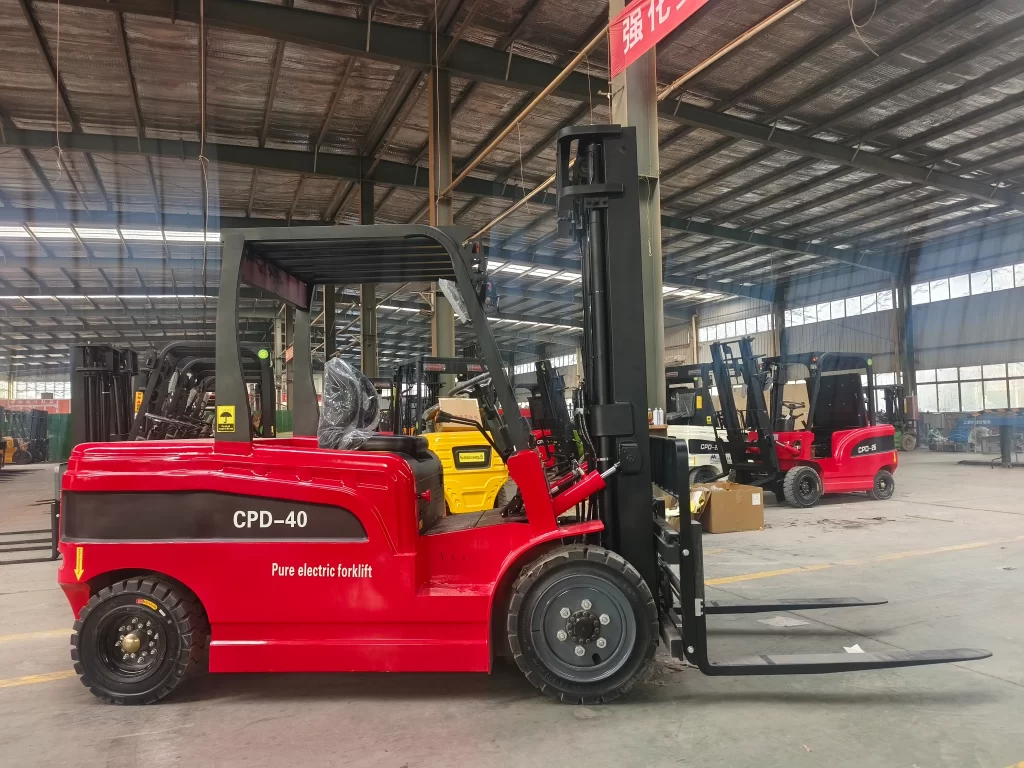
Electric vs. Diesel Forklifts: Which Is Better for Your Business?
Introduction: Choosing the Right Forklift for Modern Businesses
In today’s global and highly competitive economy, warehousing and logistics play a critical role in supply chain efficiency. The performance of logistics operations directly affects a company’s productivity, operating costs, and market competitiveness. Among all warehouse equipment, forklifts are one of the most essential tools for material handling.
Choosing the right forklift is not just an equipment decision — it significantly impacts operational efficiency, labor productivity, safety, and even a company’s professional image. A well-selected forklift allows warehouse staff to work more efficiently while maintaining a safe and comfortable working environment.
Forklifts serve as the backbone of logistics operations by:
- Improving handling efficiency through fast lifting and transport of heavy goods
- Optimizing warehouse layouts with flexible maneuverability in tight spaces
- Enhancing workplace safety with modern ergonomic and safety features
- Supporting automation through AGVs and intelligent warehouse systems
With advances in motor and battery technology, electric forklifts are becoming increasingly popular. Today, the market share of electric forklifts is approaching that of diesel models. This article compares electric and diesel forklifts to help businesses make an informed decision and choose the best forklift for their operations.
What Is an Electric Forklift?
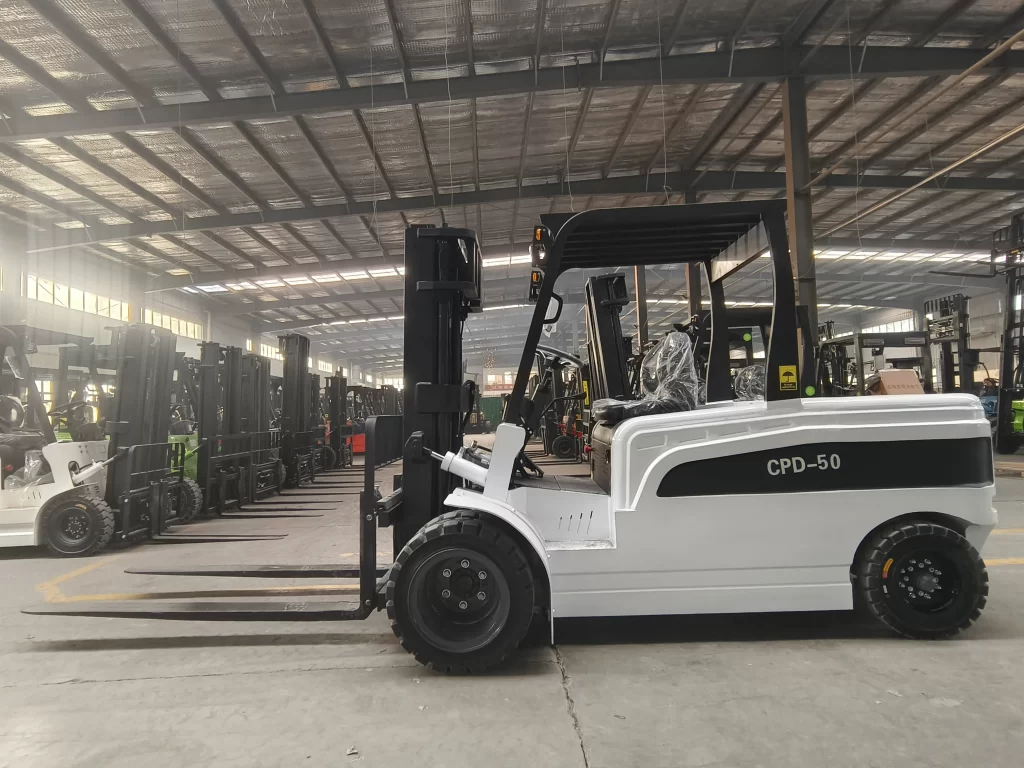
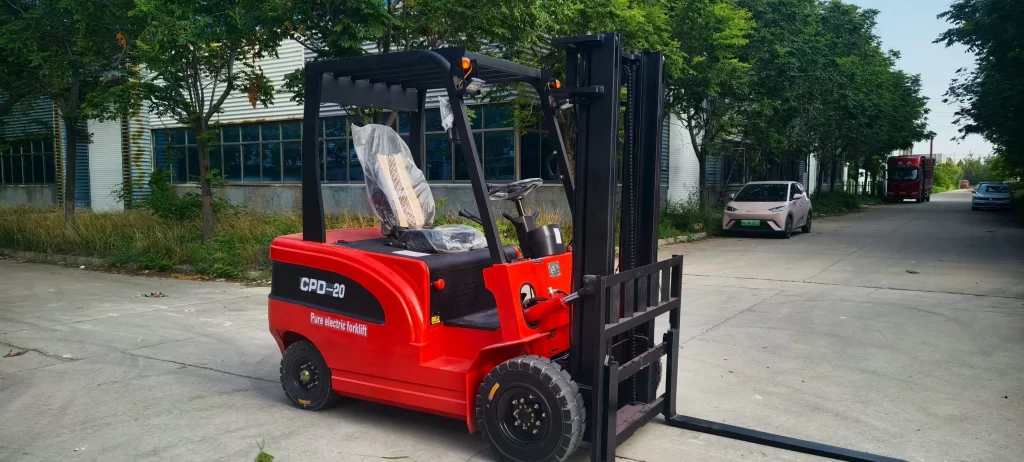
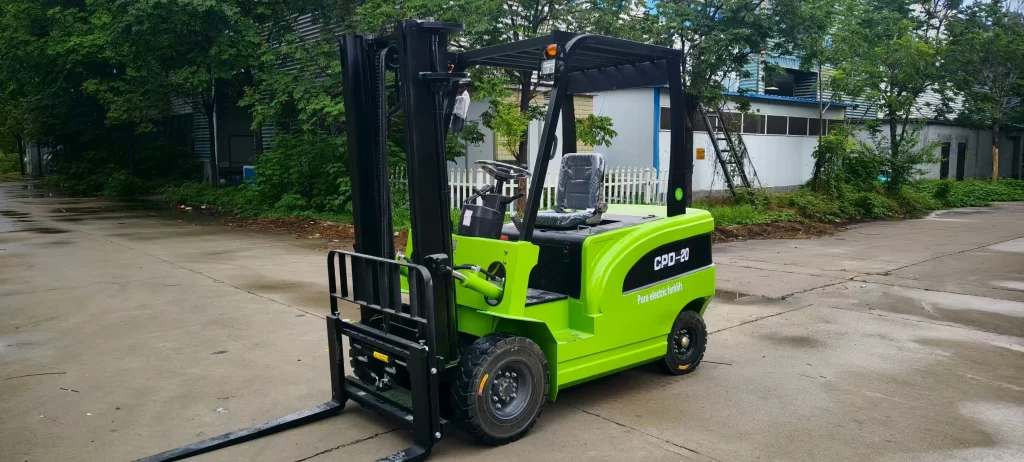
An electric forklift is a material handling vehicle powered by electricity and widely used in warehousing, logistics, and manufacturing environments.
Key Advantages of Electric Forklifts
Electric forklifts offer several important benefits:
- Zero emissions, making them ideal for indoor use
- Low noise levels, improving workplace comfort
- Smooth and precise operation
Common Applications
Electric forklifts are commonly used in:
- Cold storage facilities
- Warehouses and logistics centers
- Container handling operations
- Electronics factories and hospitals
- Clean rooms and sanitary environments
- Narrow aisle warehouses and high-density storage
- Flammable or hazardous environments
They are especially suitable for handling small to medium loads in confined indoor spaces.
What Is a Diesel Forklift?
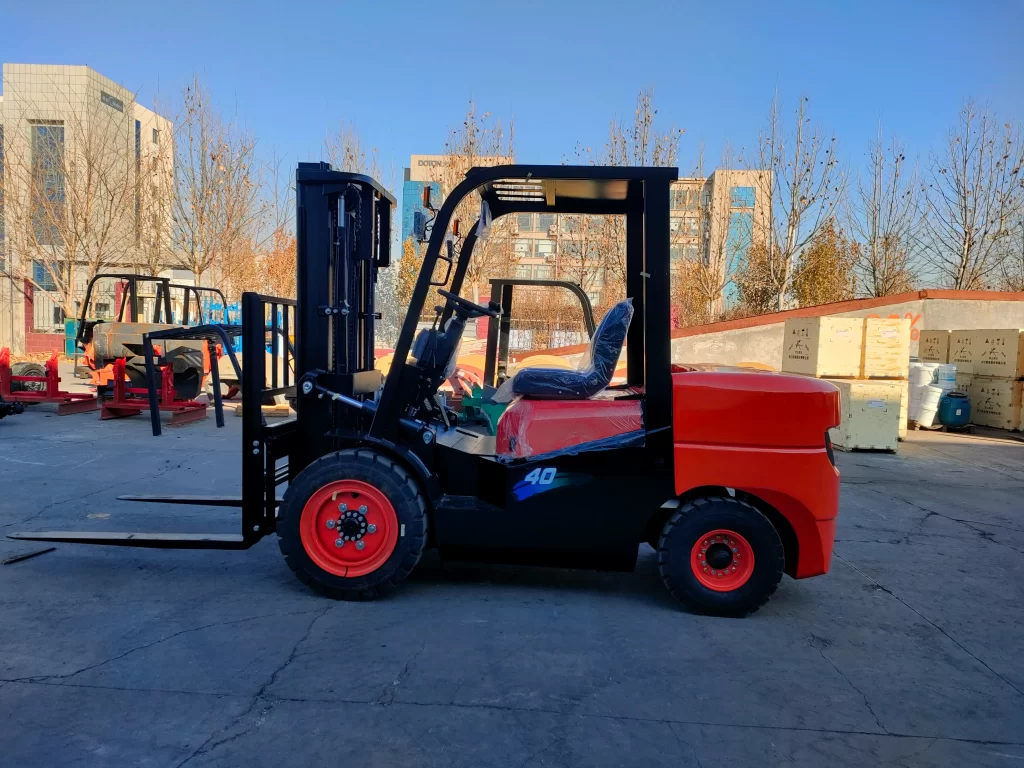
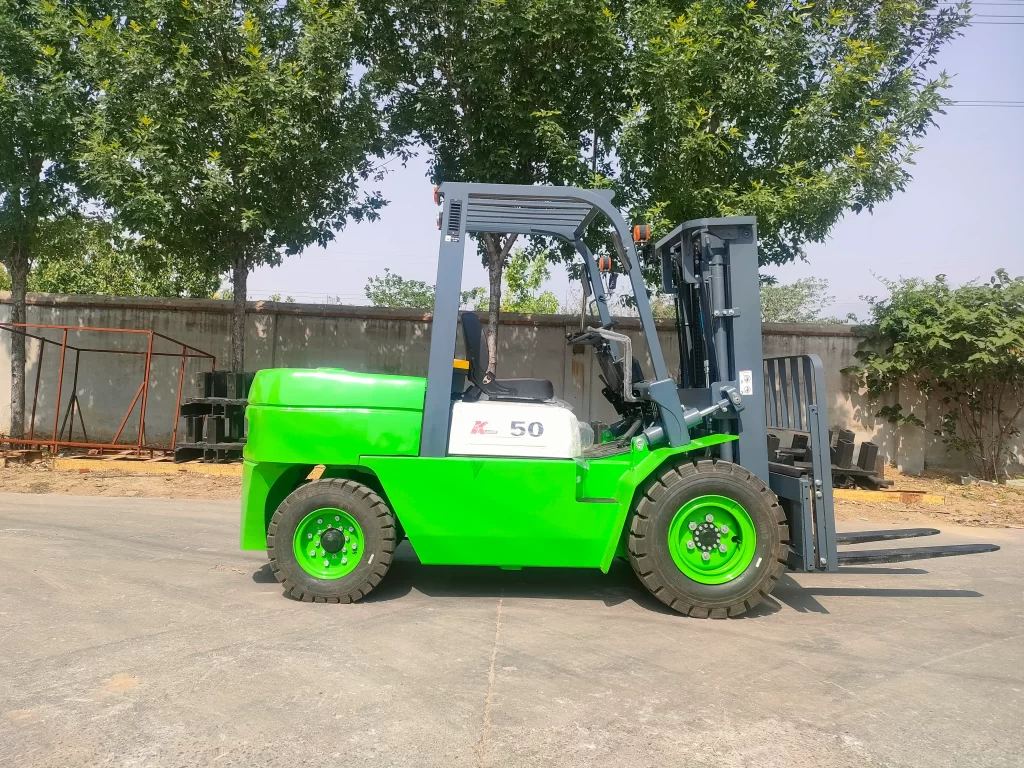
A diesel forklift is powered by a diesel engine and is primarily used for heavy-duty outdoor operations such as ports, construction sites, and industrial yards.
Key Characteristics of Diesel Forklifts
Diesel forklifts are known for:
- Strong power output
- High load capacity
- Durability in harsh environments
- Long continuous operating capability
Typical Applications
Diesel forklifts are commonly used in:
- Outdoor storage yards
- Mining and construction sites
- Steel and pipe handling operations
- Container terminals
- Heavy industrial environments
They are ideal for large, heavy loads and continuous outdoor work.
Electric vs. Diesel Forklifts: Key Differences
Performance and Power
Electric forklifts typically handle loads from 1 to 8 tons and operate efficiently in aisle widths of 3.5 to 5 meters. They are widely used indoors due to their low noise and zero emissions. However, battery charging is required after approximately 8 hours of operation, which may require spare batteries for multi-shift operations.
Diesel forklifts also handle 1.2 to 8 tons and operate in similar aisle widths. Their fuel can be replenished quickly, allowing long continuous operation. They perform well in harsh weather and outdoor environments.
Operating Costs
Electric and diesel forklifts differ significantly in energy economics.
Electric forklifts have high energy efficiency. Under current industrial electricity pricing, the cost of fully charging a 3-ton electric forklift is typically only one-third to one-quarter of the equivalent diesel fuel cost. Charging during off-peak hours further reduces expenses. Some electric forklifts also recover energy during braking.
Diesel forklifts have lower energy efficiency due to engine heat and transmission losses. Fuel costs fluctuate with oil prices and represent a major portion of long-term operating expenses.
In addition, electric forklifts require less maintenance. They do not need fuel filters or air filters, and their simpler mechanical systems reduce maintenance costs.
Environmental Impact
Electric forklifts produce zero exhaust emissions, making them environmentally friendly and compliant with strict indoor air quality standards in Europe and the United States.
Diesel forklifts generate exhaust emissions but can meet regulatory requirements by using compliant engines, such as Euro V or EPA-certified engines. However, these engines significantly increase purchase costs.
Noise and Operator Comfort
Electric forklifts operate quietly with minimal vibration. Their smooth acceleration and precise control reduce operator fatigue. Some models include regenerative braking systems to extend operating time.
Diesel forklifts provide strong power for heavy loads and uneven terrain but generate higher noise levels and vibration, which can reduce operator comfort.
Best Use Cases: When to Choose Electric Forklifts
Electric forklifts are ideal for:
- Indoor warehousing
- Cold chain logistics
- Clean manufacturing environments
- Multi-shift warehouse operations
- Noise-restricted facilities
- E-commerce and distribution centers
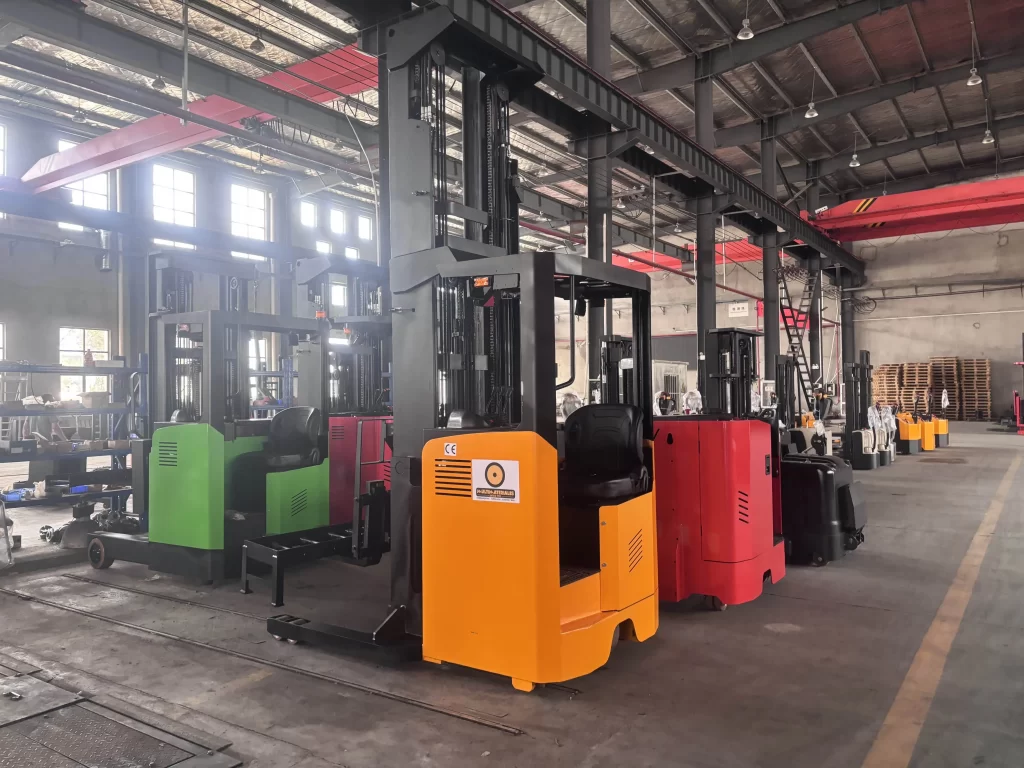
For narrow aisle operations, reach trucks and electric stackers are excellent options. These belong to the VNA (Very Narrow Aisle) forklift category and maximize storage space.
Best Use Cases: When to Choose Diesel Forklifts
Diesel forklifts are better suited for:
- Outdoor yards and construction sites
- Mining and port operations
- Heavy continuous industrial work
- Areas with limited electrical infrastructure
Heavy diesel forklifts with capacities from 10 to 52 tons are commonly used in steel and port industries. Container handlers and reach stackers are essential for container terminals.
How to Choose the Right Forklift for Your Business
When selecting a forklift, businesses should carefully evaluate:
- Environmental requirements (noise and emissions)
- Warehouse layout and aisle width
- Floor load capacity
- Door heights and elevator access
- Cold storage or explosion-proof needs
Providing detailed operational information to your forklift supplier and conducting on-site assessments ensures the selected equipment matches your needs.
Different forklift models affect efficiency, required fleet size, warehouse layout, and overall cost management. Budget considerations should also be included in the decision.
As a professional forklift manufacturer, we offer complete logistics solutions tailored to your operational requirements.
Conclusion: Which Forklift Is Better?
Both electric and diesel forklifts have important roles in modern logistics.
Electric forklifts offer significant advantages in efficiency, environmental performance, and operating costs, making them suitable for most daily warehouse operations. However, heavy diesel forklifts remain essential for demanding outdoor and heavy-duty applications.
The best choice depends on your operational needs and budget. If you are unsure which forklift is right for your business, contact us. As a professional forklift manufacturer, we provide free consultations and one-stop forklift solutions tailored to your requirements.