Electric Forklift for Warehouses: Why Zero Emissions and Low Noise Matter for Indoor Operations
Introduction
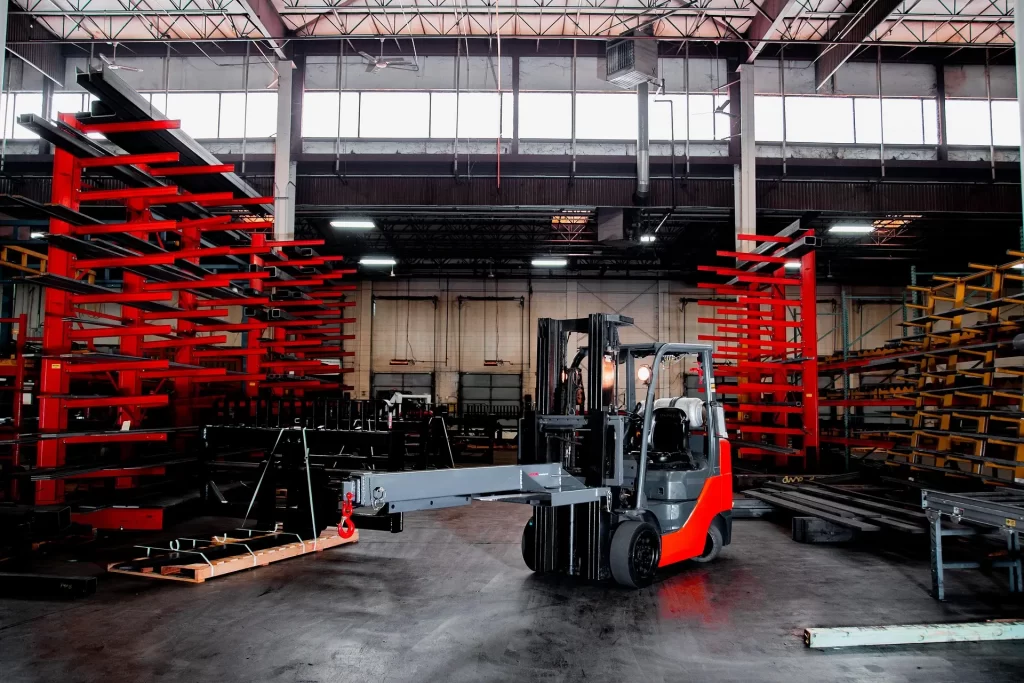
Forklifts are essential material handling tools for enterprise production, primarily used in workshops, factory areas, warehouses, and other work sites where ventilation is often limited. As is widely known, the electric forklift is an indoor forklift, suitable for warehouse and indoor use. However, many people do not fully understand why electric forklifts are the preferred choice for indoor warehouse operations. The advantages of an electric forklift lie in its zero emissions and low noise, both of which perfectly meet the environmental requirements of warehouse work. The quality of a warehouse’s indoor environment directly impacts employee health, operational efficiency, and product quality. In enclosed or semi-enclosed storage spaces, forklift exhaust emissions and noise pollution are two invisible hazards.
In the debate of diesel forklift vs. electric forklift, while a diesel forklift delivers powerful performance, its exhaust contains multiple air pollutants such as carbon monoxide, nitrogen oxides, and particulate matter. These substances linger in the indoor air, and without a proper ventilation system, they can easily harm warehouse workers’ health. At the same time, noise pollution damages workers’ eardrums, and prolonged exposure to a noisy environment reduces work efficiency.
An LPG forklift primarily uses natural gas and gasoline as fuel. Even when using natural gas indoors, its emissions still contain carbon monoxide and other substances, failing to meet the standard of zero indoor emissions. Indoor ventilation must be maintained to dissipate propane forklift emissions. While a dual-fuel forklift combines the advantages of both diesel and electric forklifts, its higher price drives many buyers toward the more cost-effective electric forklift.
With its core advantages of zero emissions and low noise, along with its eco-friendly philosophy, the electric forklift is becoming the standard configuration for modern indoor warehouses. It not only meets increasingly stringent environmental regulations but also significantly improves the working environment and reduces operating costs.
The Hidden Dangers of Indoor Forklift Emissions
What Diesel and LPG Forklifts Release Indoors
What substances do diesel and LPG forklifts mainly emit?
A diesel forklift emits harmful exhaust equivalent to 3-5 times its own weight every year. Because exhaust gas is denser than air, it tends to accumulate and linger around factories, workshops, warehouses, office areas, and other nearby zones, forming primary pollution. Under the action of sunlight or ultraviolet rays, these primary pollutants undergo photochemical reactions and create secondary pollution, known as photochemical smog. The composition of photochemical smog is complex, and its harmful effects on humans mainly include eye and mucous membrane irritation, headaches, breathing difficulties, worsening of chronic respiratory diseases, and abnormal lung function. These locations are also the daily working environments of enterprise managers and employees. Because the forklift’s daily working environment overlaps with the staff’s environment, it causes serious harm to their health and surroundings.
Harmful components of diesel forklift exhaust mainly include carbon monoxide, hydrocarbons, nitrogen oxides, sulfur dioxide, particulate matter such as certain heavy metal compounds, lead compounds, black smoke, and oil mist, as well as formaldehyde. Together with exhaust from all road and non-road vehicles, they are among the primary culprits of today’s air pollution and serious health hazards. Hydrocarbons and nitrogen oxides in exhaust primarily irritate the eyes, causing conjunctivitis, and irritate the nose, throat, trachea, and lungs, leading to chronic respiratory diseases.
Health Impacts on Warehouse Workers
The fact that exhaust contains large amounts of carcinogens has long been proven by modern scientific research. Scientists have never stopped studying the health hazards of exhaust on humans. In April 2011, Belgian researchers studying the effects of forklift exhaust on humans concluded that exhaust causes greater damage to the heart than drugs. They published a paper stating that among various factors inducing heart disease, traffic exhaust pollution is, from a certain perspective, more harmful than cocaine.
- Long-term exposure to exhaust environments significantly increases the probability of employees developing respiratory diseases, headaches, and fatigue.
- Rising sick leave rates increase labor costs and reduce production efficiency.
- Occupational health and safety regulations have clear requirements for indoor air quality. Failure to meet these standards may result in fines and litigation risks.
The Power of Zero Emissions: Why Electric Forklifts Win
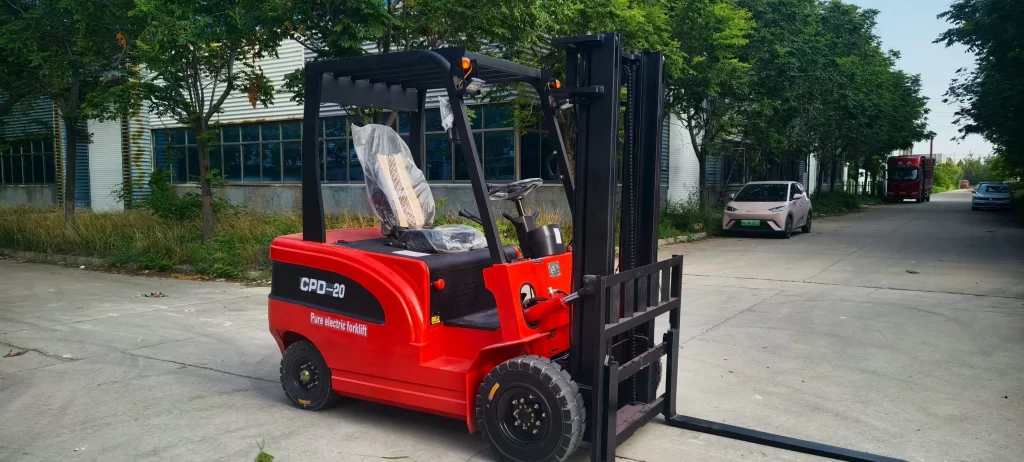
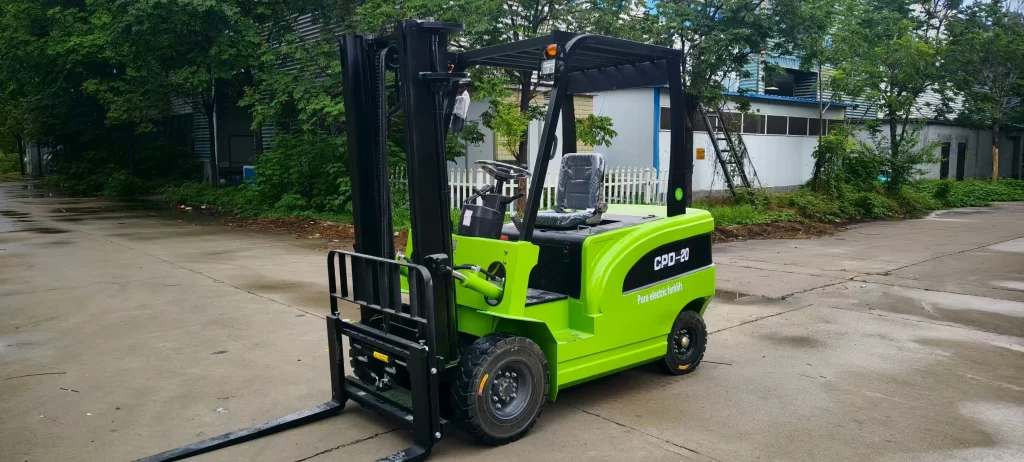
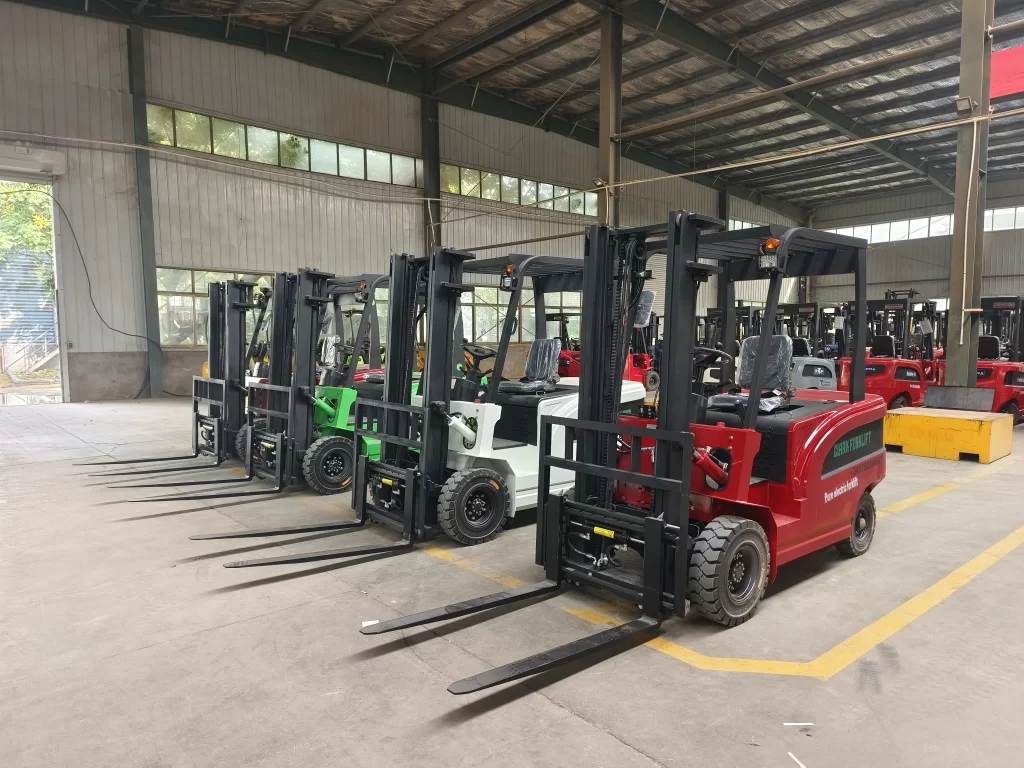
An electric forklift is a zero-emission forklift. Its main power source comes from batteries, including lead-acid batteries and lithium batteries.
The Advantages of Electric Forklifts
What is an electric forklift? An electric forklift is a material handling device powered by a battery, converting chemical energy into electrical energy to drive the equipment. Main categories include counterbalance electric forklifts, four-way electric forklifts, electric pallet stackers, and electric stackers. It uses transistor controllers such as SCR and MOS tubes to improve performance, featuring zero pollution, easy operation, and high energy efficiency.
- Compared to a diesel forklift, an electric forklift is driven by a battery-powered motor without an engine burning fuel, so it produces zero exhaust emissions during operation.
- No CO, NOx, PM2.5, VOCs, or other air pollutants are released. Indoor air quality is completely unaffected and complies with emission standards in every country.
- Even in highly sensitive environments such as cold storage, cleanrooms, food warehouses, e-commerce warehouses, and flammable or explosive areas, an electric forklift operates without sparks, making it relatively safer.
- The price of an electric forklift is relatively low. Electric forklifts from 1 to 5 tons offer good quality and high cost-effectiveness for small and medium-sized warehouses.
Key Industries That Require Zero-Emission Forklifts
With the development of motors and forklift battery technology, electric forklifts have replaced internal combustion forklifts in many applications.
- Food and Beverage: Using eco-friendly, non-marking tires, a warehouse electric forklift prevents exhaust from contaminating food raw materials and finished products.
- Pharmaceutical and Medical: Maintains GMP cleanliness standards and prevents cross-contamination.
- Electronics and Semiconductors: Zero-emission particulate matter helps prevent damage to precision components.
- Cold Chain Warehousing: Lithium battery electric forklifts can operate in low-temperature environments without preheating like diesel forklifts.
- Retail and E-commerce: The compact design of an electric forklift allows narrow aisle operation, improving work efficiency and the employee working environment, aligning with ESG reporting requirements.
- Coal Mines and Flammable or Explosive Sites: With no sparks or exhaust emissions, heavy-duty counterbalance electric forklifts are suitable for flammable and explosive environments.
Types of Electric Forklifts and Suitable Applications
There are many types of electric forklifts, including electric pallet trucks, electric stackers, counterbalance electric forklifts, electric reach trucks, and VNA forklifts. Below are their main application scenarios, and different electric forklifts can be used together in combination.
- Electric Pallet Truck: The electric version of a manual pallet truck, with a load capacity of 2-5 tons and a lift height of 10-15 centimeters. Both travel and lifting are driven by electric motors, making it suitable for most warehouse material handling tasks.
- Electric Stacker: With a load capacity of about 1-3 tons and a maximum lift height of 5-6 meters, electric stackers come in many models, including stand-up stackers and pedestrian-operated stackers. The integrated control handle controls forward, reverse, and lifting. Its small turning radius makes it suitable for narrow aisle operations.
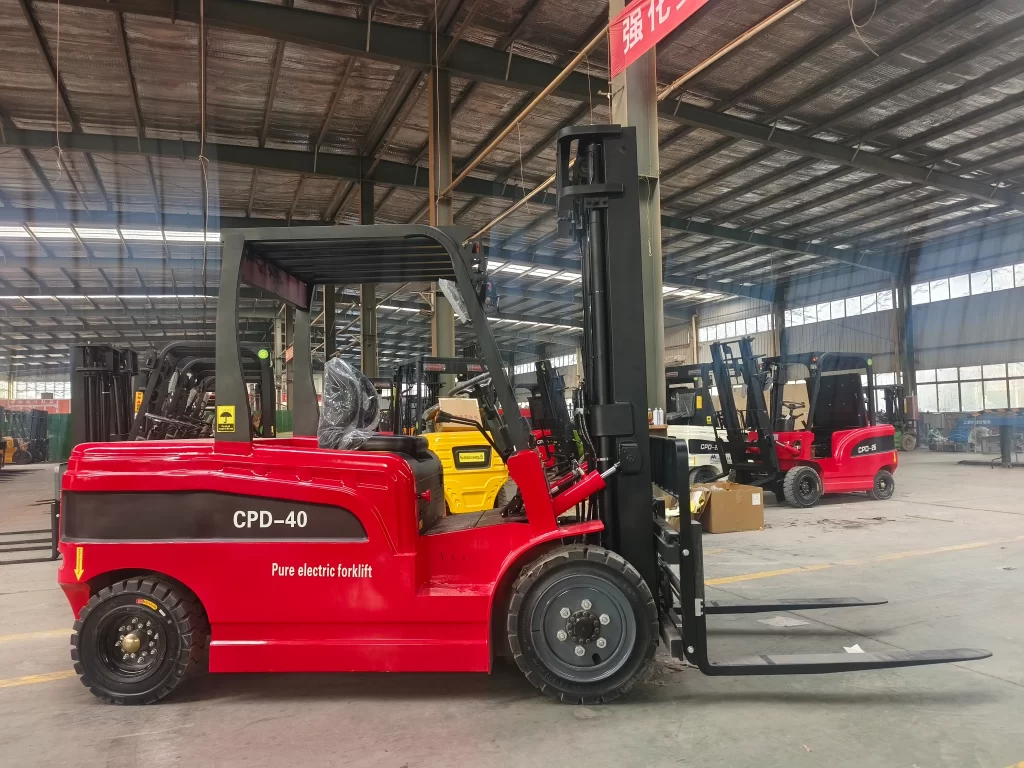
- Counterbalance Electric Forklift: Including four-wheel electric forklifts and three-wheel electric forklifts. Load capacity ranges from 1.5 to 10 tons, with lift heights from 3 to 7 meters. Seated operation with options for a cabin, forklift attachments, and air conditioning. Suitable for both indoor use and level outdoor surfaces, with a wide range of custom features for various working environments.
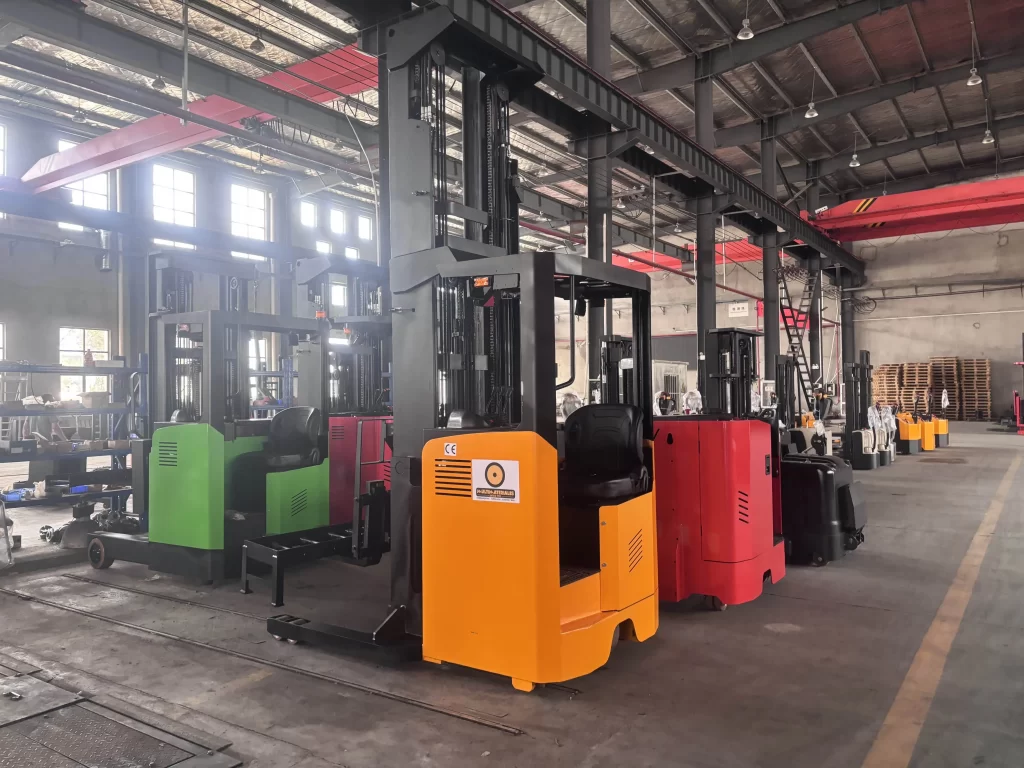
- Reach Truck: A type of electric material handling equipment, available as both stand-up and seated models. Load capacity is 1-3 tons, with a maximum lift height of 13 meters, and it is a narrow aisle forklift. Its mast or fork carriage can move forward and backward for transporting large items in warehouses, usually battery-powered. A reach truck has two forward-extending legs with wheels at the front ends, ensuring stability under load. It combines the advantages of counterbalance electric forklifts and stackers, featuring environmental friendliness, energy efficiency, low noise, high lifting, and a small operating footprint. The price of a reach truck is relatively high, but it is well suited for narrow aisle operations in e-commerce warehouses.
- VNA Forklift: A very narrow aisle forklift designed for confined aisle operation. The mast and forks are highly flexible, allowing directional changes without moving the vehicle body.
You can choose the appropriate electric forklift based on your warehouse layout and usage scenarios.
The Critical Role of Low Noise in Warehouse Operations
Compared to a diesel forklift, the quiet operation of an electric forklift is highly suitable for indoor use.
Understanding Forklift Noise Levels
- Diesel Forklift: Operating noise is typically 75-85 dB, with peaks exceeding 90 dB.
- LPG Forklift: Operating noise is about 70-80 dB.
- Electric Forklift: Operating noise is usually only 55-65 dB, equivalent to normal conversation levels.
The Operational Benefits of a Quieter Forklift
Low noise is a significant operational advantage of electric forklifts. It not only improves the working environment but also enhances the company’s image.
- Operators can hear surrounding sound signals more clearly, improving operational safety.
- It enhances employee comfort and reduces fatigue and work stress.
- It allows warehouses to extend operating hours without being restricted by community noise regulations.
- In multi-shift or 24-hour warehouse operations, the low-noise advantage is particularly prominent.
Electric Forklift vs Diesel Forklift: A Warehouse Perspective
Below is a comparison between electric forklifts and internal combustion forklifts.
Key Differences at a Glance
| Comparison Dimension | Electric Forklift | Diesel Forklift | LPG Forklift |
|---|---|---|---|
| Exhaust Emissions | Zero emissions | CO, NOx, PM2.5, and other harmful substances | Carbon monoxide and other substances, not zero emissions |
| Operating Noise | 55-65 dB | 75-85 dB | 75-80 dB |
| Indoor Suitability | Suitable for indoor and outdoor use | Not recommended, requires strong ventilation | Suitable for indoor and outdoor use, requires ventilation |
| Energy Cost | Low (electricity) | High (diesel price fluctuates greatly) | High (gasoline and natural gas prices fluctuate greatly) |
| Maintenance Cost | Low (no engine maintenance) | High (oil, filters, exhaust system) | High (oil, filters, exhaust system) |
| Service Life | 5-10 years (lithium battery) | 5-12 years (with careful maintenance) | 5-12 years (with careful maintenance) |
| Initial Purchase Cost | Lower for 1-5T models | High | High |
| Total Cost of Ownership | Low | High | High |
| Endurance | Up to 10 hours per charge, shift work possible | 24-hour operation | 24-hour operation |
| Outdoor or Harsh Environment Adaptability | Suitable for indoor use, not suited for rain or snow | Works in any weather | Works in any weather |
The advantages of an electric forklift are cost-effectiveness, eco-friendliness, and quiet operation, making it ideal for indoor use. Its disadvantages include limited endurance, poor adaptability to outdoor environments, and moderate power.
When Diesel Forklifts Still Make Sense
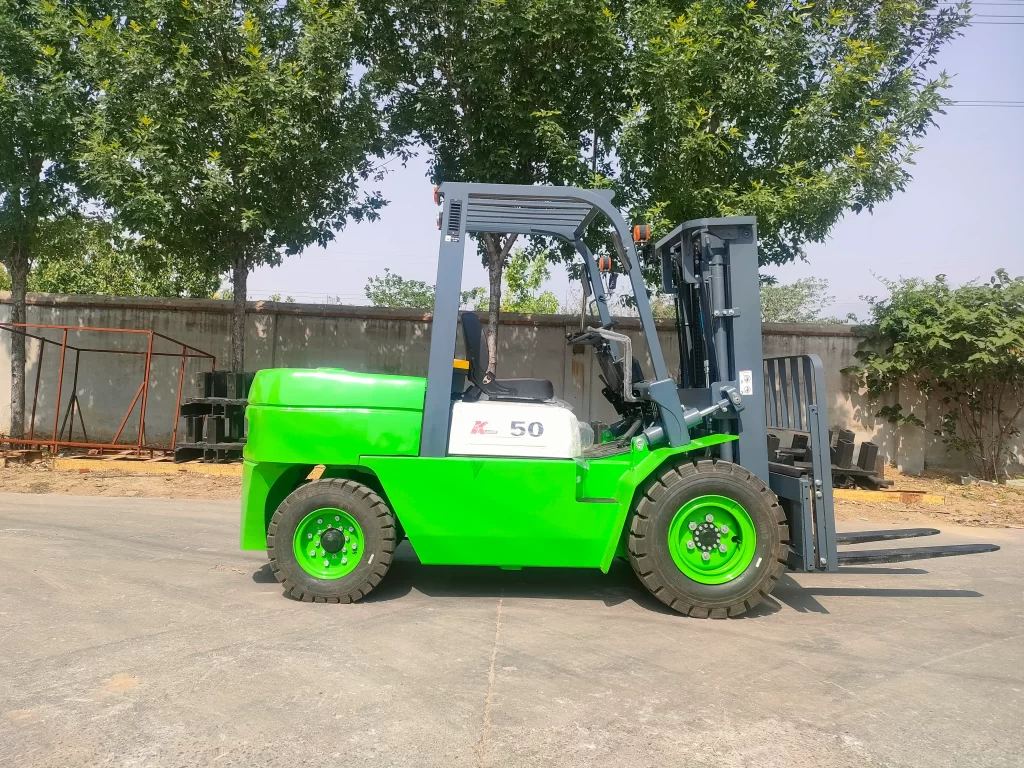
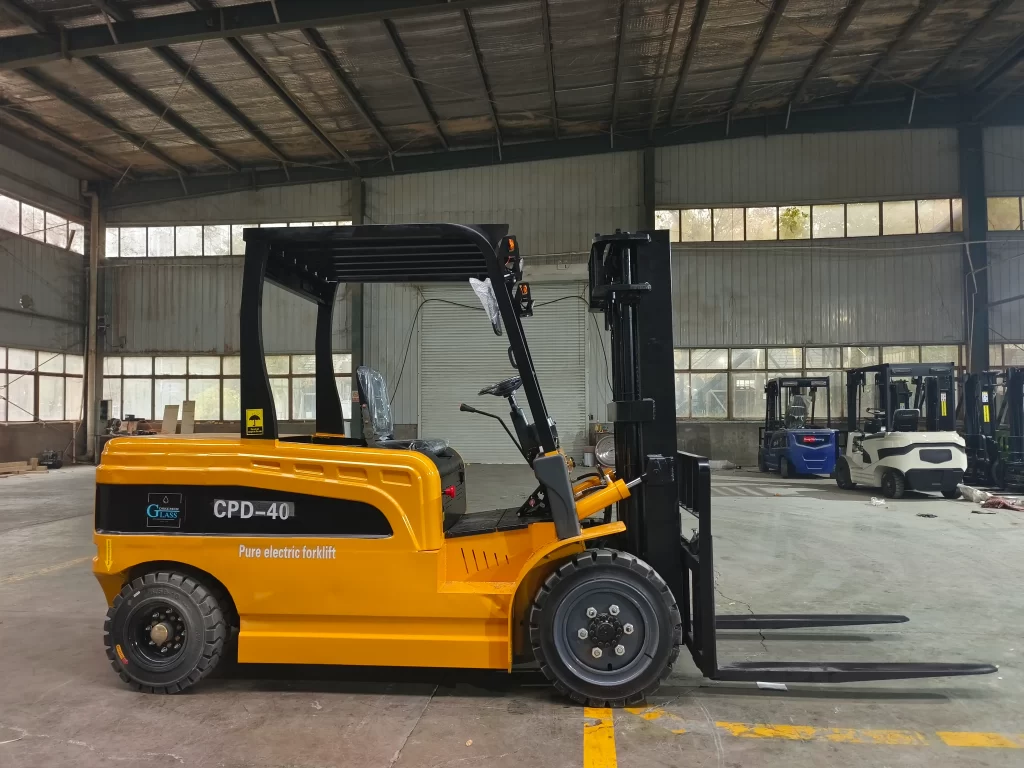
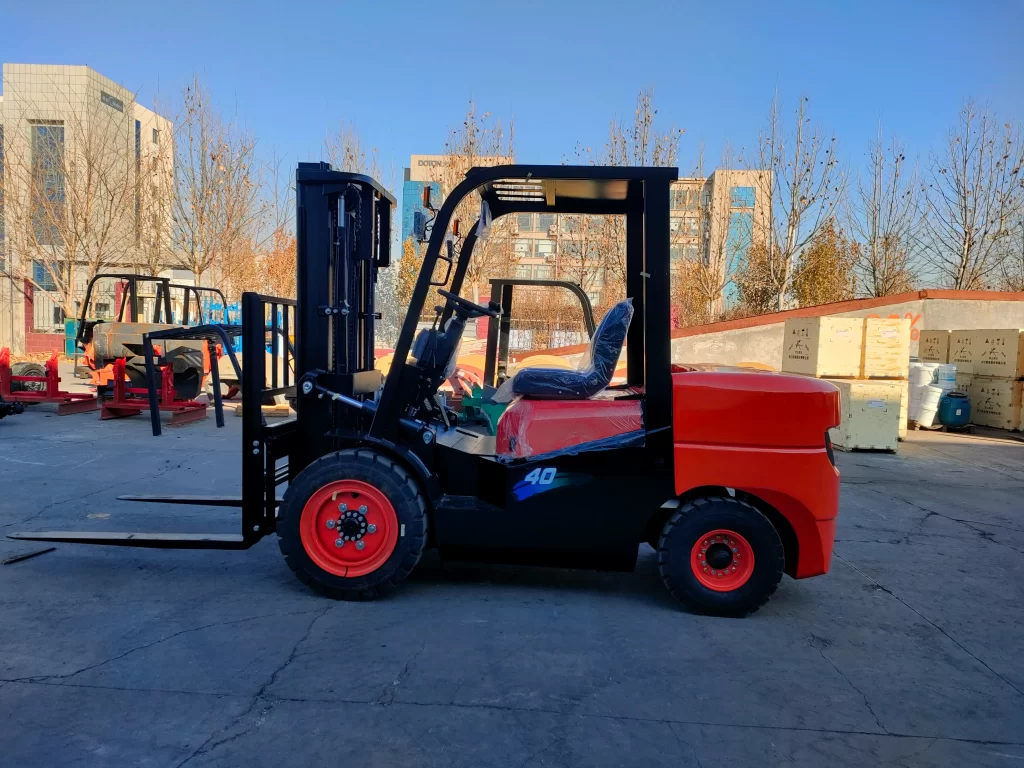
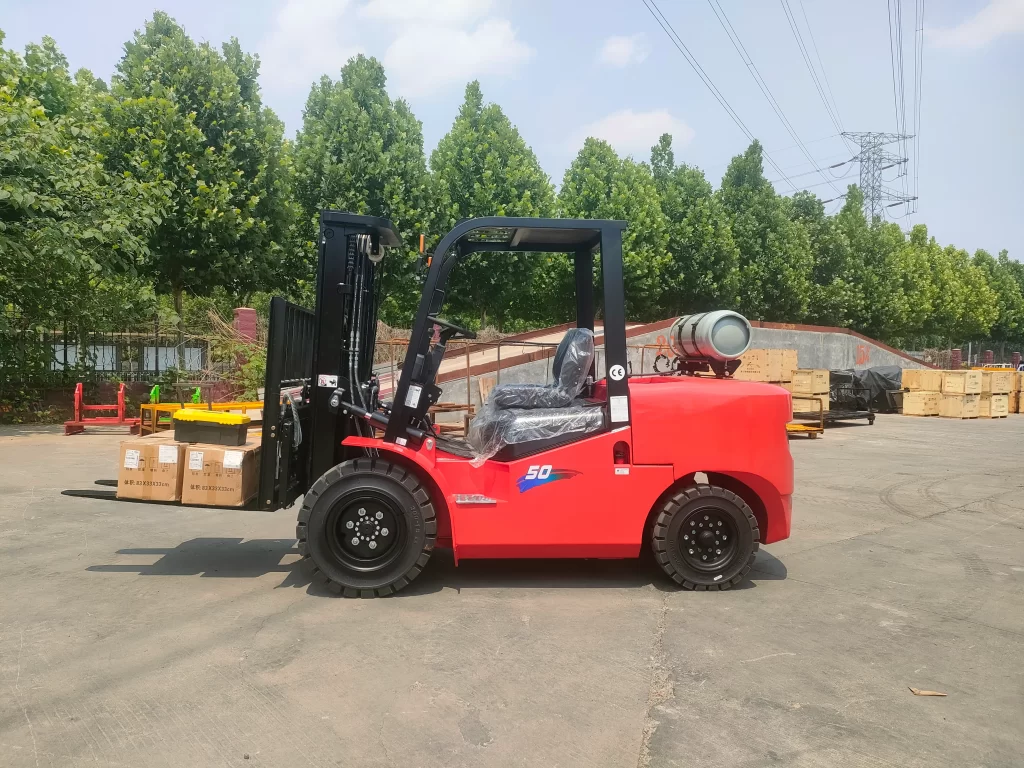
The diesel forklift is a traditional material handling tool with mature technology. High-horsepower diesel forklifts are suited for heavy-duty outdoor operations. Their powerful performance makes them the right choice for the following scenarios:
- Outdoor heavy-duty operations such as construction sites, ports, and mines.
- Remote locations without charging facilities.
- Special scenarios requiring extreme gradeability or continuous ultra-long operation.
Lithium-Ion vs Lead-Acid Batteries: Making the Right Choice
The main battery types for electric forklifts are lead-acid and lithium batteries. What are the differences between them?
Lithium-Ion Electric Forklift Advantages
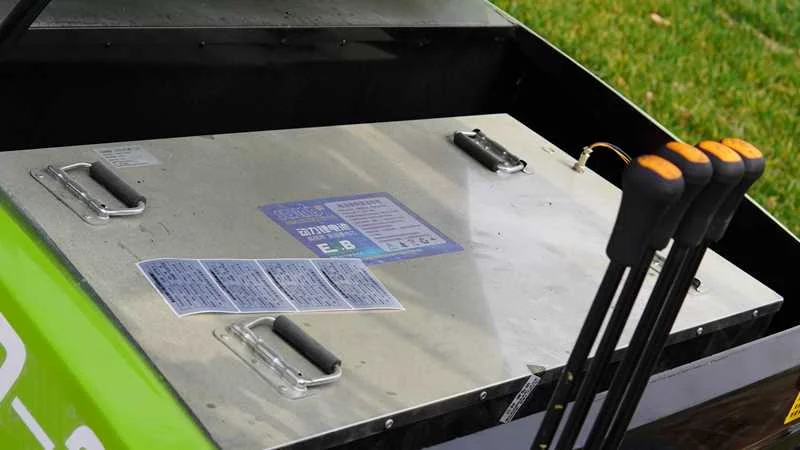
Lithium battery electric forklifts offer the following advantages:
- Fast Charging: Supports fast charging at 380V.
- Long Cycle Life: Over 3,000 cycles, with a service life of 8-10 years.
- Maintenance-Free: No need for water refilling, equalization charging, or regular inspection.
- High Efficiency: High energy density and high discharge efficiency.
- Good Low-Temperature Performance: Active chemical properties make it suitable for cold storage and other low-temperature environments.
- BMS System: Equipped with a Battery Management System to monitor battery capacity, temperature, and health status.
Lead-Acid Battery Considerations
The lead-acid battery in an electric forklift has relatively stable chemical properties, making it safer for indoor work.
- Low Initial Cost: Purchase price is about two-thirds that of a lithium battery.
- Recyclable: Lead-acid batteries can be recycled and reused.
- Safe and Stable: Very low risk of thermal runaway.
- Suitable Scenarios: Limited budget, single-shift operation, dedicated charging area.
The forklift lead-acid batteries produced by our factory are maintenance-free lead-acid dry batteries, capable of 3,000 charge-discharge cycles.

Battery Selection Guidance
Should you choose a lithium electric forklift or a lead-acid battery electric forklift? You can decide based on your operating environment and needs.
- Multi-shift or 24-hour operation: Prioritize lithium batteries for fast charging. Lithium batteries are also self-contained units that can be quickly swapped.
- Cold storage environments: Lithium batteries have better discharge efficiency than lead-acid batteries at low temperatures.
- Budget-sensitive and single-shift operation: Lead-acid batteries remain a reliable choice.
Calculating the Real Cost of Electric Forklifts
Total Cost of Ownership (TCO) Analysis
We can calculate the TCO of an electric forklift based on its purchase cost, maintenance expenses, and service life.
- Electric Forklift Price: Electric forklifts from 1 to 5 tons are cheaper than diesel forklifts.
- Energy Cost: Electricity is a renewable energy source. Its cost is far lower than diesel, offering significant long-term savings.
- Maintenance Cost: An electric forklift has no engine, transmission, or exhaust system, so there are fewer maintenance items. A diesel forklift requires regular replacement of air filters, oil filters, hydraulic oil filters, and cleaning of engine carbon deposits.
- Parts Replacement: The motor has a simple structure, a long lifespan, and few wear parts.
- Import Cost: Importing electric forklifts from China is more cost-effective. As a professional Chinese electric forklift manufacturer, we can provide high-quality electric forklifts at competitive prices.
Conclusion: The Future of Warehouse Forklifts Is Electric
The zero-emission and low-noise advantages of electric forklifts make them one of the best choices for indoor forklifts. With the development of electric motors and battery technology, the load capacity, maneuverability, and endurance of electric forklifts have greatly improved. Whether meeting regulatory requirements, protecting employee health, reducing operating costs, or enhancing brand image, the electric forklift is the optimal solution.
- As lithium battery technology matures and costs continue to decline, the total lifecycle economic benefits of electric forklifts will further surpass diesel forklifts.
- Electric forklifts support intelligent management. For enterprises planning to upgrade to smart warehouses, switching to electric forklifts as early as possible is not only following industry trends but also gaining an advantage for future sustainable development.
💡 One-sentence summary: For indoor warehouses, choose an electric forklift. Zero emissions protect employee health, low noise improves operational comfort, and it saves money in the long run.
📞 Looking for a zero-emission, low-noise electric forklift solution for your warehouse? We are a professional Chinese electric forklift manufacturer, offering a full range of 1-10 ton electric forklifts with lithium battery customization. Contact us for a free selection consultation and the most cost-effective quote.