Common Forklift Classifications and How to Choose the Right One (2026 Guide)
Introduction
The forklift is one of the most widely used pieces of mechanical equipment in the industrial sector. Whether in a warehouse, factory, or on a construction site, a vast amount of material handling work relies on forklifts. However, forklift classifications are numerous. Different types and load capacities each have their own strengths, so it is essential to have a relative understanding of forklifts before making a purchase or renting one for a project. So, how do you choose the right warehouse forklift based on your own needs? Below, we introduce some of the most common forklift types and provide suggestions to help you select the right one.
Major Forklift Types
1. Pallet Truck
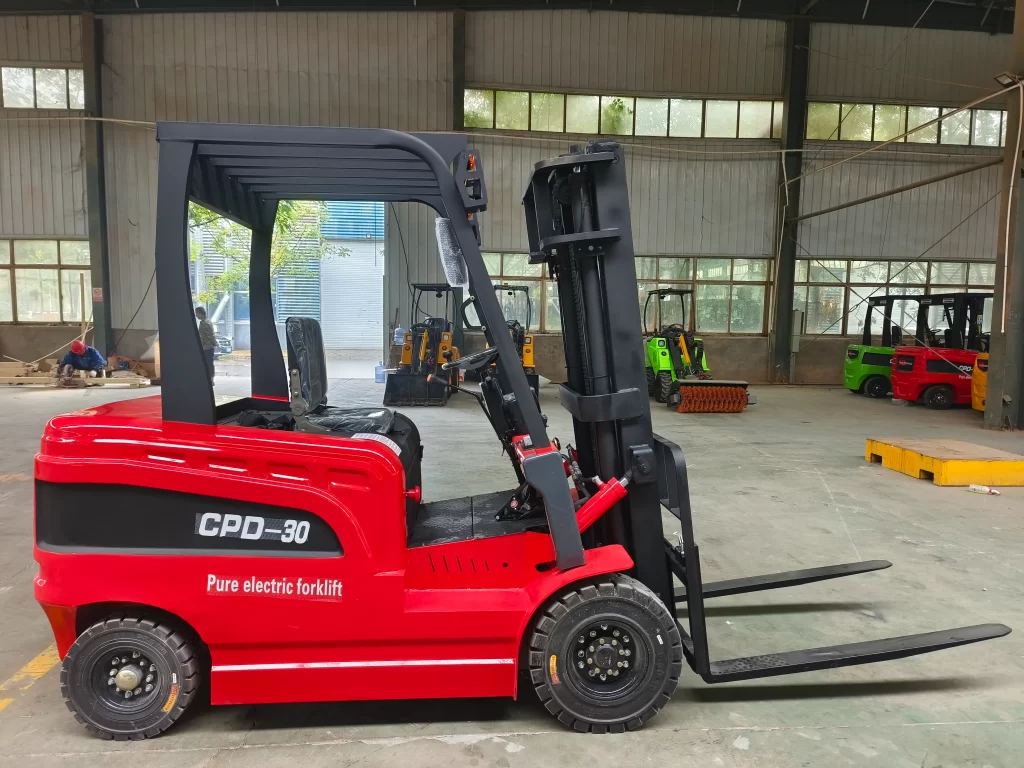
Pallet trucks are divided into electric pallet trucks and manual pallet trucks. They generally have a load capacity of around 2-5 tons and are primarily used for moving goods on production lines and inside and outside warehouses. This is a common type of forklift, equipped with a hydraulic pump, and lifts goods to a height of about 10-20 cm. When choosing this type of pallet truck, you must pay attention to the pallet size of your goods. The standard fork width dimensions for a manual pallet truck are 550mm and 650mm, and it is only suitable for single-sided pallets.

2. Stacker Forklift
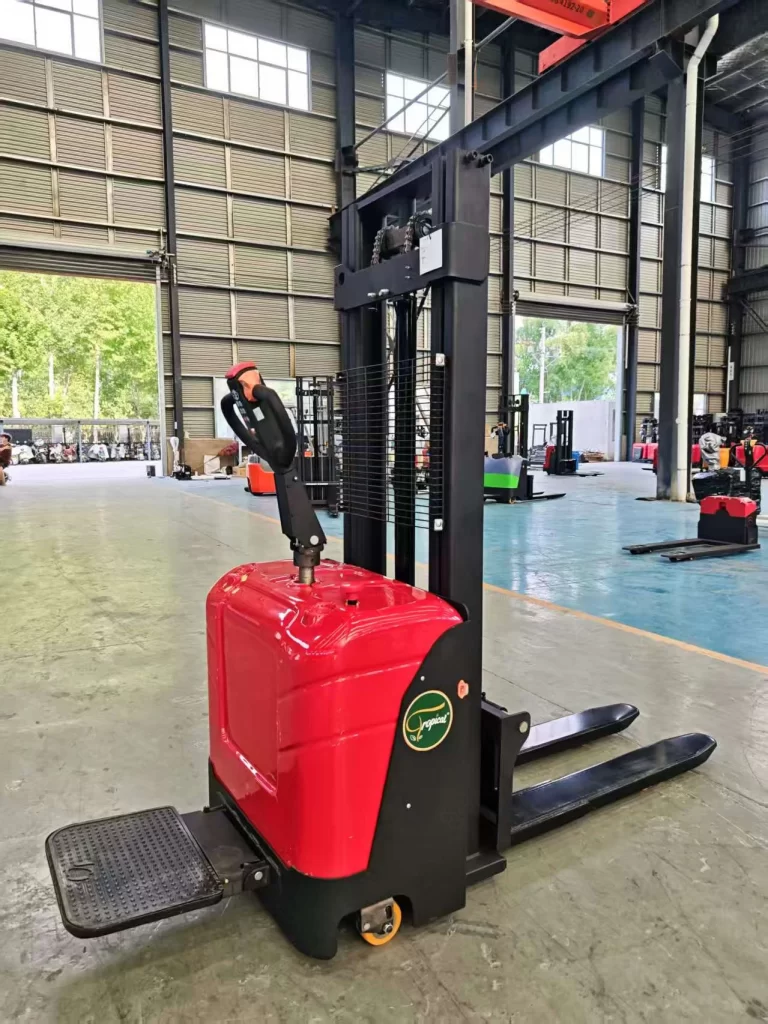
A stacker forklift, also known as an electric stacker or pallet stacker, refers to a wheeled handling vehicle used for loading, unloading, stacking, and short-distance transport of unitized pallet goods. The main load capacity is around 1-3 tons, with a maximum lift height of 6-7 meters. When the lift height exceeds 5 meters, it is advisable to widen the support legs to avoid accidents caused by excessive height. A stacker has a mast but does not have a driver’s cabin like other forklifts, which is mainly to facilitate flexible handling and stacking operations. Stackers are mainly divided into pedestrian-operated stackers, stand-on stackers, and reach stackers. All of these have a very small turning radius, making them suitable for narrow aisle use. They are also affordable, fitting clients with a limited budget. This type of electric stacker can support customization, including custom off-road tires, which can raise the stacker’s chassis and enhance its mobility to adapt to uneven ground. Also, you need to pay attention to the outer width specification of the forks, which comes in 550mm and 650mm. You should measure your pallet dimensions first to choose the right stacker.
3. Counterbalance Forklift
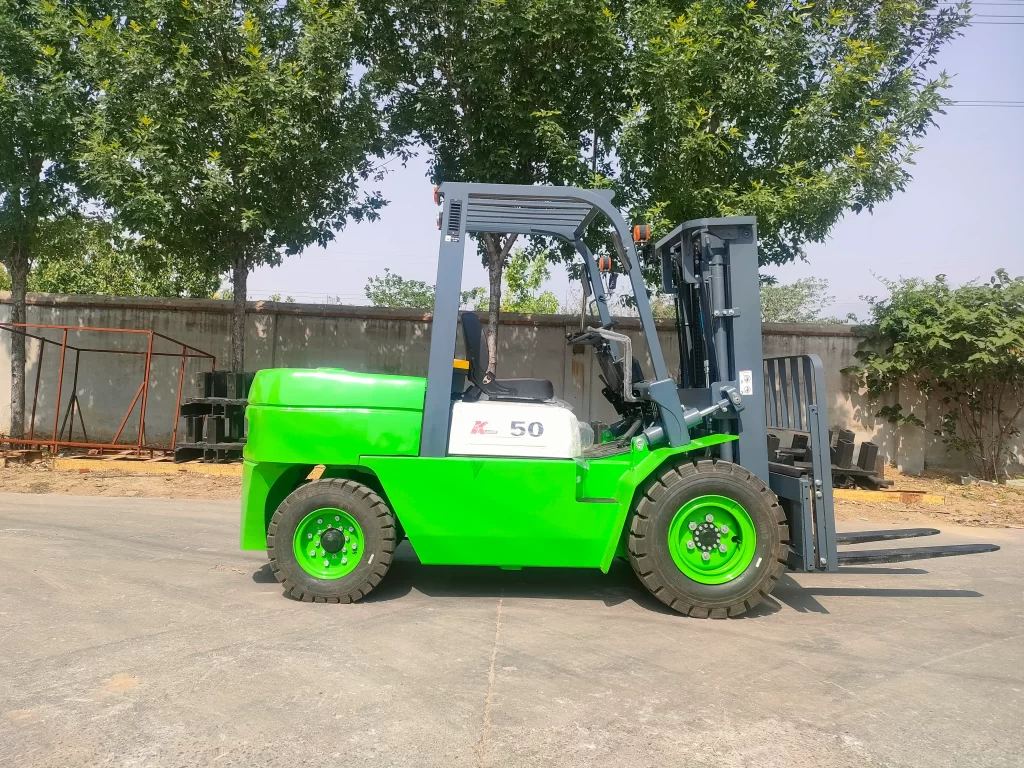
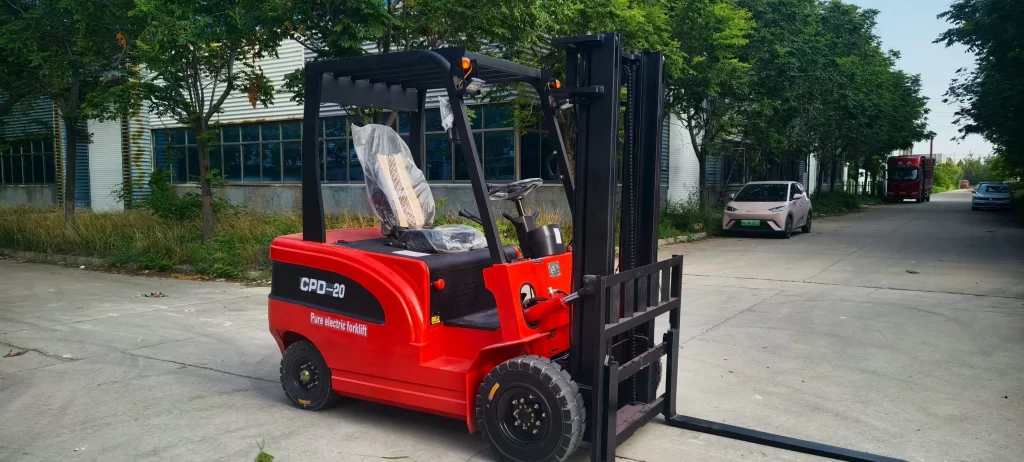
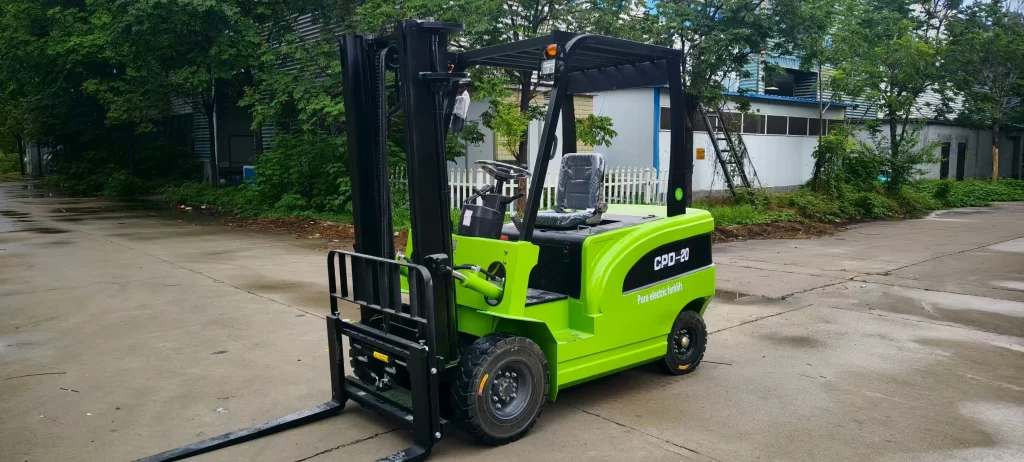
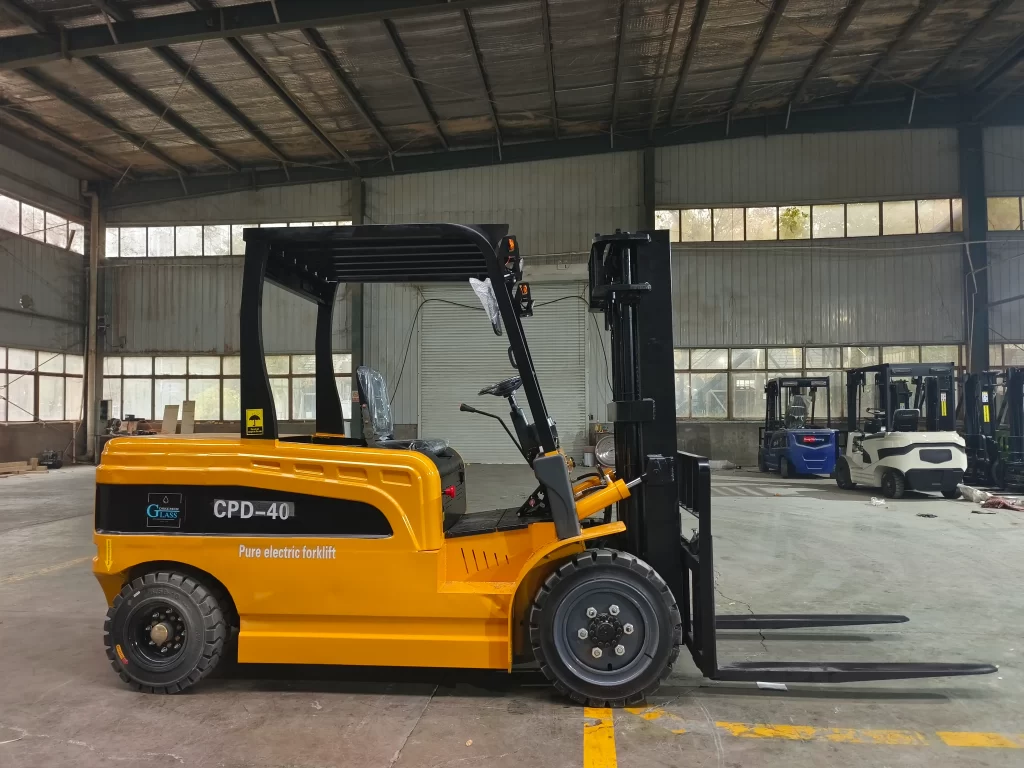
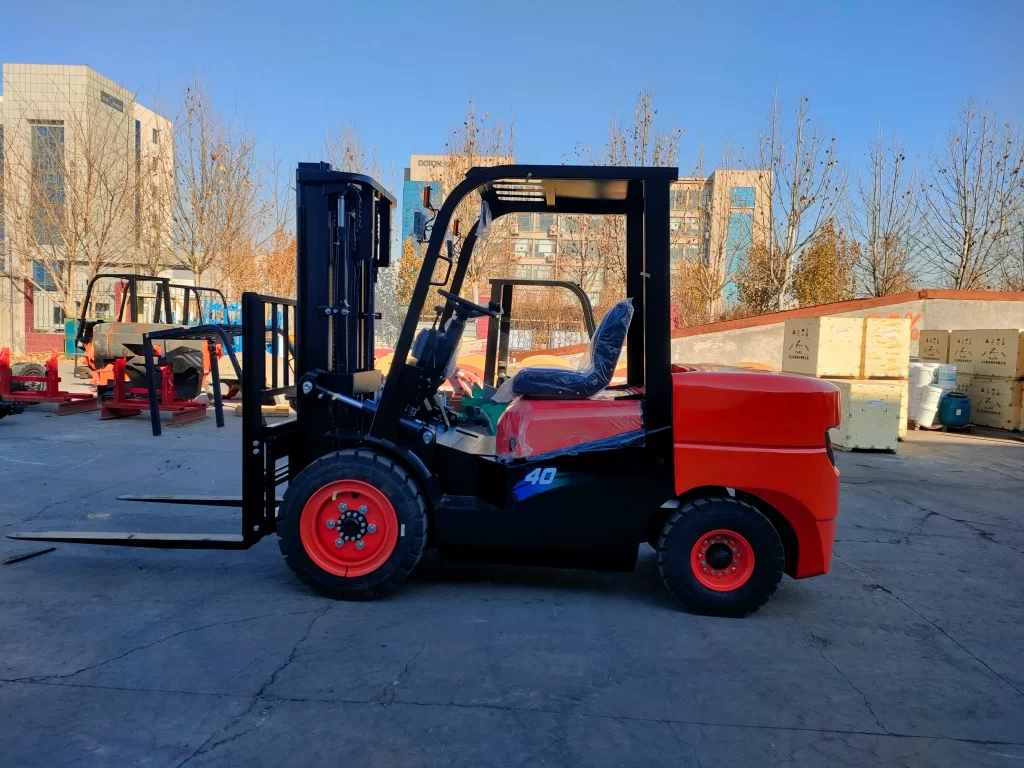
The counterbalance forklift is one of the most widely used forklift classifications today. Counterbalance forklifts can be divided into internal combustion forklifts and electric forklifts. Their load capacity ranges from about 1.5 to 10 tons, and the lift height can reach 3-7 meters. They are the most common type of forklift. The forks of a counterbalance forklift are located in front of the centerline of the front wheels. Its main feature is that, to overcome the tipping moment generated by the load, a counterweight block is installed at the rear of the forklift.
- Internal Combustion Counterbalance Forklift: Equipped with pneumatic tires, it runs relatively fast, up to 20 km/hour, has good gradeability, and is suitable for outdoor work. Its working range is wide, suitable for loading, unloading, stacking, and handling unitized goods at ports, container terminals, stations, and warehouses.
- Electric Counterbalance Forklift: Equipped with wear-resistant solid tires, it can be further divided into lead-acid electric forklifts and lithium battery electric forklifts. An electric forklift is a green and environmentally friendly forklift, suitable for indoor use, and produces no emissions.
When buying a forklift for your warehouse, you need to consider the pros and cons of a diesel forklift vs. an electric forklift. Firstly, an electric forklift is suitable for indoor use, with low noise and zero emissions. Its load capacity is similar to that of an internal combustion forklift. The starting and lifting motion of an electric forklift is stable and smooth, unlike a diesel forklift, which requires some operating skill. Secondly, the initial purchase cost and maintenance cost of a 1-5 ton electric forklift are lower than those of a diesel forklift. For instance, the only type of internal combustion forklift suitable for indoor use is the LPG dual-fuel forklift. The engine of this type uses natural gas and gasoline as fuel, and its purchase cost is higher than that of a regular diesel forklift. From this perspective, the electric forklift is the main trend because its total cost of ownership (TCO) appears superior overall to an internal combustion forklift. However, the disadvantages of an electric forklift are also obvious: its mobility and endurance are weaker than an internal combustion forklift, and the resale value of a used machine is lower than a diesel forklift.
You can choose a suitable forklift based on your specific usage situation and in combination with your operating habits.
4. Reach Truck for Warehouse
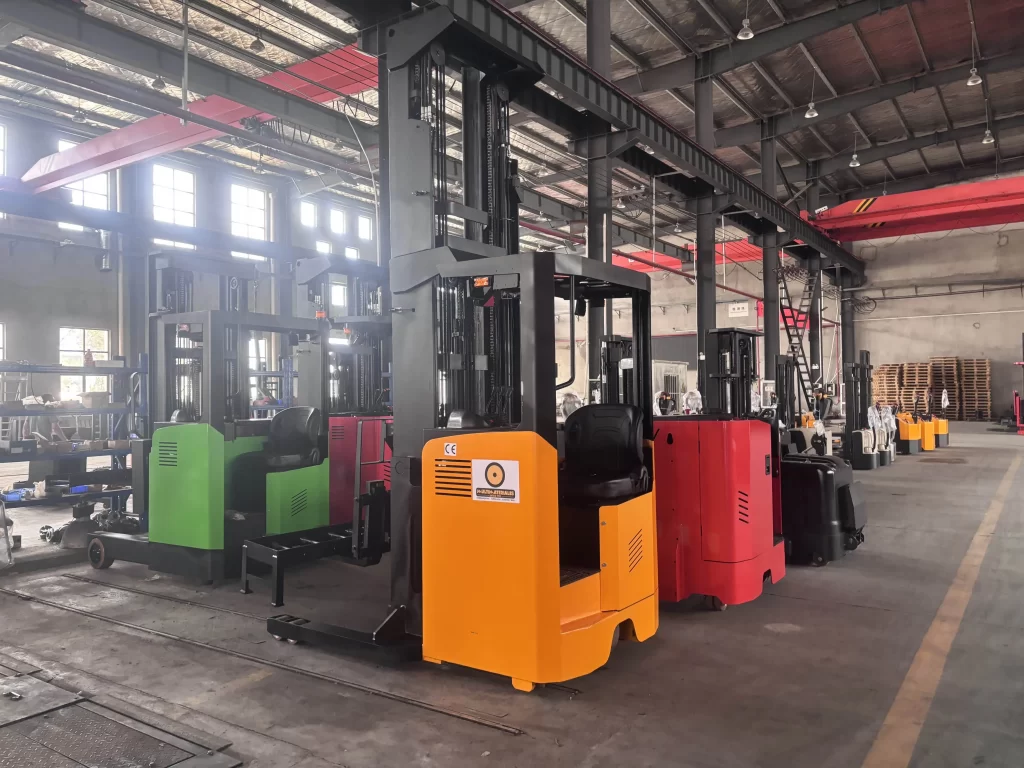
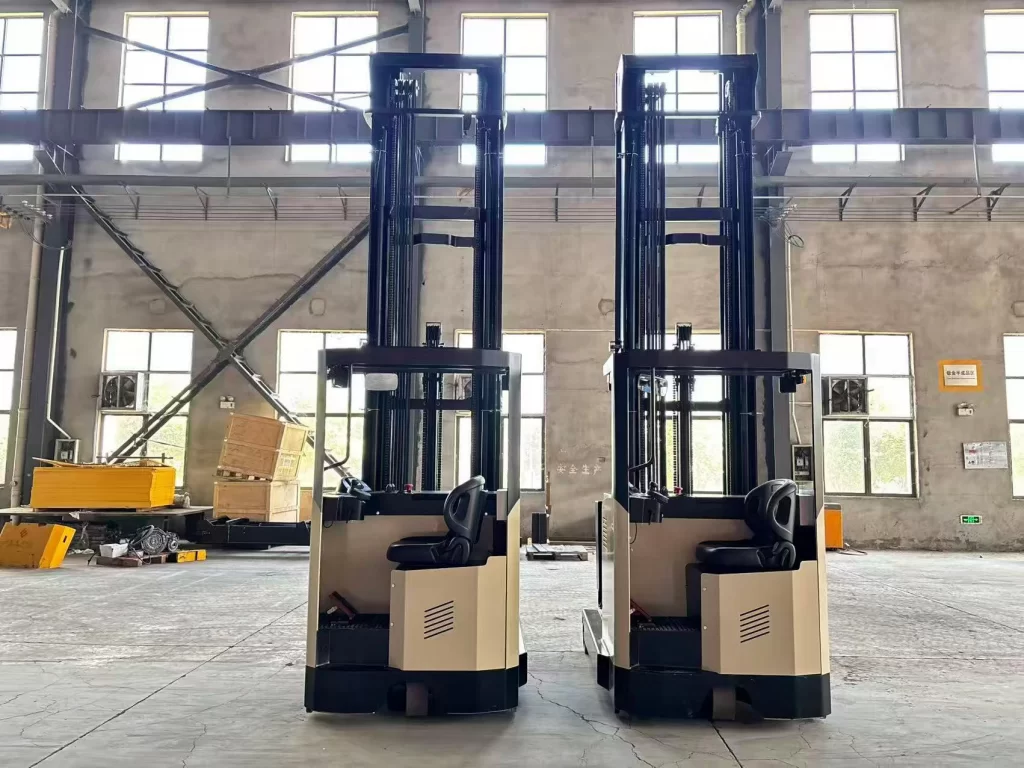
The mast or forks of a reach truck can move forward and backward. The maximum lift height has reached 13 meters, with a load capacity ranging from 1 to 3 tons. Special-purpose products have also been developed, such as multi-directional reach trucks for accessing long or wide goods, double-deep reach trucks, indoor/outdoor universal reach trucks, and VNA reach trucks. They have gradually become a major material handling solution for e-commerce warehouses.
This type of indoor electric forklift is a narrow-aisle forklift, suitable for customers handling lightweight goods and pursuing maximum warehouse space utilization. It is typically used in large-scale distribution centers and e-commerce warehouses. The price of a reach truck is relatively high due to its high purchase cost. Sometimes, renting a reach truck is actually more cost-effective.
5. Order Picker Forklift
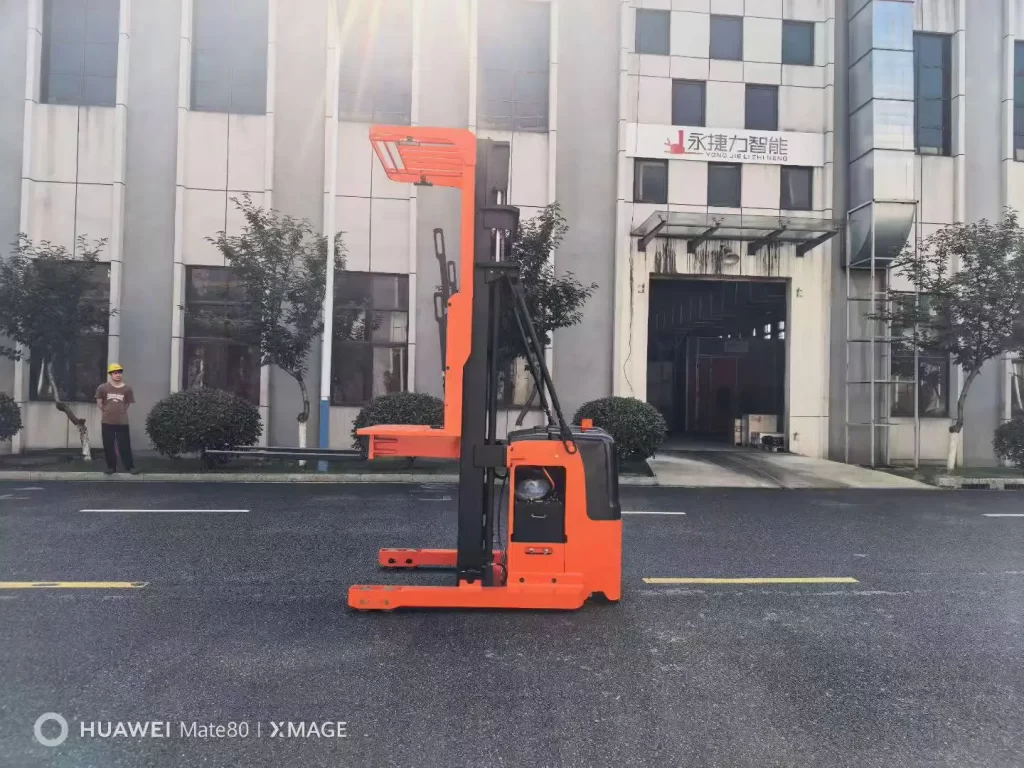
An order picker forklift, also known as a picker forklift, has its forks and the operator’s standing platform mounted on an inner sliding frame. They move up and down together with the loading and unloading device, and the operator can access items stored on racks on both sides. The lift height of an order picker is 4 to 6 meters. It has a small turning radius and is suitable for narrow aisles and high-bay rack warehouses.
6. Rough Terrain Forklift
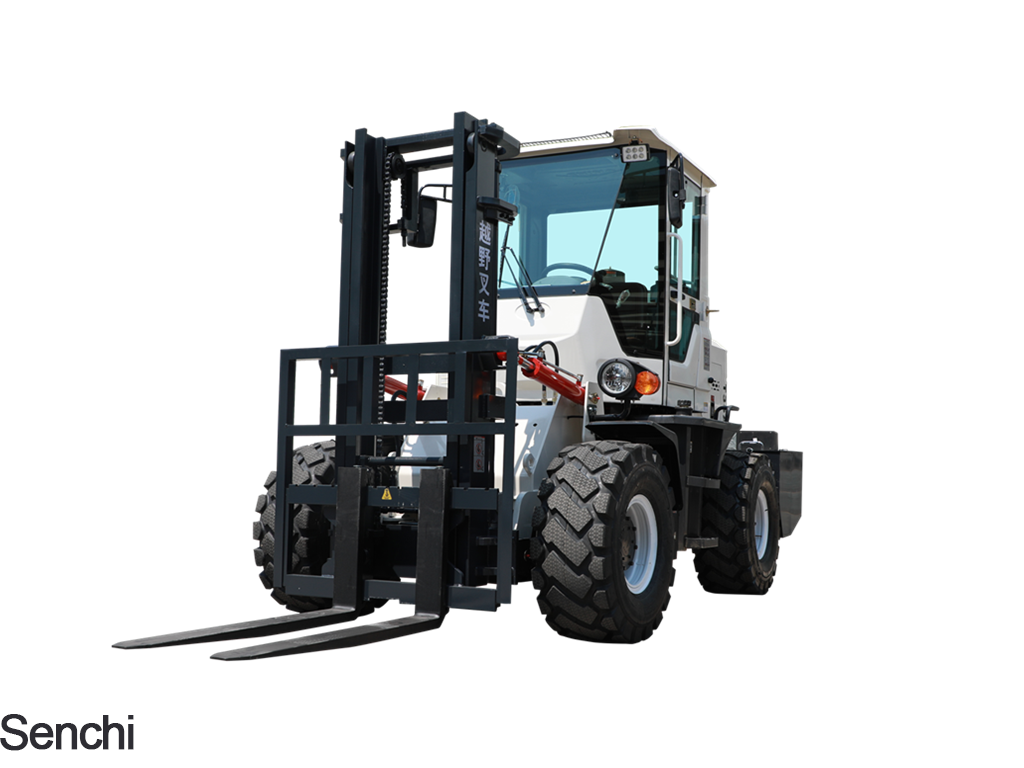
The rough terrain forklift is a major classification for outdoor operations. Compared to industrial counterbalance forklifts, rough terrain forklifts use off-road pneumatic tires and are suitable for outdoor construction and operations on uneven surfaces, such as gravel, sand, mud, or even snow and ice-covered ground. Rough terrain forklifts have powerful engines, making them faster, more flexible, and durable. The load capacity of a rough terrain forklift is generally 3-5 tons. The body of a rough terrain forklift is usually articulated, and this design gives the rough terrain forklift strong maneuverability over rough ground.
7. Heavy-Duty Forklift
A heavy-duty forklift, also known as a high-capacity forklift, combines the functions of a warehouse forklift with those of a telescopic forklift. It has a high load capacity, ranging from 13 to 25 tons. Common heavy-duty forklifts include heavy-duty forklifts, container reach stackers, and container stackers. The application range is generally narrow, concentrated in scenarios such as heavy industry and container terminals. This type of forklift is suitable for dock work and is relatively expensive.
8. Telehandler
A telehandler, also known as a telescopic forklift, features a boom and an extendable arm. The forks attached to the telescopic boom can lift 2-5 tons of material off the ground and lift it to heights of 6-19 meters. The load capacity and lift height of a telehandler are very strong, making it very suitable for high-altitude operations. It is widely used in factories, stations, docks, freight yards, post offices, forestry, building materials, warehouses, and other places.
How to Choose a Forklift?
After a preliminary understanding of the several forklift types above, you can choose the right forklift category based on your usage scenario, and then select the appropriate forklift tonnage and lift height.
1. Determine the weight, length, width, and height of your goods.
First, measure the weight and dimensions of your goods, and calculate the load center distance of the forklift. For example, even if two goods have the same weight, their dimensions are different. The distance from the object’s center of gravity to the fork faceplate is different, so their load center distance is also different. This means the forklift tonnage capable of lifting them will also be different.
2. Determine the forklift’s lifting capacity (including deration) and lift height.
A forklift’s load capacity varies at different heights. For example, a CPCD35 diesel forklift may have a load capacity of 3.5 tons at a 3-meter lift height, but its load capacity at a 4.5-meter lift height might not reach 3.5 tons; it might be around 3 tons. For specific data, you need to check the forklift load chart or contact the forklift manufacturer.
3. Determine the job site conditions: ground load-bearing capacity, slope, smoothness, site width limits, and height limits.
Understanding your site conditions allows you to choose the right forklift and potentially customize the cabin and other functions for easier work.
4. Other factors: extreme operating temperatures.
For low-temperature operations, you can choose a forklift preheating start system, or for cold storage, you can choose a suitable cold storage forklift.
5. Choose a suitable forklift based on your budget.
If you are unsure, you can contact us. We are a professional forklift manufacturer that can provide you with professional guidance and advice, as well as cost-effective forklift equipment.
📞 Looking for the right forklift for your operation? Contact our team today for expert advice and a customized, cost-effective solution.