New vs Used Reach Truck: Total Cost of Ownership Analysis for Small Businesses (2026)
When it comes to adding a reach truck to your warehouse fleet, most business owners face a familiar dilemma: buy new, buy used, or lease? Many decision-makers fixate on the upfront price tag — but that’s merely the tip of the iceberg.
At Senchi Machinery, we are a professional Chinese forklift manufacturer dedicated to providing you with cost-effective reach trucks that deliver reliable performance without breaking the bank. We believe smart equipment decisions are built on a Total Cost of Ownership (TCO) analysis. This means looking beyond the initial purchase or rental cost and evaluating the full spectrum of expenses: from energy consumption and maintenance frequency to spare parts availability and resale value. Only then can you truly determine which option delivers the best long-term value for your small business.
In this guide, we’ll break down the numbers, compare real-world cost categories, and provide a clear decision framework tailored to small warehouse owners.

1. Understanding Total Cost of Ownership — The 6 Key Components
Before diving into the new-vs-used comparison, it’s essential to understand what TCO actually means for a reach truck. In simple terms, TCO captures the total economic impact of owning and operating a piece of equipment over its entire useful life. Here are the six core cost categories you need to account for:
Acquisition Cost – This is the upfront cost to obtain the equipment — whether it’s the full purchase price of a new reach truck, the negotiated price of a used unit, or the initial payment on a lease agreement.
Operating Cost – The ongoing energy expenses required to keep the machine running. For electric reach trucks, this primarily means electricity costs for battery charging.
Maintenance & Repair Cost – This includes both scheduled maintenance (routine inspections, replacing wear parts) and unscheduled repairs (emergency fixes when components fail unexpectedly).
Downtime & Productivity Loss – Arguably the most overlooked cost category. When a reach truck breaks down and waits for repairs or parts, the resulting business interruption and production loss often far exceed the repair bill itself.
Disposal Cost or Residual Value – At the end of the equipment’s service life, you may incur disposal costs — or you might recover some value through resale. This is a critical factor that varies significantly between new and used units.
Administrative & Financial Cost – This covers fleet management labor, insurance premiums, taxes, and the opportunity cost of capital tied up in the equipment.
2. Price Gap at a Glance: New vs Used
When acquiring a reach truck, you essentially have two primary purchase paths:
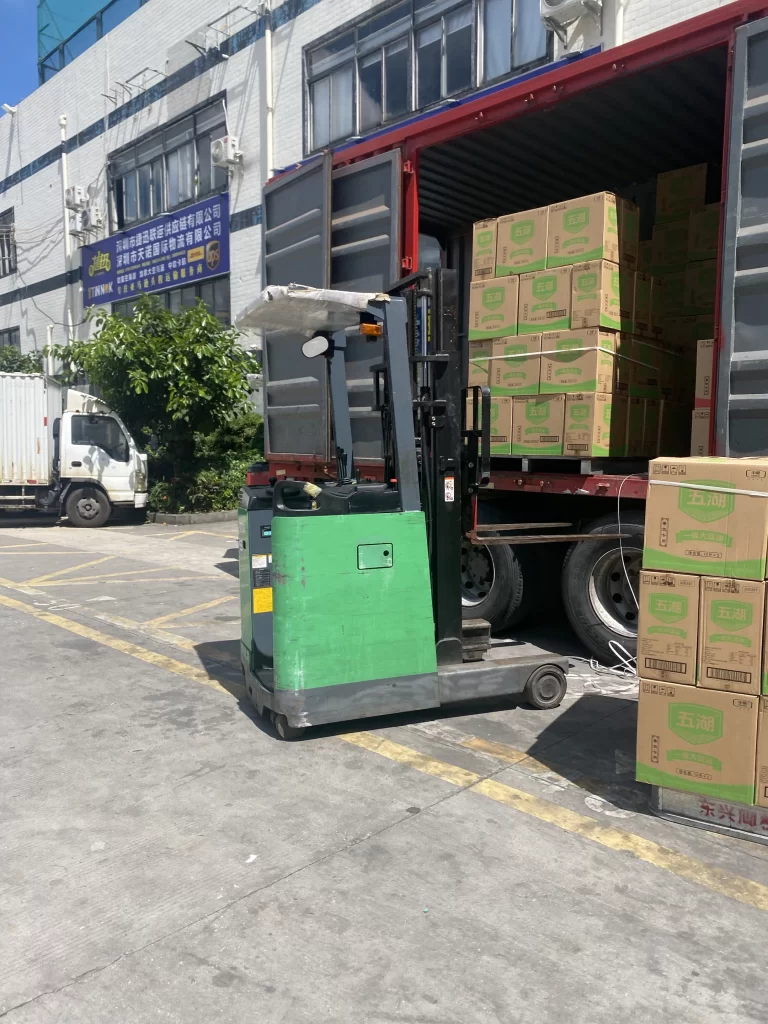
Buying New
Purchasing a brand-new reach truck means your business assumes all costs and risks. The upfront price tag is substantial — that’s the obvious part. Whether you can keep ongoing operating and maintenance costs under control depends heavily on equipment quality and your internal management capabilities.
The advantage is that you gain full ownership of the asset, including its residual value at the end of its service life. However, you also bear the full risk of technological obsolescence and depreciation. For example, if a more advanced, efficient, and cheaper model hits the market just two years after your purchase, the value of your equipment drops immediately.
Financial perspective: New equipment requires significant capital expenditure, is recorded on the balance sheet, and is subject to depreciation. The total cost gets amortized over a longer period, making this option better suited for stable, long-term operations.
Buying Used
The appeal of a used reach truck lies in the significantly lower initial acquisition cost — it’s considerably cheaper than a new unit, easing the pressure on early-stage capital. But this saving comes with a trade-off: substantially higher uncertainty risk.
The prior operating conditions, remaining service life, and hidden defects of a used machine are difficult to assess accurately. You might feel like you’ve found a bargain at purchase, only to discover later that repair costs are mounting, breakdowns are frequent, and the resulting downtime losses exceed the initial savings you pocketed.
Financial perspective: The upfront spend is lower, but total lifecycle costs are more variable. It’s a “high-risk, potentially high-reward” scenario — if you’re lucky enough to find a well-maintained unit, you can save significantly; if you’re not, the headaches can be endless.
Initial Cost Comparison
| Cost Factor | New Reach Truck | Used Reach Truck |
|---|---|---|
| Purchase Price | $23,000 – $47,000 | $7,000 – $21,000 |
| First-Year Depreciation | ~20–30% | Already stabilized |
At first glance, the used option appears far more attractive financially. But as we’ll see in the next section, the real story unfolds over the full 5-year ownership period.
3. 5-Year Total Cost of Ownership Breakdown
Now let’s dig into the real cost drivers that determine whether a new or used reach truck actually saves you money over a typical 5-year ownership cycle.
Battery — The Single Biggest Variable Cost
The battery is the heart of any electric reach truck. Unlike internal combustion forklifts, electric models experience gradual battery degradation over time. This is where many used reach truck buyers get caught off guard.
| Battery Factor | New Reach Truck | Used Reach Truck |
|---|---|---|
| Remaining Capacity | 100% (factory new) | 70–82% (may need replacement within 1–3 years) |
| Replacement Cost | ~$4,000–$7,000 after 5–7 years | May be an immediate or near-term expense |
Key insight: If a used reach truck’s battery is near the end of its life, you’re essentially inheriting a $4,000–$7,000 liability that could surface in your first year of ownership.
Maintenance & Repairs — The Ongoing Cost
Maintenance costs are one of the clearest differentiators between new and used equipment.
| Maintenance Factor | New Reach Truck | Used Reach Truck |
|---|---|---|
| Annual Maintenance Cost | ~$400–$1,400 (under warranty) | ~$1,000–$3,000 (no warranty) |
| Major Component Risk | Low (factory fresh) | High (hydraulics, mast, controller failures) |
| Parts Availability | Easy (current models) | Potentially difficult (discontinued parts) |
A single hydraulic system repair on an older reach truck can easily cost $2,500–$3,500 — almost wiping out the initial price advantage of buying used.
Downtime — The Hidden Productivity Killer
When a reach truck is out of commission, the cost isn’t just the repair bill — it’s the labor hours lost, the orders delayed, and the customer satisfaction eroded.
| Downtime Factor | New Reach Truck | Used Reach Truck |
|---|---|---|
| Breakdown Probability (Years 1–3) | Very low | Moderate to high |
| Estimated Downtime Cost | ~$80–$250/hour | Can be 2–3x higher due to aging components |
The bottom line: New reach trucks typically run trouble-free for the first 3–5 years. Used units, especially those with high hours, are far more likely to experience unplanned downtime.
4. Decision Matrix — Which Path Fits Your Business?
Based on your actual usage intensity, here’s a quick-reference guide to help you choose:
| Usage Intensity | Recommended Option | Why |
|---|---|---|
| Light Use (<1,000 hours/year) | ✅ Quality Used Reach Truck | Lower purchase cost; maintenance exposure remains manageable |
| Medium Use (1,000–2,000 hours/year) | 🤔 Certified Used or Leasing | Balanced approach between cash flow and risk management — and if you prefer to avoid long-term commitment, a rented reach truck can be a flexible alternative for seasonal or project-based needs |
| Heavy Use (>2,000 hours/year) | ✅ New Reach Truck (Lithium-Ion) | Minimal downtime + fast charging supports multi-shift operations |
A note on lithium-ion: For high-intensity operations, the fast-charging capability and zero maintenance requirement of lithium-ion batteries can deliver significant productivity gains that justify the higher upfront cost.
A note on leasing and rental: If your usage pattern is unpredictable or you need equipment only for specific projects, a rented reach truck might be the smartest short-term solution. It preserves capital, includes maintenance in many agreements, and lets you scale up or down as demand changes.
5. Used Reach Truck Buying Checklist — 5 Must-Check Items
If you decide to go the used route, don’t skip these critical checks:
- Hour Meter Reading — Look for units with less than 5,000 hours. Machines above this threshold are more prone to systematic failures. Once a major breakdown occurs, repair costs can be exorbitant — and in some cases, the unit may be beyond economic repair.
- Battery State of Health (SOH) — Have the battery professionally tested. If SOH is below 70%, negotiate a significant discount — or factor in an immediate replacement cost. You may ultimately decide to replace the battery outright for reliable performance.
- Complete Maintenance Records — Insist on a full service history. Without documented maintenance, you’re buying blind.
- Dealer Warranty — Aim for at least 3 months of warranty coverage from the seller. This provides a reasonable window to uncover any hidden issues.
- Tire Condition — Inspect all tires for wear. Replacement costs run approximately $800–$1,200 per set, so factor this into your negotiation.
Pro tip: Stick with reputable brands — and remember, we are a professional Chinese forklift manufacturer, offering you high-quality, cost-effective reach trucks that combine modern engineering with competitive pricing. Whether you’re looking for new units or exploring rental alternatives, our team can help you find the right fit for your operation.
6. Frequently Asked Questions (FAQs)
| Question | Answer |
|---|---|
| How many hours is too many for a used reach truck? | As a rule of thumb, avoid units with over 10,000 hours. The “sweet spot” is 5,000–7,000 hours with documented maintenance. |
| What’s the best age to buy a used reach truck? | 3–5 years old — this gives you the best balance of remaining life and depreciation savings. |
| Can I get financing for a used reach truck? | Yes, but interest rates are typically 2–4% higher than for new equipment. Some credit unions specialize in used equipment loans. |
| How much does a replacement battery cost? | Lead-acid: $3,000–$7,000; Lithium-ion: $8,000–$11,000+. |
| Is leasing better than buying used? | Leasing is ideal if you value predictable monthly expenses, minimal maintenance headaches, and the flexibility to upgrade every few years. Similarly, a rented reach truck offers short-term flexibility without the long-term commitment — perfect for seasonal peaks or trial runs. |
| Where can I find cost-effective new reach trucks? | We are a professional Chinese forklift manufacturer offering competitive pricing without compromising quality. Contact us to discuss your specific needs and budget. |
7. Building Your Decision Framework — Key Questions to Ask
Rather than simply looking at price, we recommend evaluating the new vs used decision through four strategic lenses:
① Finance & Cash Flow
Ask yourself: Do you prefer to treat equipment costs as ongoing operating expenses (favoring lease-like structures), or do you want to own assets on your balance sheet? Do you have sufficient capital for a large upfront purchase?
Impact: Leasing protects cash flow by spreading costs evenly. New purchase requires strong upfront capital. Used purchase has low upfront cost but may introduce unpredictable future cash outflows (repairs). A rented reach truck offers maximum cash flow flexibility for short-term or trial usage.
② Business Needs & Strategy
Ask yourself: Is your need for a reach truck long-term and stable, or short-term with seasonal fluctuations? Could your business model or technology requirements change significantly in the next few years?
Impact: Stable long-term demand favors new purchase (cost amortized over many years). Variable or uncertain demand favors leasing or rental (flexibility). Used is only advisable for clear short-term needs with no strategic significance.
③ Operations & Management Capability
Ask yourself: Does your team have the technical expertise to maintain complex reach truck systems? Are you prepared to manage the operational disruption of unexpected breakdowns?
Impact: New and used ownership requires strong in-house maintenance capabilities. Leasing and rental transfer most technical risk and management burden to the service provider, allowing you to focus on core operations.
④ Technology & Obsolescence Risk
Ask yourself: Is staying at the forefront of material handling technology critical to your operational efficiency? How do you view the risk of equipment depreciation and technological obsolescence?
Impact: Leasing and rental naturally avoid obsolescence risk and provide access to updated equipment. New purchase fully exposes you to asset depreciation risk, with the potential reward of residual value. Used equipment has the most pronounced technology lag.
Bringing It All Together
Based on this decision framework, the optimal path often becomes clear:
| Your Profile | Recommended Path |
|---|---|
| Strong capital + stable demand + in-house maintenance team | ✅ New Purchase (lowest lifetime TCO) |
| Cash flow focus + variable demand + want to minimize management burden | ✅ Leasing or Rental (predictable costs, transferred risk) — a rented reach truck gives you the flexibility to scale without ownership hassles |
| Tight budget + short-term need + can handle repair risks | ⚠️ Used Purchase (only with extreme caution) |
From the manufacturer’s perspective: As a professional Chinese forklift manufacturer, we design and build reach trucks with durability and serviceability in mind. Whether you choose to purchase new or explore leasing options, our team can provide tailored solutions and transparent TCO guidance to help you make the most informed decision.
8. Conclusion — What’s the Right Call for Your Business?
There’s no universal “right” answer to the new vs used reach truck question. The best choice depends entirely on your usage intensity, financial position, risk tolerance, and operational capabilities.
For small businesses, here’s the simplified takeaway:
- If you’re budget-conscious and plan to use the reach truck sparingly — a well-inspected used unit can be a smart way to conserve capital.
- If you need stable, predictable operations with moderate usage — explore certified used options, leasing, or even a short-term rented reach truck as a flexible trial before committing.
- If you run a high-intensity, multi-shift operation — a new lithium-ion reach truck is usually the most cost-effective choice when you factor in downtime savings and productivity gains.
And remember: We are a professional Chinese forklift manufacturer, offering you high-value, cost-effective reach trucks designed for modern warehousing demands. Whether you’re considering new purchases, rentals, or need expert advice on TCO, we’re here to help you every step of the way.
The cheapest initial price rarely equals the lowest total cost of ownership. Take the time to run the numbers for your specific situation, inspect any used unit thoroughly, and don’t hesitate to involve equipment professionals in your decision.