Piggyback Forklift vs Three-Wheel Electric Forklift: Which One Is Right for Your Operation?
With the rapid growth of e-commerce warehousing and logistics distribution, the specialization of material handling equipment has become increasingly refined. Among the many forklift types, the three-wheel electric forklift and the piggyback forklift—also known as a piggyback truck or truck-mounted forklift—both fall under the forklift category, but their design philosophies and application scenarios are fundamentally different.
Introduction: Two Forklifts, Two Very Different Jobs
Here is a quick overview of the core differences between these two machines:
- Piggyback Forklift (also called a piggyback truck or truck-mounted forklift): Designed to travel with the delivery truck and be deployed at the unloading point. It can “ride” on the back of the truck, saving valuable cargo space during transport.
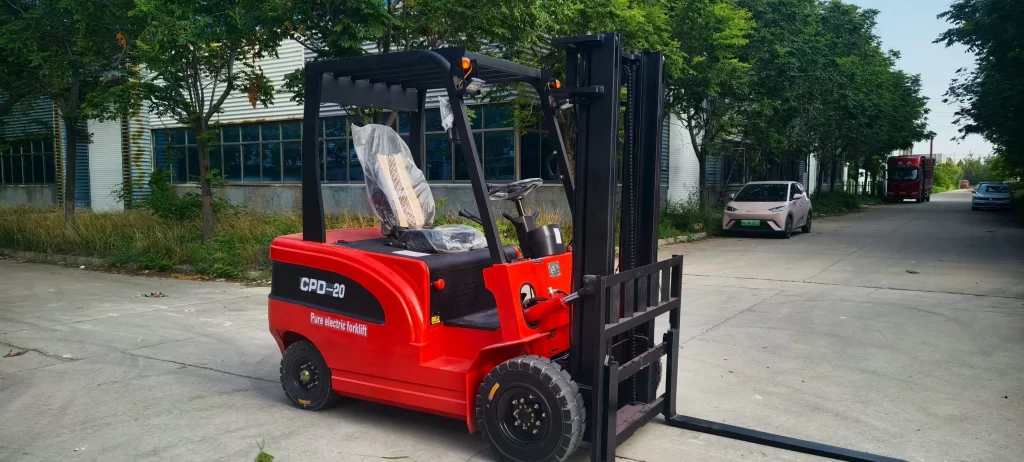
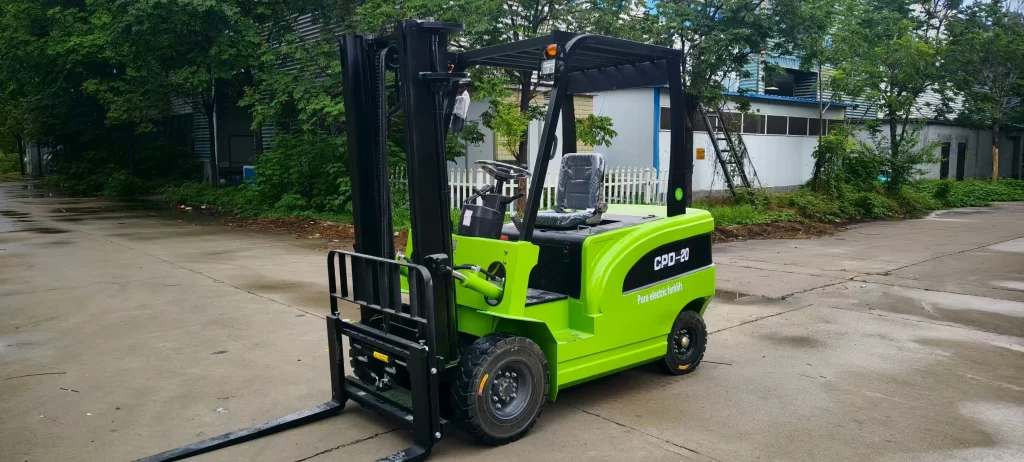
- Three-Wheel Electric Forklift: A variation of the four-wheel counterbalance forklift, designed primarily for indoor warehouse operations, known for its agile steering and high maneuverability.
Both are material handling tools used in logistics. A truck-mounted forklift shares some characteristics with the three-wheel electric type: both have three wheels and a comparable load capacity, typically in the 1 to 2.5-ton range. However, their operational purposes quickly diverge.
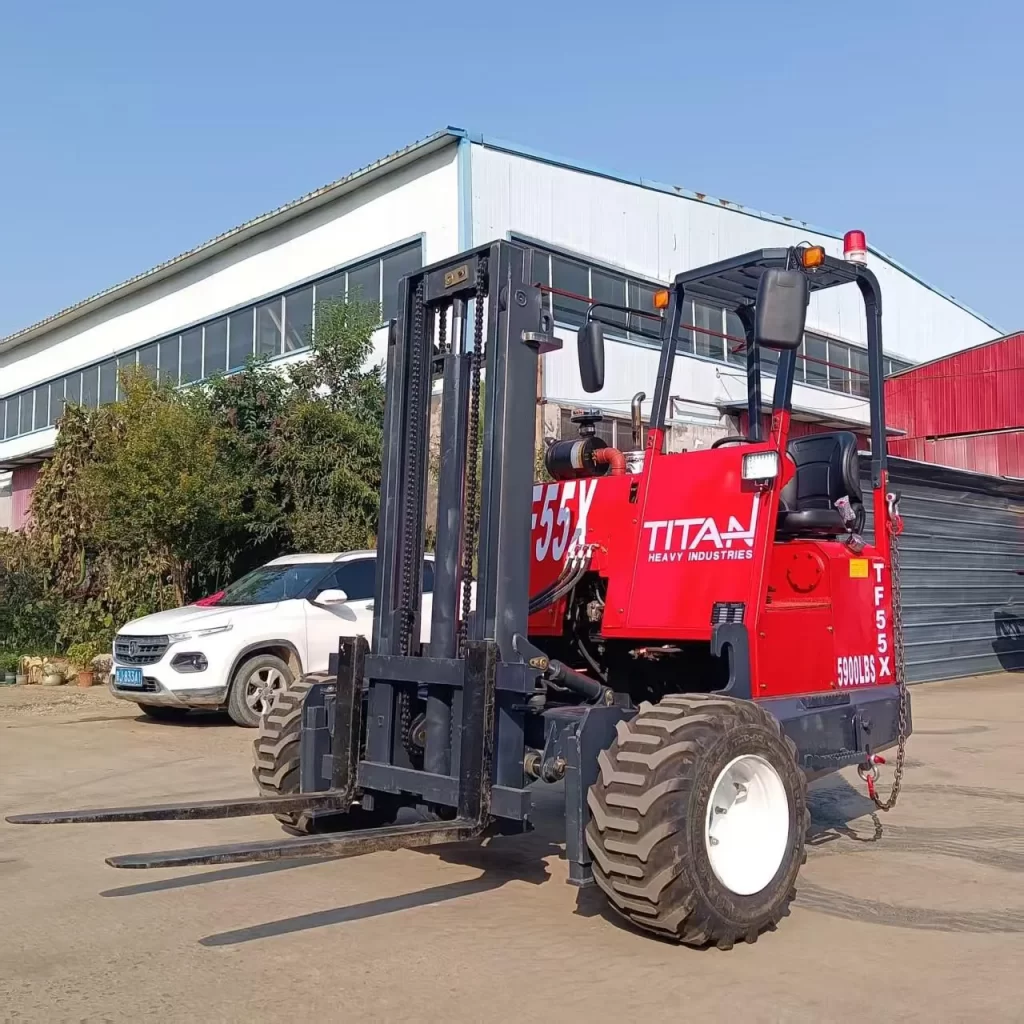
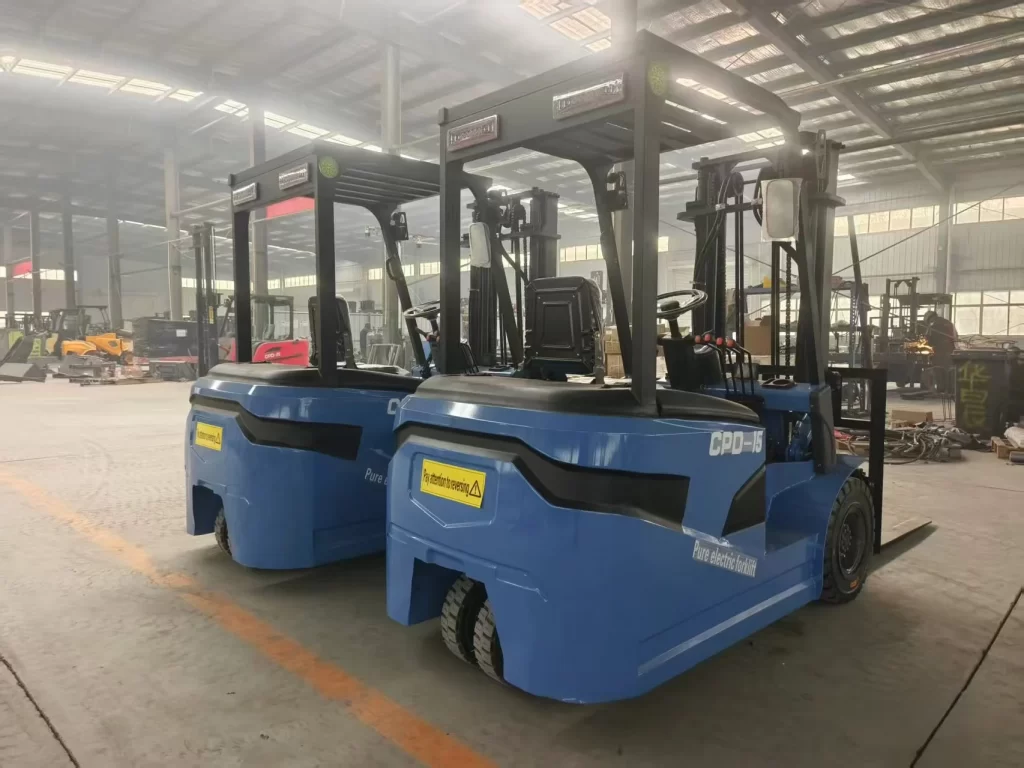
Quick Overview: What is Each Forklift Designed For?
What is a Piggyback Forklift?
- Other Names: Truck-mounted forklift, piggyback truck, Moffett-style forklift
- Core Features: A piggyback forklift is designed to be carried on the back of a delivery truck. It is mounted and demounted at the destination using its own self-lifting system. This machine typically consists of an internal combustion engine, three wheels (often rough-terrain tires), and a specialized mounting system that allows it to attach securely to the rear of the truck. The powerful engine, combined with off-road tires, enables the truck-mounted forklift to work efficiently on various ground surfaces.
- Typical Applications: Container work, last-mile delivery, construction sites, curbside delivery, retail offloading—any location where a dedicated forklift is not available.
- Power Type: Diesel, gasoline, or electric (in newer models)
- Lift Height: Typically 3-5 meters
- Load Capacity: Typically 1-2.5 tons
What is a Three-Wheel Electric Forklift?
- Other Names: Three-wheel counterbalance forklift, 3-wheel electric truck
- Core Features: This forklift has three wheels (one drive wheel and two steering wheels), enabling an extremely tight turning radius of approximately 1.5 meters. It is equipped with solid cushion tires and an electric battery, producing nearly zero emissions, which makes it perfectly suited for indoor use.
- Typical Applications: Indoor warehouse operations, container loading/unloading, narrow aisle work, food and pharmaceutical industries.
- Power Type: 100% electric (lead-acid or lithium-ion battery)
- Lift Height: 3-6 meters (standard mast), optional high mast up to 8 meters or more
- Load Capacity: Typically 1-2.5 tons
7 Key Differences Between Piggyback Forklift and Three-Wheel Electric Forklift
1. Primary Use Case: On-Road Delivery vs. In-Warehouse Operation
- Piggyback Forklift: This machine travels with the truck and is used precisely in places where there is no forklift available. A piggyback truck excels in off-road conditions and offers outstanding mobility for remote or unprepared sites. Its entire purpose is to bring the forklift capability directly to the delivery point.
- Three-Wheel Electric Forklift: This is a dedicated indoor machine, optimized for use in places where a forklift is already a permanent fixture—like a warehouse or distribution center. Powered by an electric motor and battery, it operates with minimal noise and zero emissions, making it a standard material handling tool for indoor environments.
2. Maneuverability: Where Does Each Excel?
- Piggyback Forklift: Equipped with rough-terrain tires, a truck-mounted forklift is built for open unloading yards, construction sites, and port areas. Its maneuverability is designed for open ground and outdoor surfaces rather than tight indoor spaces.
- Three-Wheel Electric Forklift: Fitted with solid, non-marking tires, this forklift is environmentally clean and excels in tight warehouse aisles and inside shipping containers. Its turning radius can be as small as 1500mm, allowing it to spin almost on the spot.
3. Portability: Can You Take It With You?
- Piggyback Forklift: This is the defining feature. A piggyback truck is equipped with a self-lifting system. It can mount itself onto the back of a delivery truck in minutes, travel with the truck, and be deployed at the destination. Crucially, it rides on the rear of the truck, taking up virtually no cargo space.
- Three-Wheel Electric Forklift: This is a stationary asset. It requires a dedicated trailer or flatbed for transportation between sites and cannot be carried along with a standard delivery vehicle.
4. Lifting Height and Mast Design
- Piggyback Forklift: Designed with a low-profile mast to facilitate easy mounting and transport on the back of a truck. The lifting height is consequently limited, typically sufficient for loading and unloading at ground level or stacking onto low racks.
- Three-Wheel Electric Forklift: Available with standard, duplex, or triplex masts, allowing for high lifting capability. Some models can reach 8-10 meters. The three-wheel design is a type of narrow-aisle forklift, comparable in stability to a four-wheel counterbalance truck but with a much tighter turn.
5. Power Source and Runtime
- Piggyback Forklift: Most models, especially those manufactured before 2010, are powered by diesel or gasoline engines. Newer versions are beginning to feature electric powertrains. Our factory produces truck-mounted forklifts equipped with Xinchai engines, delivering strong power with excellent cost-effectiveness.
- Three-Wheel Electric Forklift: This is a 100% electric forklift, available with either lead-acid or lithium-ion batteries. It is well-suited for multi-shift operations when paired with fast charging or spare battery swapping systems.
6. Operator Comfort and Safety
- Piggyback Forklift: Primarily a seated operation. The entire machine includes a complex self-mounting system, which adds to its operational weight and complexity but is essential for its mobile role.
- Three-Wheel Electric Forklift: Available in both seated and stand-up configurations. The ergonomic design is more refined, with a focus on reducing operator fatigue during long, continuous shifts in the warehouse.
7. Cost and Total Cost of Ownership (TCO)
Here is a direct cost comparison between a piggyback truck and a three-wheel electric forklift:
| Comparison Item | Piggyback Forklift | Three-Wheel Electric Forklift |
|---|---|---|
| Initial Purchase Price | $25,000–45,000 | $18,000–35,000 |
| Daily Operating Cost | High (diesel/gasoline) | Low (electricity, ~$5-8 per shift) |
| Maintenance Cost | Higher (engine upkeep) | Lower (electric system) |
| Service Life | 5-8 years (high wear) | 8-12 years (with lithium battery) |
Side-by-Side Comparison Table
For a quick, at-a-glance understanding, here is a direct comparison of the two forklift types:
| Feature | Piggyback Forklift | Three-Wheel Electric Forklift |
|---|---|---|
| Primary Use | Mobile delivery, construction | Internal warehouse, distribution center |
| Maneuverability | Moderate | Excellent (very tight turning radius) |
| Portability | High (carried by truck) | Low (fixed location) |
| Lift Height | 3-5 m | 3-10 m |
| Power Source | Diesel/Gas/Electric | 100% Electric |
| Operating Duration | Short (minutes per stop) | Long (full shift operation) |
| Operator Comfort | Lower | High |
| Initial Cost | $25k–45k | $18k–35k |
| Best For | Logistics companies, builders | Warehouses, manufacturers |
Which One Should You Choose? A Decision Framework
Choose a Piggyback Forklift if…
- You need to deliver goods to multiple locations by truck: A truck-mounted forklift is a highly mobile and portable solution that travels with your delivery vehicle.
- The receiving site has no loading equipment: When your cargo needs to be unloaded in remote areas, fields, or small sites without any forklift available, a piggyback truck lets you handle the job independently.
- Your work involves construction sites, curbside delivery, or retail back doors: The main task is loading onto trucks or unloading goods onto low-level racks, typically no higher than 3-5 meters.
Choose a Three-Wheel Electric Forklift if…
- You operate in a fixed warehouse with a reliable power supply: These forklifts are designed for indoor, stationary use with access to charging infrastructure.
- Your warehouse aisles are narrow (less than 3 meters): As a narrow-aisle forklift, its exceptionally small turning radius makes it ideal for maneuvering in confined warehouse spaces.
- Your operation demands environmental consideration and low noise: For industries like food processing, pharmaceuticals, or retail, the zero-emission electric operation is essential for indoor use.
- You require high lifting capability (over 5 meters): With its available multi-stage masts, it can handle high-rack storage safely and efficiently.
Can One Forklift Do Both Jobs?
A common question is whether a single machine can serve both roles. Here’s a practical analysis:
- Theoretically: You could use a piggyback forklift inside a warehouse. However, its combustion engine creates noise and emissions that make it unsuitable for enclosed spaces, and its lift height is low. Conversely, you could transport a three-wheel electric forklift on a truck, but it requires loading ramps or another forklift to get it on and off, and it will occupy significant cargo space.
- Practical Advice: It is best to let each machine do its designated job. Use a piggyback truck for the mobile delivery stage and a three-wheel electric forklift for the internal warehouse operation.
- Industry Trend: Some manufacturers are introducing electric truck-mounted forklifts, but their lifting capacity and operator comfort still fall short of a dedicated three-wheel counterbalance forklift.
Frequently Asked Questions (FAQ)
Is a piggyback forklift street legal?
Regulations vary by state and country. A piggyback truck, being a diesel or gasoline vehicle, typically requires a license plate and registration. Its emissions must also comply with the relevant standards, such as Euro V or US EPA requirements.
Can a three-wheel forklift be used outdoors?
Yes, but with limitations. A three-wheel electric forklift is optimized for indoor use. It can operate outdoors but only on smooth, paved surfaces like concrete or asphalt. It is not designed for uneven, rough, or muddy construction site conditions.
Which is cheaper to maintain: a piggyback or a three-wheel forklift?
A piggyback forklift is rugged and durable, but its higher initial purchase price is coupled with higher maintenance costs. The internal combustion engine requires regular replacement of oil filters, air filters, and other consumables. A three-wheel electric forklift has significantly lower routine maintenance costs.
What are the top brands for each type?
- Piggyback Forklift: Moffett, PRINOTH, Liftmoore
- Three-Wheel Electric: Toyota, Raymond, Crown, Linde, Heli
The brands listed above are known for good quality but come with a higher price tag. If you are looking for a cost-effective solution without compromising on performance, feel free to contact us. We are a professional forklift manufacturer offering competitive alternatives.
Conclusion: Match the Tool to the Task
The choice between a piggyback forklift and a three-wheel electric forklift is not about which machine is universally “better.” It is about which one is correctly matched to your specific operational workflow.
- The piggyback truck serves the need for mobile, on-site delivery capability.
- The three-wheel electric forklift serves the need for efficient, clean, and continuous indoor operation.
In fact, many large fleet operators own both types: a truck-mounted forklift for the distribution phase and a three-wheel electric for the warehousing phase. We recommend basing your decision on your primary operating time, location, lifting requirements, and budget.
💡 One-sentence summary: A piggyback forklift lets you “bring the forklift to the delivery,” while a three-wheel electric forklift lets you “move goods efficiently inside the warehouse.”
If you are still unsure which equipment is the right fit for your business, contact us today for a personalized consultation and a competitive quote.