Electric Forklift vs. Diesel Forklift: 7 Key Differences You Must Know Before Buying
Forklifts can be broadly divided into two categories: electric and diesel. In sectors like logistics, warehousing, and manufacturing, the choice of power source directly impacts operating costs, work efficiency, and environmental adaptability.
For a long time, diesel forklifts have dominated outdoor and high-intensity applications due to their powerful performance and long runtime. However, with technological advancements and the increasing demand for cost-effective, refined operations, electric forklifts are becoming the preferred choice in more and more scenarios.
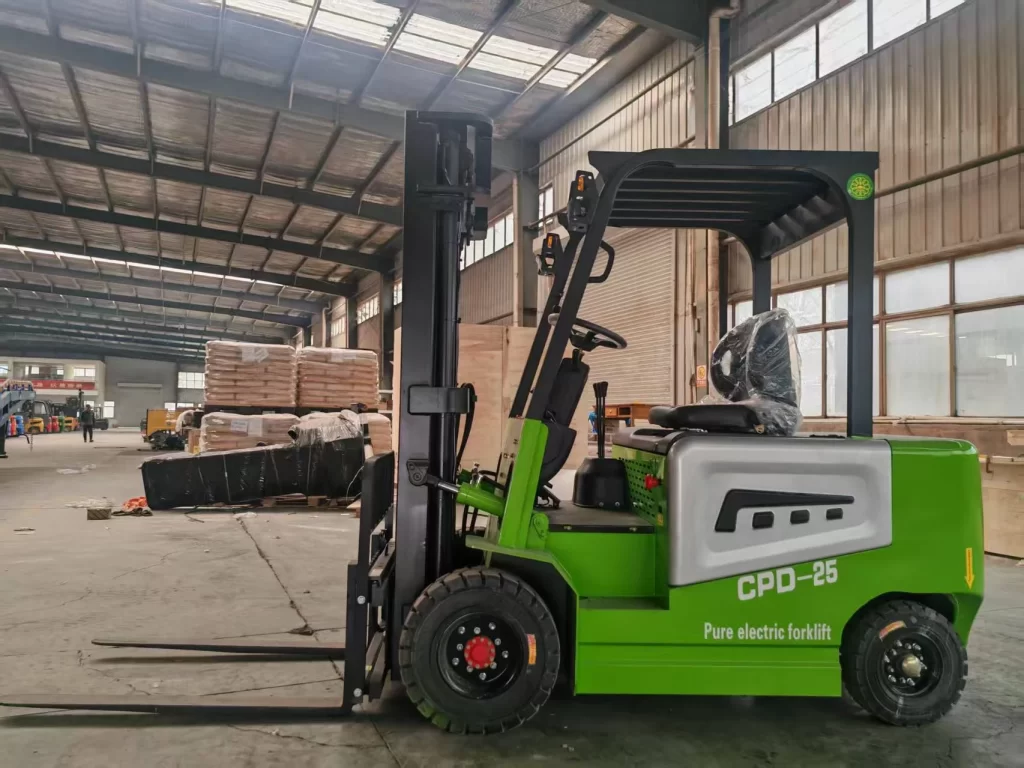
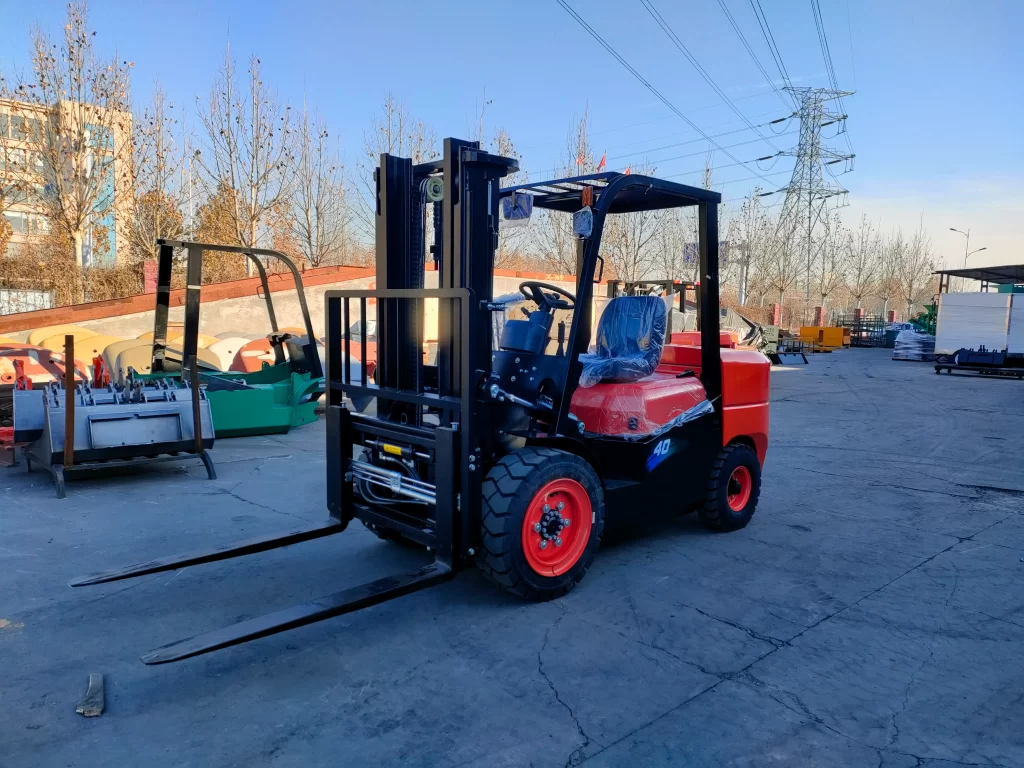
1. Energy Consumption: The Cost Difference Between Electricity and Diesel
Electric and diesel forklifts exhibit completely different energy consumption logic and cost structures.
An electric forklift uses a battery as its power source and boasts high energy efficiency. The conversion of electrical energy into power is direct, with low losses. Based on current industrial electricity prices, the energy cost to fully charge a 3-ton electric forklift is about one-third to one-quarter of the fuel cost for a diesel forklift performing the same work. Using off-peak electricity at night can reduce this cost further. Additionally, electric forklifts can recover part of their energy during braking, enhancing overall efficiency.
A diesel forklift relies on fuel combustion. During energy conversion, it suffers from engine heat loss and transmission friction, resulting in a lower actual energy utilization rate than an electric system. Its daily energy cost is significantly affected by oil price fluctuations, and fuel expenditure constitutes the bulk of long-term operating expenses. Under the same load and work intensity, a diesel forklift’s per-unit-time energy cost is usually much higher. In short, an electric forklift offers a clear advantage in fuel economy, especially for high-frequency, continuous operations.
2. Critical Component Comparison: Motor vs. Engine
The motor and the engine are the respective hearts of an electric and diesel forklift.
The Motor in an Electric Forklift
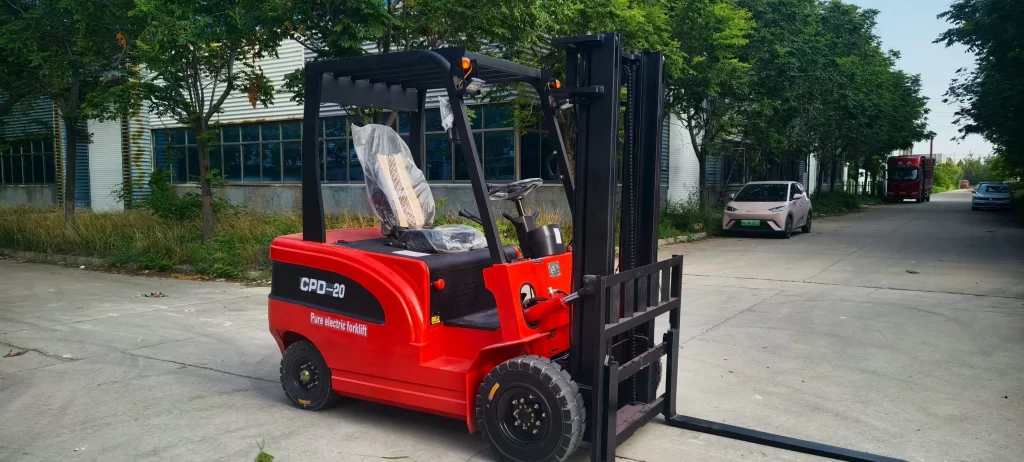
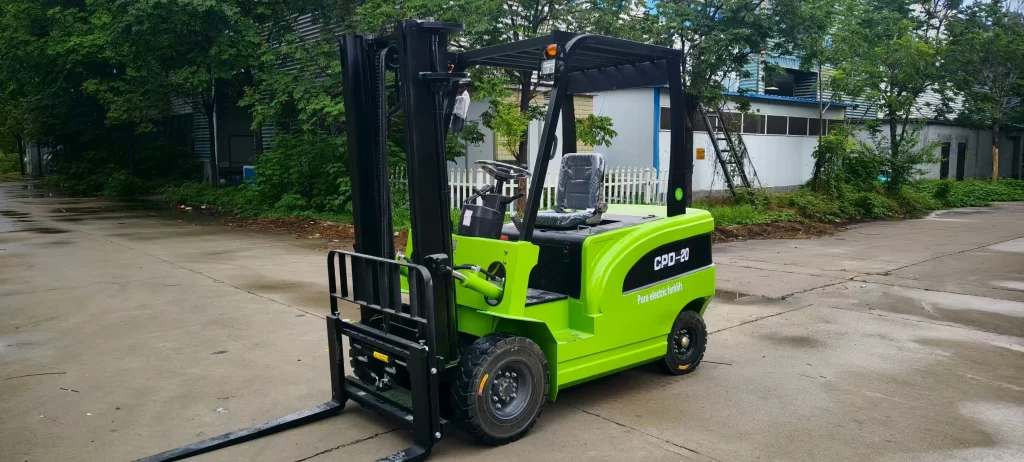
The motor is a crucial component of an electric forklift. The drive system transmits the motor’s rotational power to the wheels, while the hydraulic system uses an electric motor to drive a gear pump, enabling the fork to lift and the mast to tilt. An electric forklift has two motors: a drive motor for travel and a lift motor for handling loads. A key point for buyers is that a bigger motor is not always better; it must be correctly matched to the forklift’s load capacity.
The Engine in a Diesel Forklift
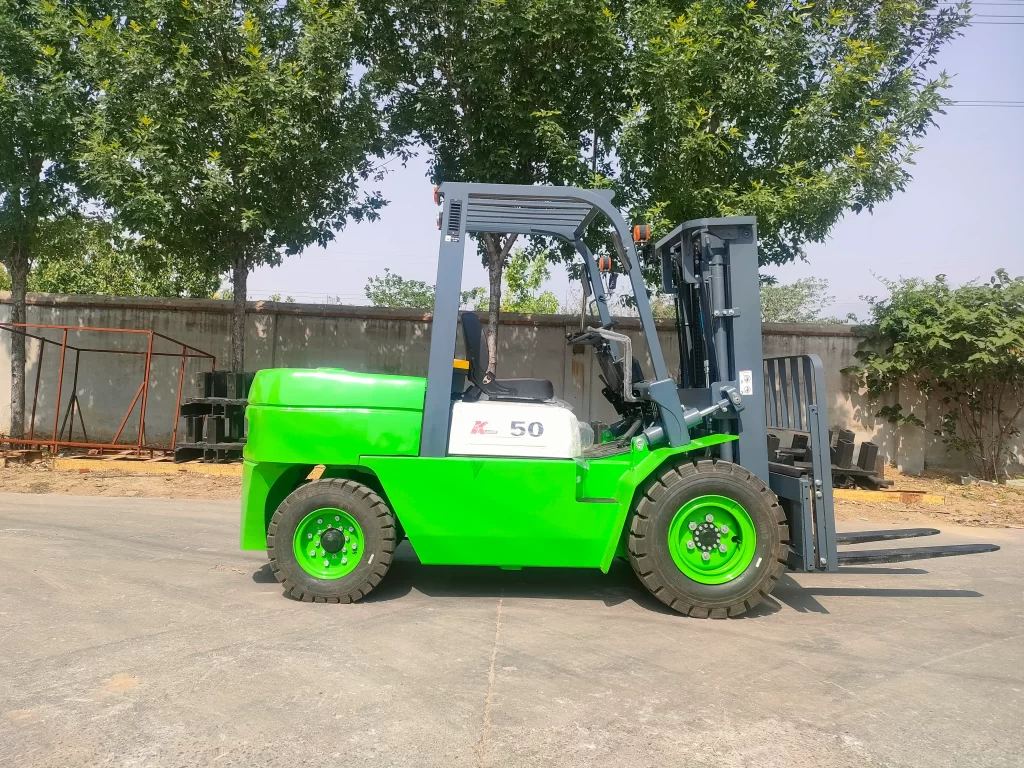
The engine is a vital component of an internal combustion forklift. It directly affects fuel consumption, emissions, and load capacity, and its lifespan can determine the overall life of the forklift. When importing diesel forklifts, it is often necessary to ensure the engine meets the destination country’s emission standards. For example, a US EPA-compliant PSI dual-fuel engine can be directly imported into the US and Canada. Buyers should consider not only the load capacity but also the engine’s horsepower and emission compliance.
3. Total Cost of Ownership: A Full-Cycle Perspective
Equipment cost includes not just the purchase price but also energy, maintenance, repairs, and disposal costs over its lifespan.
- Acquisition Cost: For large-tonnage models, diesel forklifts typically have a lower upfront purchase price. However, for models under five tons, the purchase cost of a small electric forklift is lower than that of a diesel one.
- Energy and Maintenance Costs: An electric forklift has low energy costs and simple daily maintenance. It requires no oil changes, filters, or spark plugs, making its maintenance frequency and costs significantly lower. The battery, as a core component, can last several years with proper use and charging. A diesel forklift requires regular engine maintenance, and as the years pass, repair frequency can increase, adding to upkeep expenses.
- Total Cost of Ownership (TCO) Analysis: Calculated over a five-year period, an electric forklift, while having a lower initial investment, often sees its total cost fall well below that of a diesel forklift due to its low electricity and maintenance needs. This economic advantage is more pronounced in high-usage scenarios. However, a well-maintained diesel forklift can have a service life of over ten years and a higher resale value. To summarize, an electric forklift is suitable for buyers with a lower initial budget and smaller load demands, while a diesel forklift is better for long-term, high-residual-value operations.
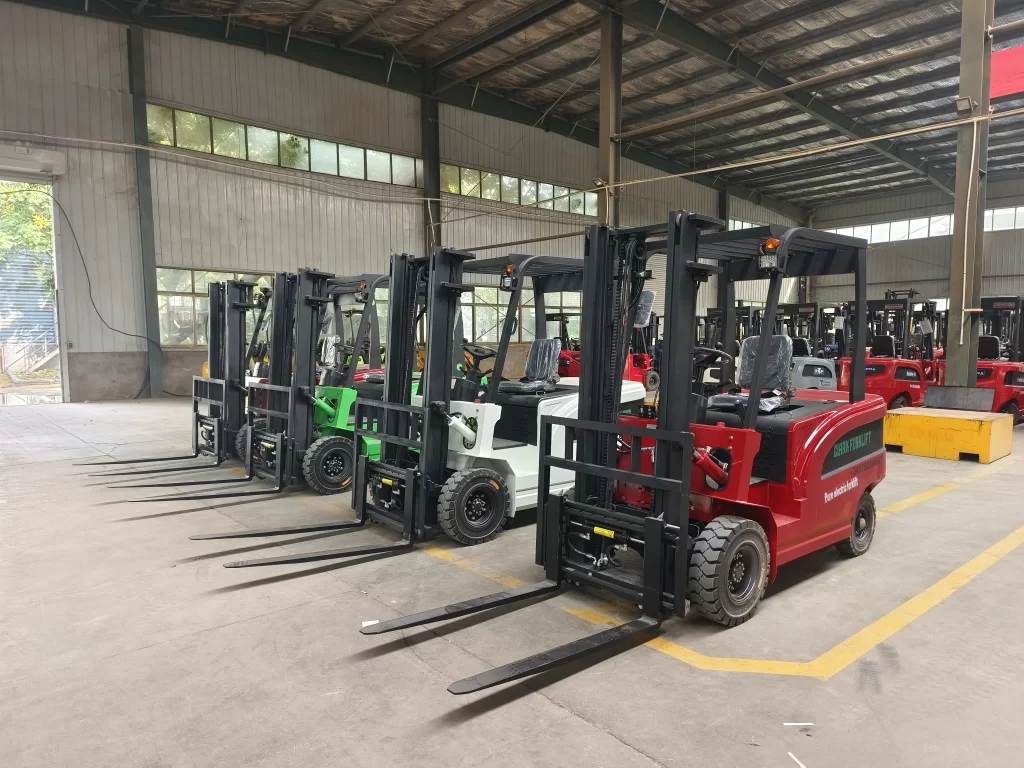
4. Ease of Operation: Electric Forklift vs. Diesel Forklift
An electric forklift uses an electronic control system, providing smooth acceleration, precise control, and low vibration and noise, which reduces operator fatigue. A diesel forklift is powerful and excels at heavy loads, ramps, and uneven terrain but is typically less agile in stop-and-go and micro-movement control. An electric forklift is more beginner-friendly, while a diesel forklift is better suited for experienced operators.
5. Continuous Operation and Environmental Friendliness
An electric forklift operates with low noise and zero tailpipe emissions, making it suitable for indoor environments with high cleanliness requirements like warehouses, food, and pharmaceutical facilities. A diesel forklift, due to its engine noise and emissions, is typically restricted to outdoor or well-ventilated areas. For indoor use, a dual-fuel LPG forklift is often the preferred alternative.
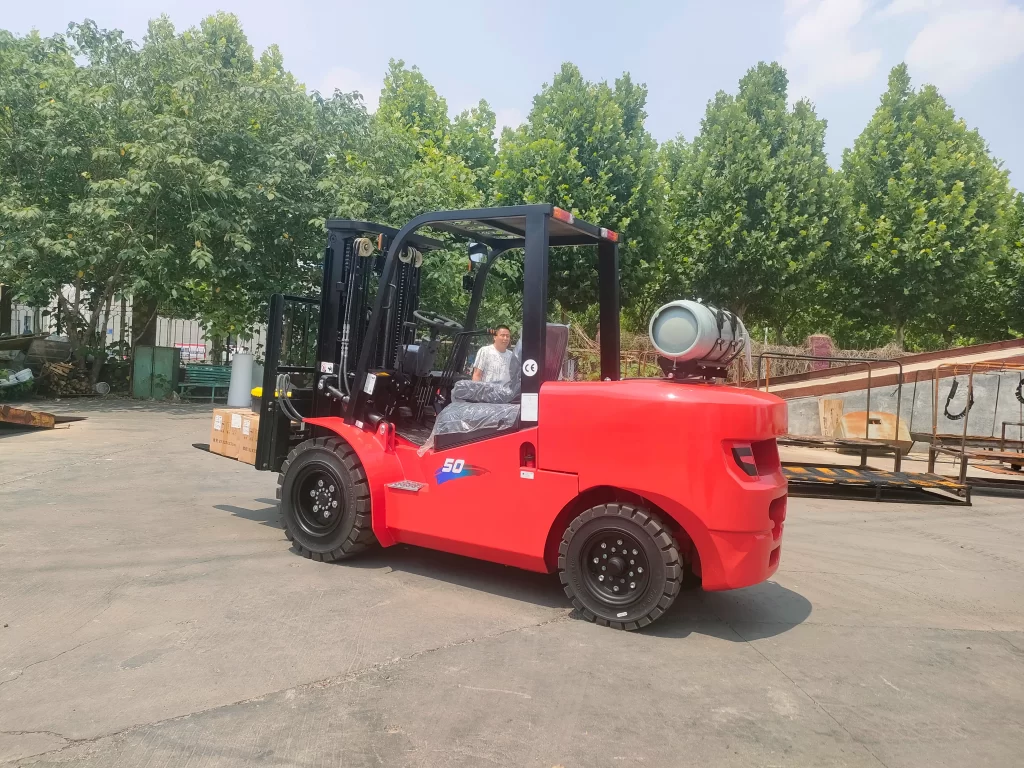
6. Start-Up and Response Performance
In low temperatures, electric forklifts generally offer more stable start-up performance. A lithium-ion electric forklift performs even better in the cold than a lead-acid model due to the battery’s chemical activity. Diesel forklifts can face starting difficulties and require warm-up time. Electric models need no warm-up and are ready to use instantly, making them ideal for multi-shift or intermittent operations. When choosing an electric forklift, you also face the choice between lithium-ion and lead-acid batteries. Lithium-ion batteries charge faster, have a longer cycle life, and are maintenance-free, making them great for cold storage. Lead-acid batteries are known for their proven safety.
7. Choosing by Application Scenario
Recommended Scenarios for Electric Forklifts:
- Indoor warehousing
- Cold chain and cold storage environments
- Cleanrooms and food/pharmaceutical facilities
- Light to medium-duty handling
- Multi-shift operations
- Locations with strict noise and emission regulations
Scenarios Where Diesel Forklifts Still Have an Edge:
- Outdoor yards and lumber/port terminals
- Construction sites
- Mining and heavy industries
- Continuous, high-intensity operations
- Locations without reliable electrical infrastructure
Summary
The choice of power type for a forklift directly determines its long-term use cost, work efficiency, and suitable application. The core conclusion is this: electric forklifts offer lower operating costs and are cleaner and quieter, making them perfect for light-to-medium-duty indoor and environmentally sensitive environments. Diesel forklifts provide more power and proven durability with a higher resale value, making them ideal for heavy-duty outdoor and demanding conditions. This guide on the seven dimensions of diesel vs. electric forklifts is designed to help you make a better, more informed purchasing decision.