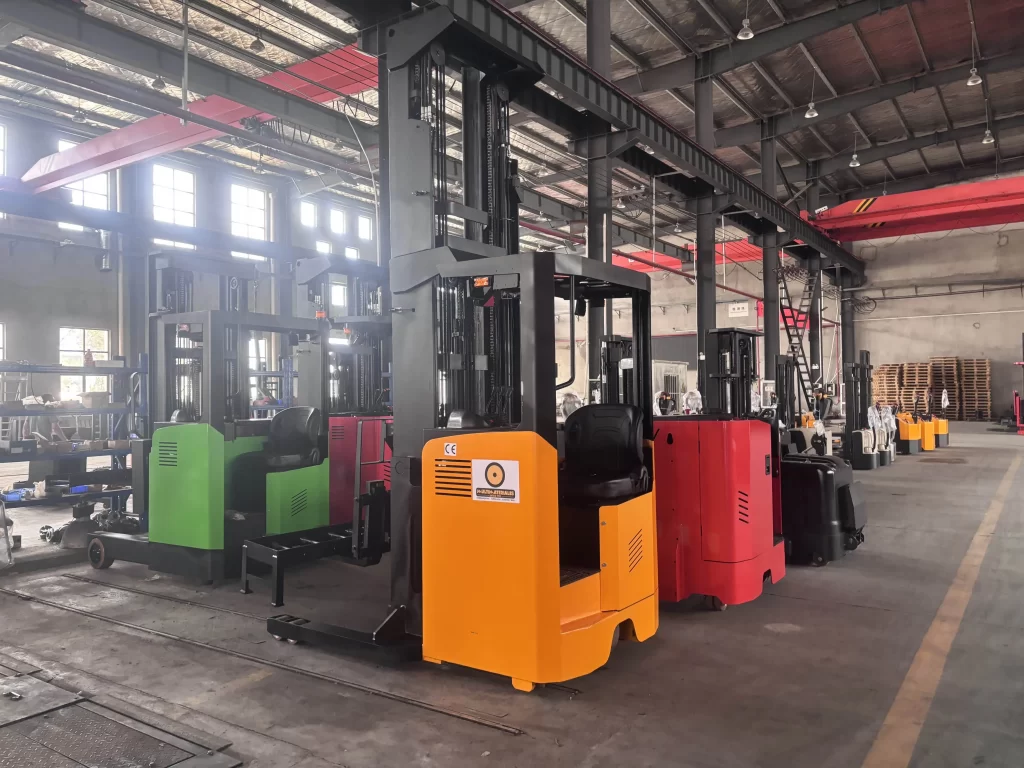
Why Electric Forklifts Are Ideal for Indoor Warehousing Operations
What Is an Electric Forklift?
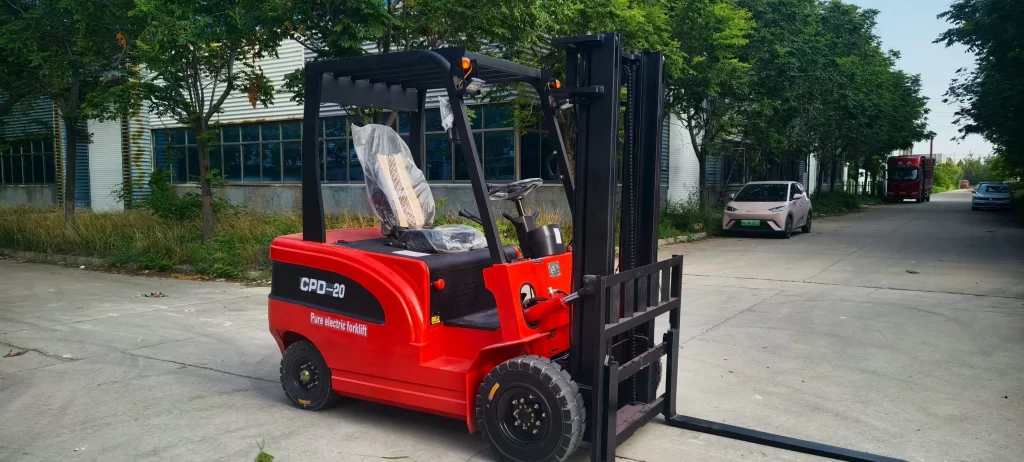
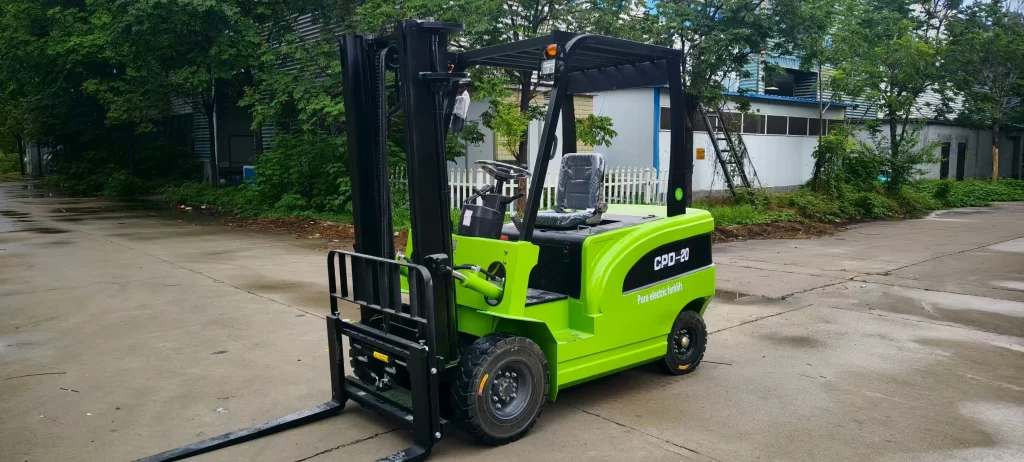
An electric forklift is a type of material handling vehicle powered by electricity. As a new-energy forklift, it features environmentally friendly and sustainable characteristics, making it an essential solution for modern logistics and warehousing operations.
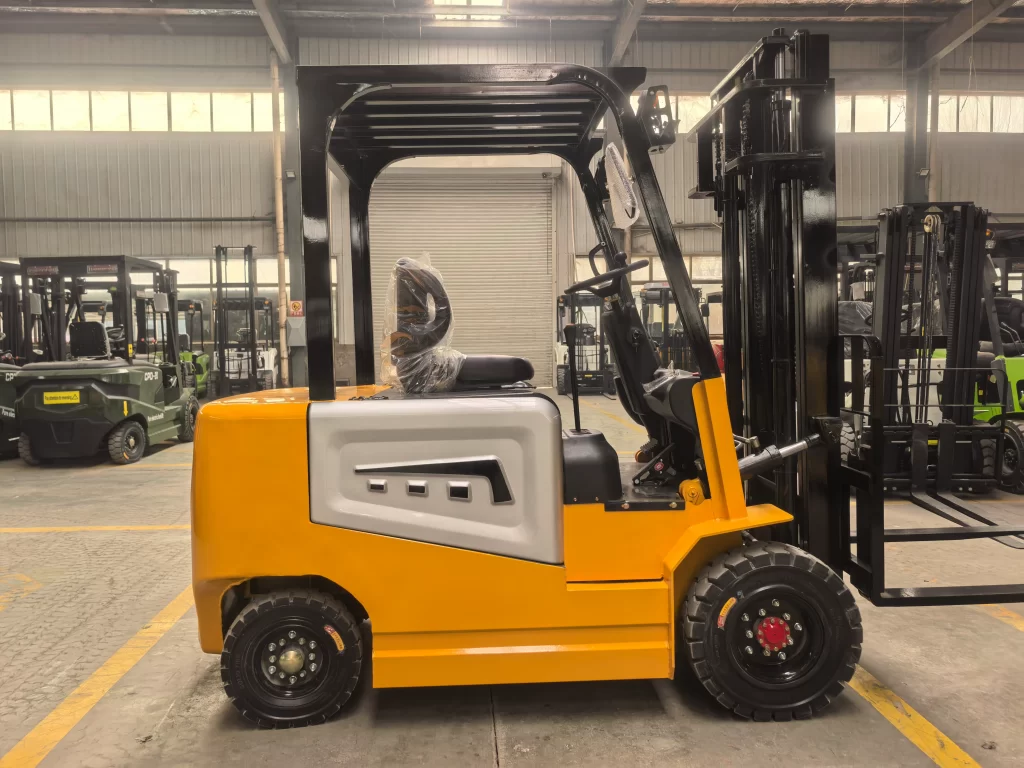
Power System
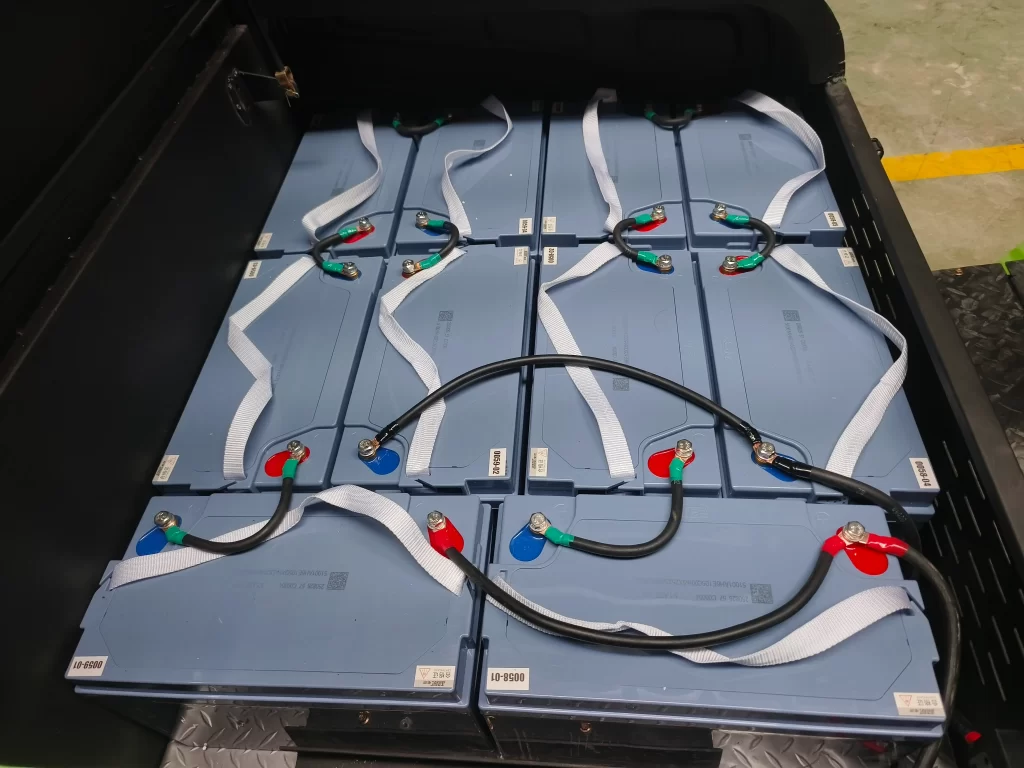
The main power source of an electric forklift is the battery, which supplies energy for both vehicle movement and lifting operations. Battery capacity determines the forklift’s operating time. Common battery types include lead-acid batteries and lithium-ion batteries.
- Lead-acid batteries have a lower initial cost but are bulky and heavy, require periodic electrolyte refilling, and have long charging times. As a professional forklift manufacturer, we can provide maintenance-free lead-acid batteries and electric forklifts.
- Lithium-ion batteries feature high energy density, fast charging, and long service life, although their initial cost is relatively higher.

Drive System
The drive system consists of the motor and drive wheels. The motor converts electrical energy from the battery into mechanical energy, enabling the forklift to move forward and backward. Drive wheels are usually solid tires to adapt to different floor conditions and ensure stable operation.
Working Devices
The working devices include the mast, forks, chains, lift cylinders, and tilt cylinders.
- The mast supports the forks and guides their lifting movement.
- The forks are used to pick up goods.
- Chains connect the forks to the lifting mechanism.
- Lift and tilt cylinders control the vertical lifting and forward/backward tilting of the forks, making loading and unloading more convenient.
Hydraulic System
The hydraulic system mainly includes the oil pump, cylinders, control valves, and hydraulic pipelines. The oil pump provides pressurized hydraulic oil, while cylinders perform lifting and tilting actions under hydraulic pressure. Control valves regulate oil flow and pressure to ensure precise operation.
Steering System
Electric forklifts use mechanical steering or hydraulic power steering systems. The steering system controls the traveling direction of the forklift, ensuring flexible maneuvering in narrow warehouse spaces.
Braking System
The braking system is usually mechanical or hydraulic. It controls forklift stopping and ensures operational safety.
Electrical System
The electrical system includes the controller, contactors, fuses, wiring, and various electrical instruments. It controls all electrical functions of the forklift, such as motor start/stop, speed regulation, lifting operations, and battery level display.

Body and Frame
The operator cabin provides the working space for the driver and includes the seat and control levers. The frame is the main structural body of the forklift, supporting and connecting all components to ensure overall strength and durability.
Application Scenarios of Electric Forklifts
Electric forklifts are widely used in:
- Warehouse operations
- Logistics and distribution centers
- Manufacturing facilities
- Other locations such as ports, terminals, and construction sites
According to different working conditions and cargo types, suitable four-wheel electric counterbalance forklifts can be selected to complete loading and material handling tasks.
Why Are Electric Forklifts More Suitable for Indoor or Warehouse Use?
Electric forklifts are the preferred choice for indoor operations because they are zero-emission, quiet, and low in maintenance cost. They are ideal for warehouses and enclosed environments where air quality and worker safety are critical.
Although internal combustion forklifts offer strong power, they emit exhaust gases that are not suitable for indoor use unless equipped with proper ventilation systems. With technological advancements, the load capacity of electric forklifts is now comparable to diesel forklifts, and they are widely used even in heavy industries.
Environmental Friendliness and Operator Comfort
Electric forklifts are designed for indoor environments with strict requirements for air cleanliness and noise control. They produce zero emissions, eliminating the risks of carbon monoxide and nitrogen oxides. Quiet operation improves worker comfort and communication efficiency, while lower vibration levels reduce operator fatigue.
Their compact size and small turning radius make them ideal for navigating narrow warehouse aisles.
For example, our three-wheel electric forklift features a small turning radius and is a perfect solution for narrow-aisle applications.
RFQ – Frequently Asked Questions
What Cost Advantages Do Electric Forklifts Offer?
Electric forklifts use electricity as their energy source, which is significantly cheaper than fuel. Compared with diesel forklifts, daily energy consumption costs are much lower. Their electric motors and power systems are simpler than internal combustion systems, resulting in lower maintenance costs. In addition, electric forklifts have a relatively lower initial purchase cost. As a professional electric forklift manufacturer, we are committed to providing high-quality forklifts with excellent cost performance.
Which Forklift Offers Better Maneuverability and Efficiency for Indoor Operations?
Electric forklifts generally offer better maneuverability due to their smaller turning radius and wide range of types, such as electric counterbalance forklifts, electric stackers, and reach trucks. Customers can select the most suitable model based on operating scenarios and operator preferences.
When Can Internal Combustion Forklifts Be Used Indoors?
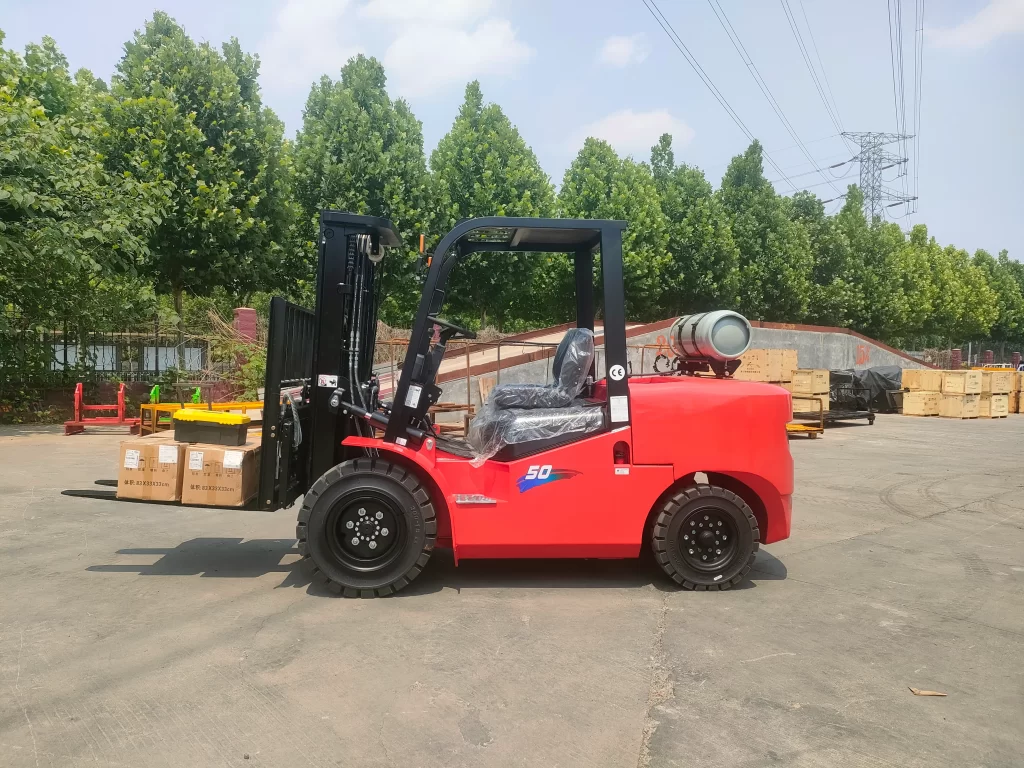
LPG forklifts are internal combustion forklifts fueled by gasoline or natural gas. They produce lower emissions than diesel forklifts but are still less environmentally friendly than electric forklifts. LPG forklifts can be used indoors only in well-ventilated warehouses.
What Are the Maintenance Differences Between Electric and Internal Combustion Forklifts?
Compared with diesel forklifts, electric forklifts mainly require battery maintenance, hydraulic filter replacement, and aging seal replacement. Internal combustion forklifts require frequent replacement of components such as fuel filters, air filters, and hydraulic oil filters. As a result, maintenance costs for internal combustion forklifts are significantly higher.
How Do Electric Forklifts Improve Indoor Safety?
Electric forklifts do not generate sparks during operation and do not require ignition systems. These features make them suitable for flammable and explosive environments, such as mining sites. Additionally, electric forklifts produce no harmful exhaust gases, ensuring a healthier working environment for operators.