What is a stand-up Electric forklift and its features
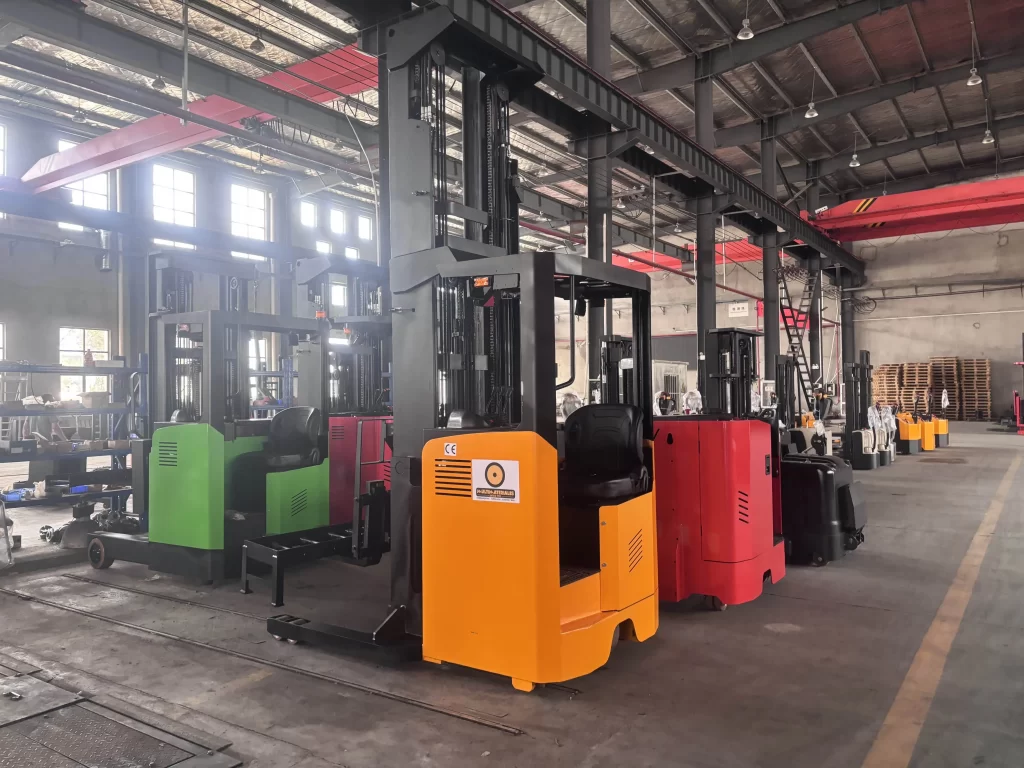
Stand-up electric forklifts, with their unique standing-operated design, demonstrate exceptional maneuverability in narrow warehouse aisles, are also small electric forklifts. Their compact dimensions and smaller turning radius provide outstanding agility while offering operators more spacious passageways. Today, stand-up forklifts have become indispensable tools in warehouses and work sites worldwide.
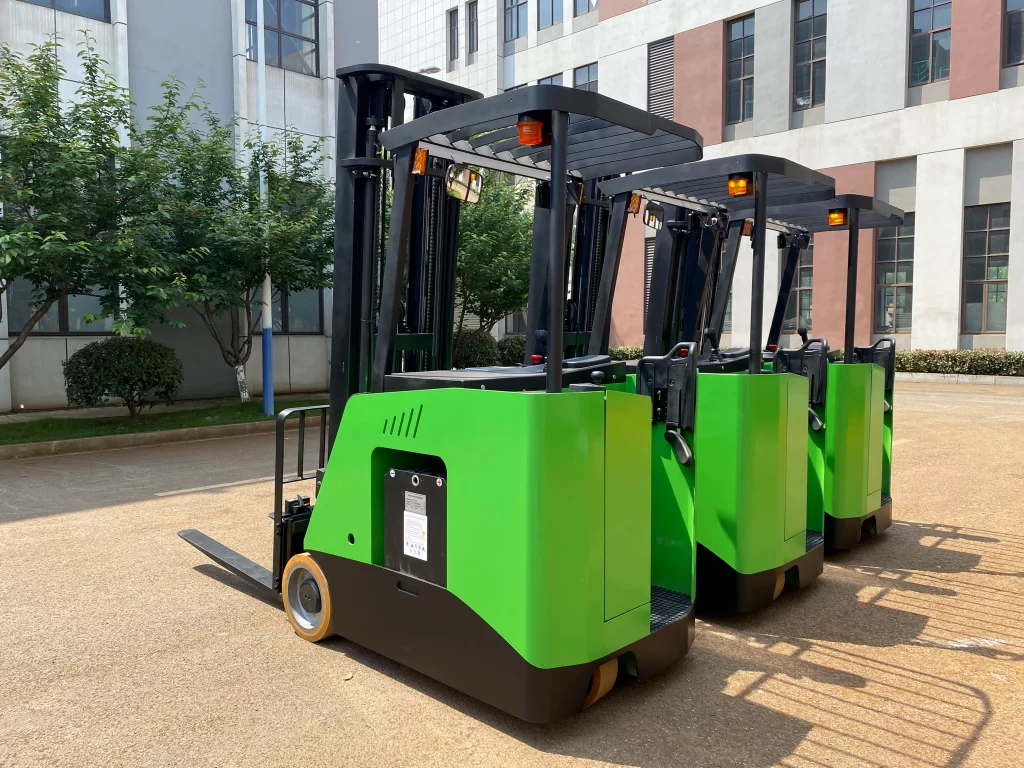
What is a stand-up electric forklift?
So, what exactly is a stand-up forklift? Its primary distinction from traditional seated electric forklifts lies in the driving method. In stand-up models, the operator stands, making operation more intuitive and convenient. Officially classified as Class III powered industrial trucks, this further underscores their significance in industrial applications.
When workers need to frequently load, unload, and stack goods, stand-up counterbalance forklifts allow operators to mount and dismount at any time, with quick and simple operation. Their unique driving method and efficient logistics performance make warehouse operations faster and more efficient.
When learning to operate a stand-up forklift, safety is always the top priority. To ensure safety, operators must adhere to a series of precautions. These include confirming the forks are retracted before starting, keeping the forks pointing upward, using the control handle for steering, tilting the control handle to direct the truck’s movement, and maintaining constant awareness of reversing warnings and parking procedures. Additionally, careful lifting and lowering of cargo is essential to prevent accidents.
Next, we address a specific safety concern: bottom collisions involving stand-up forklifts. This type of collision primarily occurs around warehouse racks, as the unique design of stand-up and telescopic forklifts makes them susceptible to this hazard. Due to the lower chassis or smaller wheels of stand-up forklifts, the risk of collision is heightened.
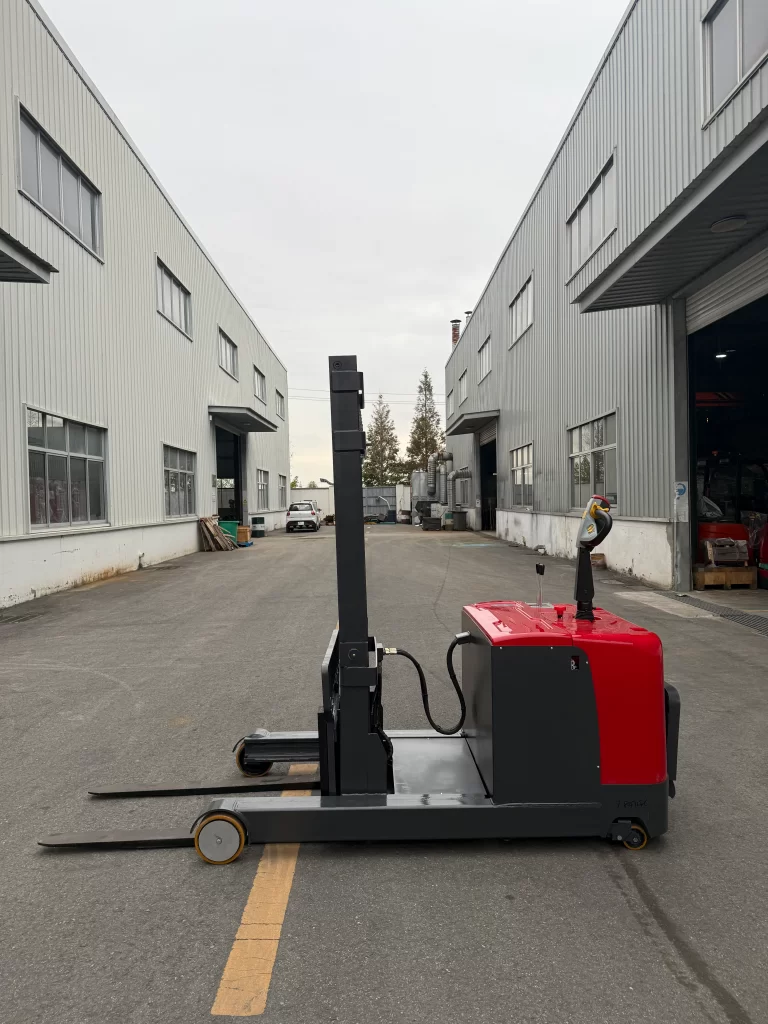
Bottom Collision Risk
Bottom collisions with stand-up forklifts represent a safety concern that cannot be overlooked. Such collisions frequently occur near warehouse racks, as the distinctive design characteristics of stand-up and telescopic forklifts make them more prone to this danger. The rear of the operator platform is clearly open, lacking a continuous protective structure from the overhead guard to the forklift body. This design may expose operators to unnecessary risks when reversing. If the forklift accidentally collides with a rack, its body could pass beneath the horizontal beams, potentially trapping the operator between the beams and the front of the operator compartment—leading to severe consequences.
Potential Injuries from Under-Rack Collisions
Under-rack collisions with stand-up forklifts can cause extensive and severe injuries. These include, but are not limited to: death, paraplegia, chest compression and trauma, asphyxiation, internal bleeding, rib fractures, spinal injuries, vertebral fractures, lung punctures, abdominal injuries, and neck and head injuries. Additionally, severe outcomes such as spleen rupture, kidney injury, and liver laceration may occur.
Three Critical Prohibitions for Standing Forklift Operation
When operating a standing forklift, strictly adhere to these three principles to ensure safety:
Do not allow cargo to obstruct visibility, do not operate on slopes, and avoid colliding with obstacles.
Adhering to these safety guidelines effectively prevents accidents caused by improper operation.
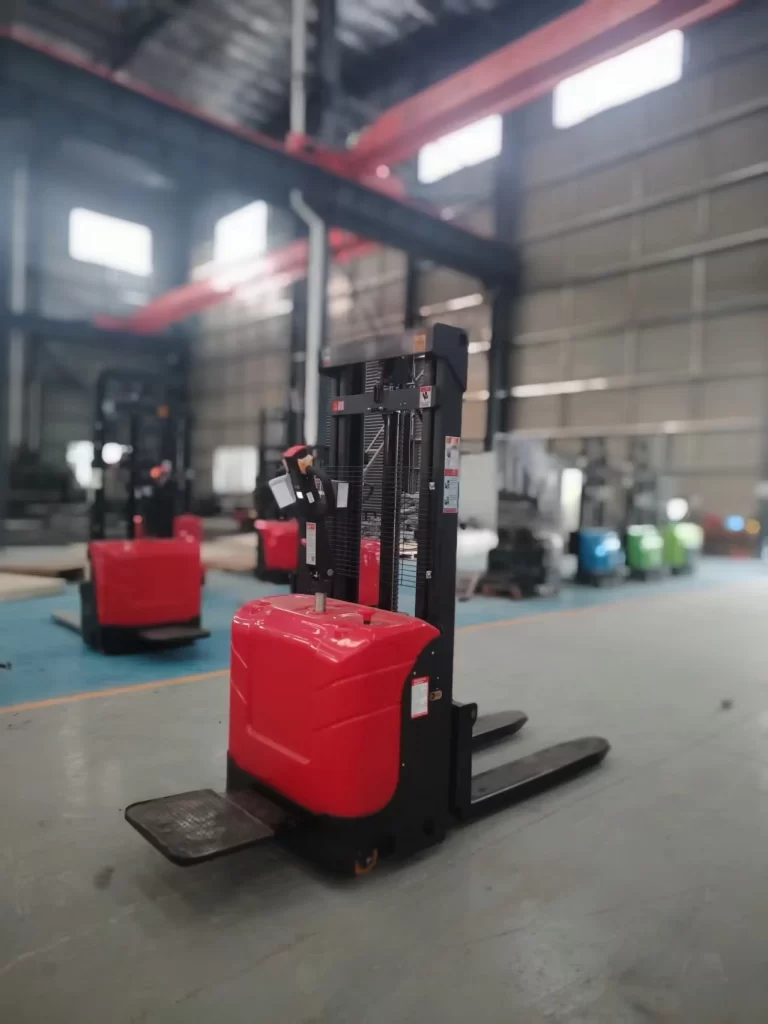
Pre-Operation Checks for Stand-Up Forklifts
Inspect tires
Check the braking system
Verify the steering system
Confirm battery charge level and fire extinguisher availability