What is the difference between a Reach Truck and a Compact Reach Truck?
1. Reach truck vs stand-on forklift stackers
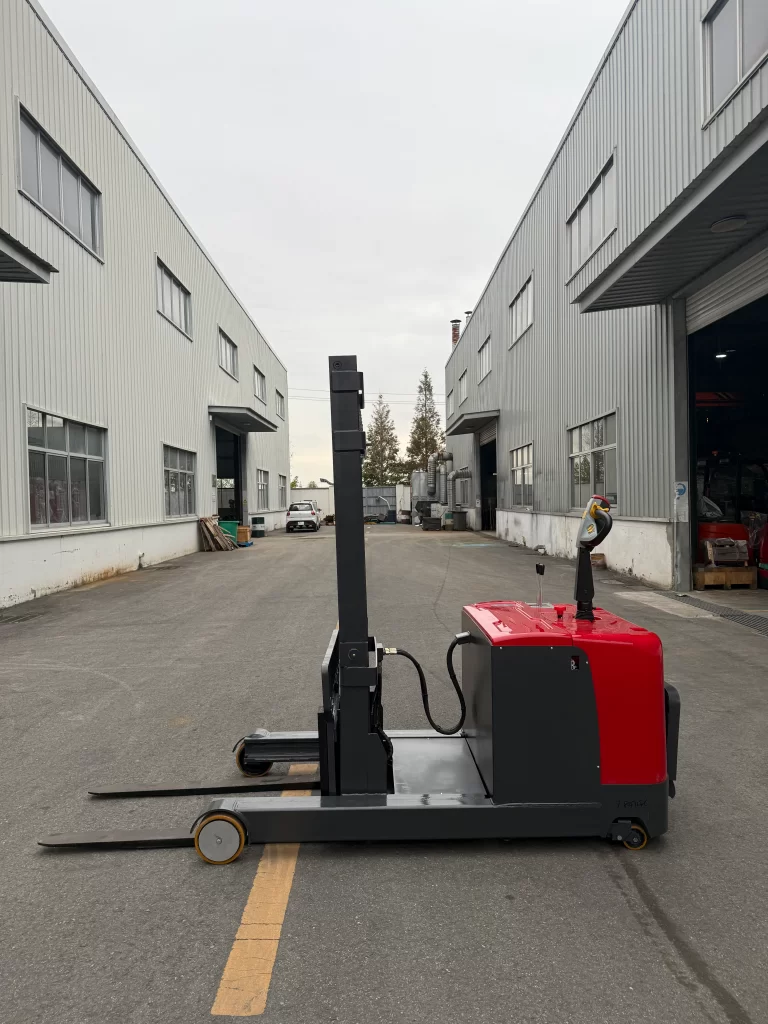
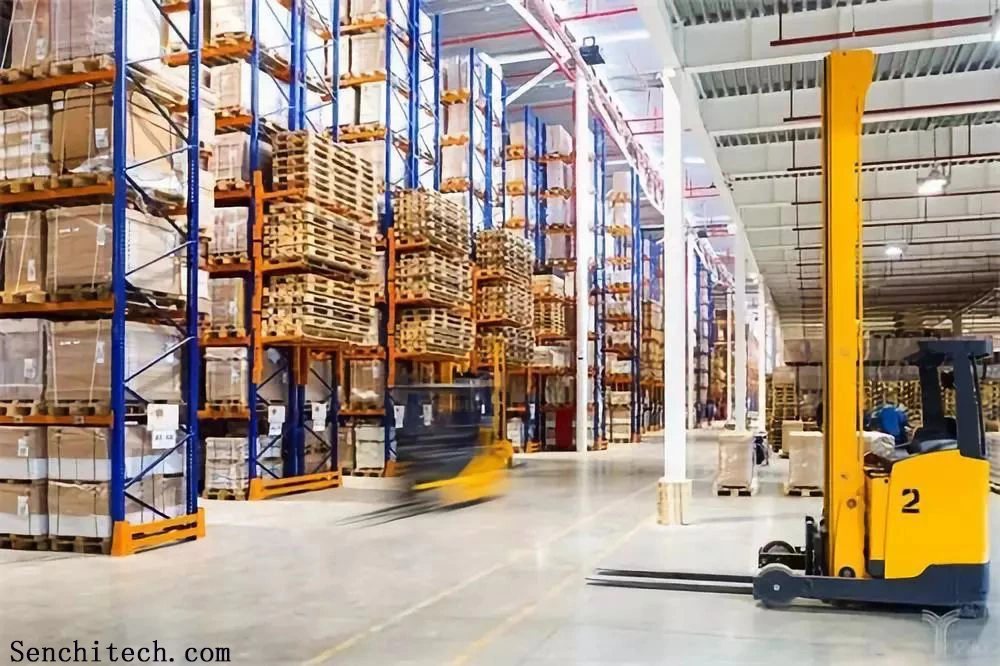
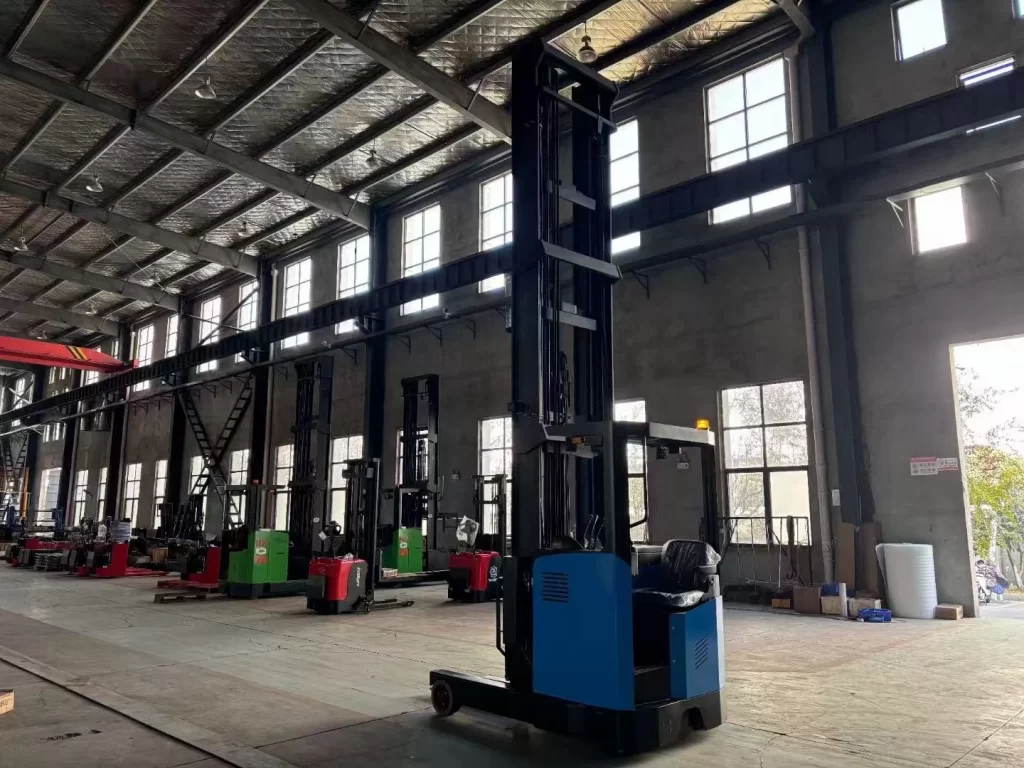
A warehouse Reach Truck is a type of forklift designed for indoor use, though it can also operate on relatively level outdoor surfaces. A standard Reach Truck typically features a telescoping mast and forks with a greater reach, offering higher lifting capacity and extended fork projection. This allows for material handling operations across a larger working range. A compact reach truck, on the other hand, features a smaller mast extension distance and a more compact overall size. It is suitable for operations in relatively confined spaces that still require some reach functionality. In summary, it is a relatively flexible and compact stand-up forklift.
2. Load Capacity
Reach trucks generally offer strong load capacity, capable of handling heavier goods. Common load ranges are 2-5 tons or higher, meeting the heavy-duty material handling needs of large warehouses and factories. Small reach trucks have relatively lower load capacities, typically around 1-3 tons, with 5000lb models being common. These compact trucks can also be customized for lifting height. They are suitable for frequent handling of light goods, such as in small parts warehouses.
3. Operational Space Adaptability
Although the Reach Truck is a narrow-aisle forklift, its larger dimensions compared to stand-up stackers require wider aisles and operating spaces, along with a relatively larger turning radius. The compact design of the small reach truck electric stacker offers greater maneuverability in narrow aisles and confined spaces. It excels in navigating older warehouses or workshops with complex layouts. Additionally, small reach trucks feature simpler operation, making them user-friendly.
4. Work Efficiency
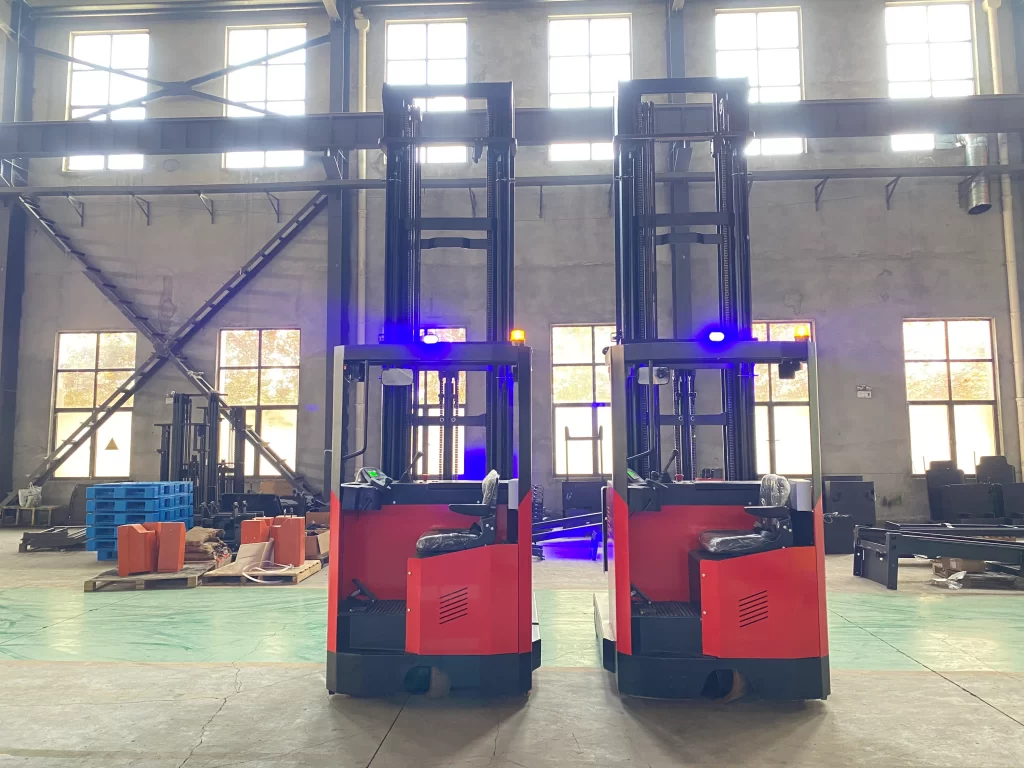
Large reach trucks handle substantial loads at high lifting heights, delivering significant efficiency in bulk palletizing operations. They excel at transporting and storing goods over long distances and in large volumes. Equipping them with position preselection functions and wireless cameras further optimizes stacking control and enhances productivity. This industrial handling vehicle can be categorized into rider-type and stand-up models. While small reach trucks handle smaller loads per trip, their agility makes them highly efficient for frequent short-distance transport of light goods, enabling rapid response to small-batch loading/unloading demands.
5. Cost Differences
Large reach trucks typically incur higher manufacturing costs due to their greater load capacity and more complex structural design, resulting in relatively expensive purchase prices and substantial ongoing maintenance expenses. Small reach trucks offer lower costs, being more economical in both purchase price and routine maintenance, making them a more suitable choice for budget-constrained enterprises. Reach trucks command higher prices than small reach trucks but are better suited for high-end warehouse applications.
6. Application Scenario Examples
Large reach trucks are commonly used in large logistics centers, raw material warehouses of heavy industrial enterprises, and similar locations where goods are heavy and space is relatively open. Small reach trucks excel in electronics factories and small supermarket distribution warehouses, where space is limited and goods are lighter. These trucks efficiently handle material handling tasks. Both are suited for indoor use, featuring smaller wheels (typically PU or nylon) and a low chassis design to minimize the center of gravity.